
How Is AI Changing Factory Work Right Now?
Learn how AI is changing factory work today through reporting, quality, maintenance, planning, inventory, training, safety, and shopfloor visibility.

How Is AI Changing Factory Work Right Now?
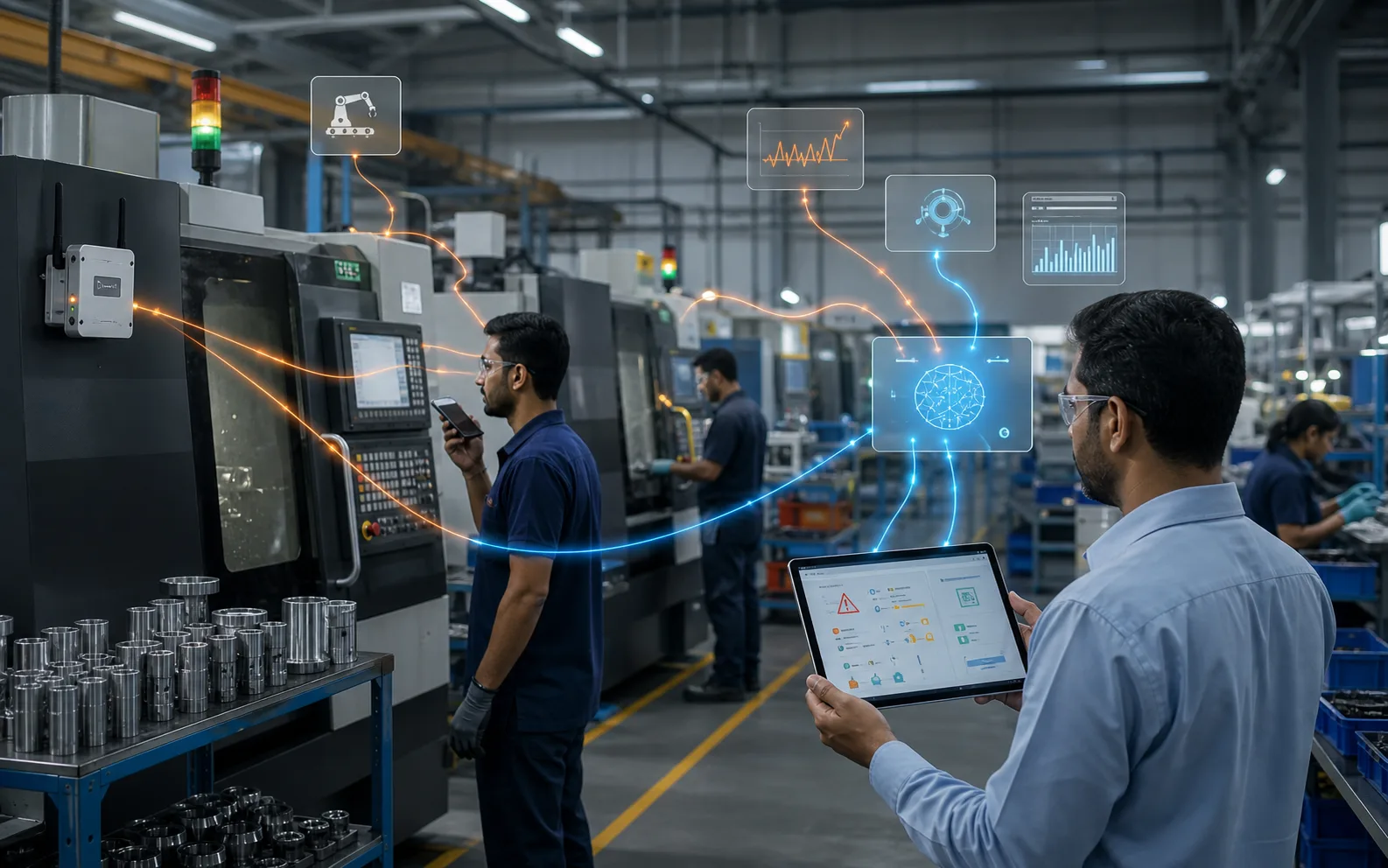
AI is already changing factory work, but not always in dramatic ways. In many manufacturers, AI is not replacing the whole production line. It is helping teams summarize information, identify risks, improve quality, plan maintenance, and make faster decisions.
The change is practical and gradual.
Reporting Is Becoming Faster
AI can summarize production, inventory, purchase, quality, dispatch, and maintenance reports. This reduces time spent preparing updates and helps managers see problems sooner.
Instead of waiting for a report at the end of the day, teams can review exceptions during the shift.
Quality Teams Are Finding Patterns Faster
AI helps quality teams analyze rejection reasons, inspection notes, customer complaints, supplier batches, and corrective actions.
This helps factories identify repeated issues earlier.
Maintenance Is Becoming More Predictive
AI can review downtime logs, machine signals, vibration, temperature, runtime, and maintenance history to flag risk.
This helps maintenance teams move from emergency repair toward planned action.
Production Planning Is Getting Better Support
AI can help planners check material readiness, delayed jobs, machine capacity, WIP, and dispatch priorities.
The planner still decides, but AI reduces manual checking.
Inventory Work Is Becoming More Analytical
AI can help identify slow-moving stock, abnormal consumption, stockout risk, and reorder needs.
This helps stores and purchase teams reduce both excess inventory and shortages.
Training and SOPs Are Becoming Easier
AI can turn process notes into SOPs, training guides, checklists, quizzes, and work instructions.
This helps factories reduce dependency on verbal training.
Workers Need More Digital Confidence
Factory work is becoming more data-driven. Workers do not need to become software engineers, but they do need to become comfortable with dashboards, alerts, ERP entries, and AI-assisted workflows.
AI Is Changing Management Rhythm
Owners and managers can get faster summaries of what is happening across departments. This changes the rhythm from delayed review to active control.
Where AICAN Optiwise Fits
AICAN Optiwise is built around this shift. It connects ERP, workflows, reports, IoT readiness, and AI agents across sales, purchase, inventory, production, shopfloor, quality, dispatch, and finance visibility.
For MSME manufacturers, this makes AI practical inside daily factory work rather than a separate experiment.
Learn more at AICAN Optiwise and About AICAN.
Founder’s Note
AICAN’s belief is that AI’s biggest early impact in manufacturing will be clarity. Factories do not only need more automation; they need better visibility into what is happening and why.
Optiwise is built to bring that visibility into daily work, so AI helps teams act faster instead of creating another dashboard to ignore.
FAQ
Is AI already used in factories?
Yes. It is used for reporting, quality analysis, predictive maintenance, planning, inventory, and documentation.
Is AI changing shopfloor jobs?
Yes, mainly by adding digital workflows, alerts, and better instructions.
Does AI replace managers?
No. It gives managers faster visibility and better decision support.
What should workers learn now?
ERP usage, data discipline, AI basics, and process improvement.
Is AI adoption happening only in large factories?
No. MSME manufacturers can start with practical AI use cases too.
Final Thought
AI is changing factory work by making information faster, clearer, and more actionable. The factories that adapt early will build stronger operating habits.
Next step: Explore AICAN Optiwise if your factory wants AI built into the workflows teams use every day.

Related Posts
Is AI Worth the Investment for My Factory?
Learn how to decide if AI is worth the investment for your factory by evaluating use cases, data readiness, costs, risks, ROI, and operational impact.
13 Jun 2026Read more →Manufacturing AI Mistakes to Avoid Before You Start
List manufacturing AI mistakes and controls for unclear use case, messy data, unsafe automation, no owner, weak security and unreviewed recommendations.
13 Jun 2026Read more →What's the Difference Between AI and Regular Automation?
Understand the difference between AI and regular automation in manufacturing, with practical examples for workflows, decisions, alerts, and predictive operations.
13 Jun 2026Read more →What Are the Risks of Using AI in Manufacturing?
Understand the risks of AI in manufacturing, including bad data, wrong recommendations, safety issues, security, job fear, over-automation, and implementation failure.
13 Jun 2026Read more →