
How Will AI Change My Factory in the Next Few Years?
Explore how AI will change manufacturing through better visibility, predictive maintenance, smarter planning, quality control, connected workers, and faster decisions.
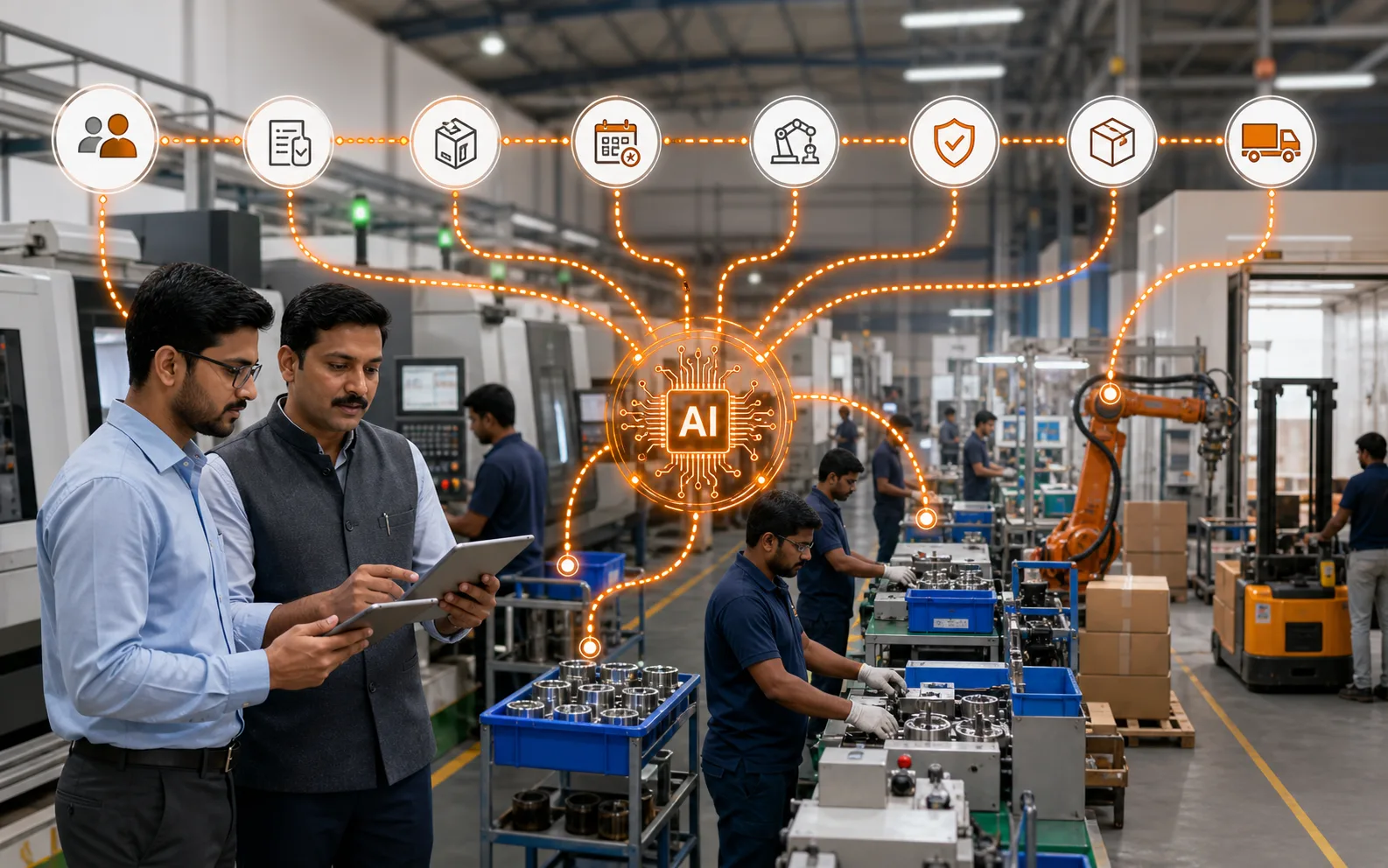
How Will AI Change My Factory in the Next Few Years?
AI will likely change factories by making information more visible, decisions faster, and problems easier to detect before they become expensive. The biggest change will not be robots everywhere. It will be smarter daily operations.
Manufacturers will use AI to summarize what is happening, forecast what may happen next, and recommend where teams should focus attention.
The factories that benefit most will be the ones that prepare their data and workflows now.
More Predictive Maintenance
Maintenance will shift from mostly reactive or fixed schedules toward risk-based planning. AI will help identify machines that need attention based on history, usage, and operating signals.
This does not remove maintenance teams. It helps them plan better.
Smarter Production Planning
AI will help planners compare demand, capacity, materials, machine availability, and delivery commitments. Planning will still need human judgment, but teams will have stronger decision support.
This can reduce last-minute firefighting.
Faster Quality Detection
AI will help quality teams identify defect trends earlier, connect defects to process conditions, and reduce repeated issues.
The goal will be prevention, not only inspection.
Better Inventory Control
AI will support demand forecasting, reorder planning, slow-moving stock detection, and shortage warnings.
This will help manufacturers reduce both stockouts and unnecessary inventory.
More Connected Workers
Workers will interact with more dashboards, alerts, mobile workflows, and AI-assisted summaries. Digital confidence will become a normal manufacturing skill.
The best systems will support workers without overwhelming them.
Stronger Management Visibility
Leaders will expect real-time exception views instead of waiting for delayed reports. AI will help summarize risks, pending decisions, and performance changes.
Management reviews will become more action-focused.
Where AICAN Optiwise Fits
AICAN Optiwise helps manufacturers build the connected ERP foundation needed for AI-driven operations. Production, inventory, purchase, sales, finance, and reporting visibility will become more important as AI adoption grows.
AICAN supports manufacturers preparing for a more predictive and connected future. Learn more at About AICAN.
Founder’s Note
The future factory will not be defined only by advanced machines. It will be defined by how quickly people can understand what is happening and act wisely.
AI will matter because it helps teams see earlier and decide better.
FAQ
Will AI fully automate factories soon?
Most factories will see AI-assisted decision-making before full automation.
What should manufacturers prepare now?
Clean data, connected workflows, digital training, and measurable use cases.
Which area will change fastest?
Reporting, inventory visibility, maintenance alerts, and production summaries are likely early changes.
Will workers still matter?
Yes. Human judgment and process knowledge remain essential.
Final Thought
AI will change factories by making operations more predictive and connected. Manufacturers that prepare now will adapt faster and compete better.

Related Posts
Is AI Worth the Investment for My Factory?
Learn how to decide if AI is worth the investment for your factory by evaluating use cases, data readiness, costs, risks, ROI, and operational impact.
13 Jun 2026Read more →Manufacturing AI Mistakes to Avoid Before You Start
List manufacturing AI mistakes and controls for unclear use case, messy data, unsafe automation, no owner, weak security and unreviewed recommendations.
13 Jun 2026Read more →What's the Difference Between AI and Regular Automation?
Understand the difference between AI and regular automation in manufacturing, with practical examples for workflows, decisions, alerts, and predictive operations.
13 Jun 2026Read more →What Are the Risks of Using AI in Manufacturing?
Understand the risks of AI in manufacturing, including bad data, wrong recommendations, safety issues, security, job fear, over-automation, and implementation failure.
13 Jun 2026Read more →