
How Will AI Change My Industry?
Learn how AI changes industries through automation, better decisions, predictive insights, customer experience, workforce shifts, and new operating models.
How Will AI Change My Industry?
AI will change most industries by improving how information is processed, decisions are made, and work is coordinated. The exact impact depends on the industry, but the pattern is similar: repetitive information work gets automated, decisions become more data-driven, and people need to work with AI tools.
In manufacturing, AI can affect almost every department.
Sales and Customer Work
AI can help prioritize leads, summarize customer history, suggest follow-ups, and identify delayed commitments.
Salespeople still need trust and negotiation, but they can work with better information.
Supply Chain and Purchase
AI can highlight supplier delays, demand changes, material shortage risks, and purchase priorities.
This helps teams act earlier.
Inventory and Production
AI can detect unusual stock movement, predict shortages, identify bottlenecks, and summarize production delays.
Quality
AI can help identify defect patterns, supplier issues, and repeated rework causes.
Human quality teams still decide corrective action.
Finance and Reporting
AI can summarize cash flow risks, overdue payments, cost trends, and operational exceptions.
Workforce Impact
Jobs with repetitive reporting and routine data work will change. Jobs requiring judgment, process knowledge, and accountability become more important.
Where AICAN Optiwise Fits
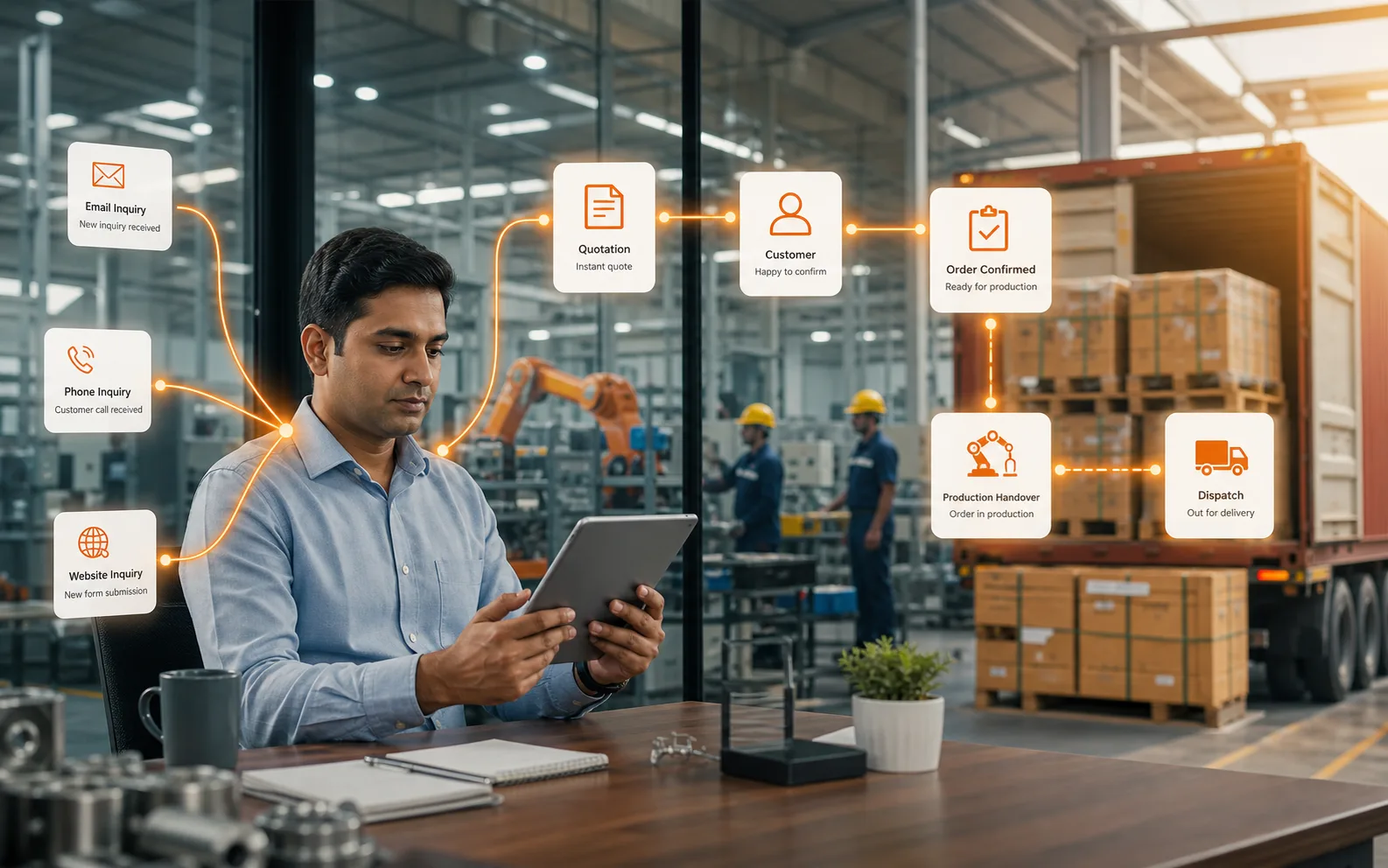
AICAN Optiwise applies AI directly to manufacturing operations, connecting sales, purchase, inventory, production, quality, dispatch, and finance visibility. Its AI agents help teams identify what needs attention faster.
FAQ
Will AI affect every industry?
Most industries will be affected, but in different ways and speeds.
What changes first?
Repetitive information processing and reporting often change first.
Will AI remove human roles?
Some tasks may be automated, but many roles will shift toward judgment and oversight.
How should businesses prepare?
Digitize core data, train teams, and identify workflows where AI can reduce friction.
Final Thought
AI changes industries by changing how work is seen and coordinated.
Businesses with clean data and adaptable teams will move faster.

Related Posts
Is AI Worth the Investment for My Factory?
Learn how to decide if AI is worth the investment for your factory by evaluating use cases, data readiness, costs, risks, ROI, and operational impact.
13 Jun 2026Read more →Manufacturing AI Mistakes to Avoid Before You Start
List manufacturing AI mistakes and controls for unclear use case, messy data, unsafe automation, no owner, weak security and unreviewed recommendations.
13 Jun 2026Read more →What's the Difference Between AI and Regular Automation?
Understand the difference between AI and regular automation in manufacturing, with practical examples for workflows, decisions, alerts, and predictive operations.
13 Jun 2026Read more →What Are the Risks of Using AI in Manufacturing?
Understand the risks of AI in manufacturing, including bad data, wrong recommendations, safety issues, security, job fear, over-automation, and implementation failure.
13 Jun 2026Read more →