
How Factory Work Is Actually Changing, Not Clickbait
Factory work is changing through digital reporting, AI alerts, data-driven supervision, quality tracking, maintenance visibility, and new worker skills.
How Factory Work Is Actually Changing, Not Clickbait
Factory work is changing, but not in the dramatic way headlines often suggest.
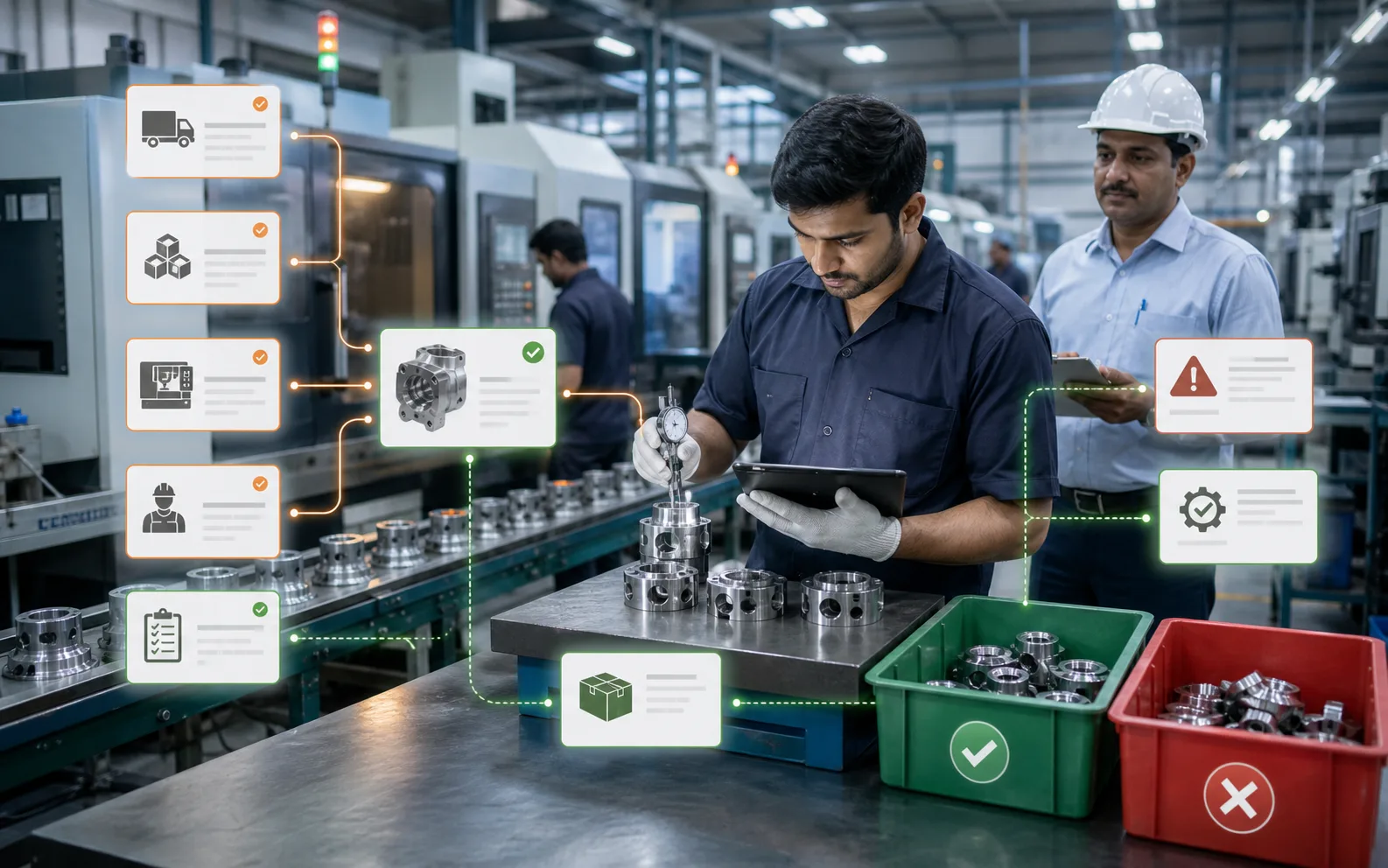
Most factories are not becoming worker-free overnight. The real change is more practical: digital reporting, better dashboards, machine alerts, quality tracking, data-based supervision, and new skills for workers and managers.
The factory is becoming more visible and connected.
Reporting Is Becoming Digital
Paper logs and verbal updates are slowly moving into digital systems.
This helps production status, downtime, quality, and material movement become visible faster.
Workers Are Using More Tools
Workers may use tablets, barcode scanners, dashboards, digital work instructions, and alert systems.
This requires training, but it also reduces confusion when used well.
Supervisors Are Managing With Data
Supervisors are spending less time chasing updates and more time reviewing exceptions.
Data helps them see delays, machine issues, and quality patterns earlier.
AICAN Optiwise supports this shift by connecting production, inventory, purchase, sales, finance, reports, IoT readiness, and AI workflows.
Maintenance Is Becoming More Predictive
Factories are starting to use machine signals and downtime history to plan maintenance better.
This does not replace technicians. It supports them.
Human Skills Still Matter
Judgment, safety, quality, machine understanding, and communication remain important.
The change is that these skills are now supported by better systems.
Where AICAN Optiwise Fits
AICAN Optiwise helps factories make this transition practically by connecting shop floor work with the rest of the business.
Learn more at About AICAN.
Founder’s Note
Factory work is not disappearing. It is becoming more connected.
The best transformation respects the people doing the work and gives them better information.
FAQ
Is factory work becoming fully automated?
Not everywhere. Most change is gradual and workflow-based.
What changes first?
Reporting, monitoring, quality tracking, downtime analysis, and planning visibility.
Do workers need new skills?
Yes, mainly digital tool confidence and process understanding.
Does AI replace supervisors?
No. It helps supervisors manage with better visibility.
Final Thought
Factory work is changing in practical ways: more data, better tools, faster visibility, and new skills.
The factories that manage this change well will be stronger, and AICAN is building Optiwise to support that shift.

Related Posts

Is AI Worth the Investment for My Factory?
Learn how to decide if AI is worth the investment for your factory by evaluating use cases, data readiness, costs, risks, ROI, and operational impact.
13 Jun 2026Read more →Manufacturing AI Mistakes to Avoid Before You Start
List manufacturing AI mistakes and controls for unclear use case, messy data, unsafe automation, no owner, weak security and unreviewed recommendations.
13 Jun 2026Read more →What's the Difference Between AI and Regular Automation?
Understand the difference between AI and regular automation in manufacturing, with practical examples for workflows, decisions, alerts, and predictive operations.
13 Jun 2026Read more →What Are the Risks of Using AI in Manufacturing?
Understand the risks of AI in manufacturing, including bad data, wrong recommendations, safety issues, security, job fear, over-automation, and implementation failure.
13 Jun 2026Read more →