
How Long Does It Take to Set Up AI in a Factory?
Learn realistic timelines for setting up AI in a factory, including readiness, data preparation, rollout, training, go-live, and stabilization.
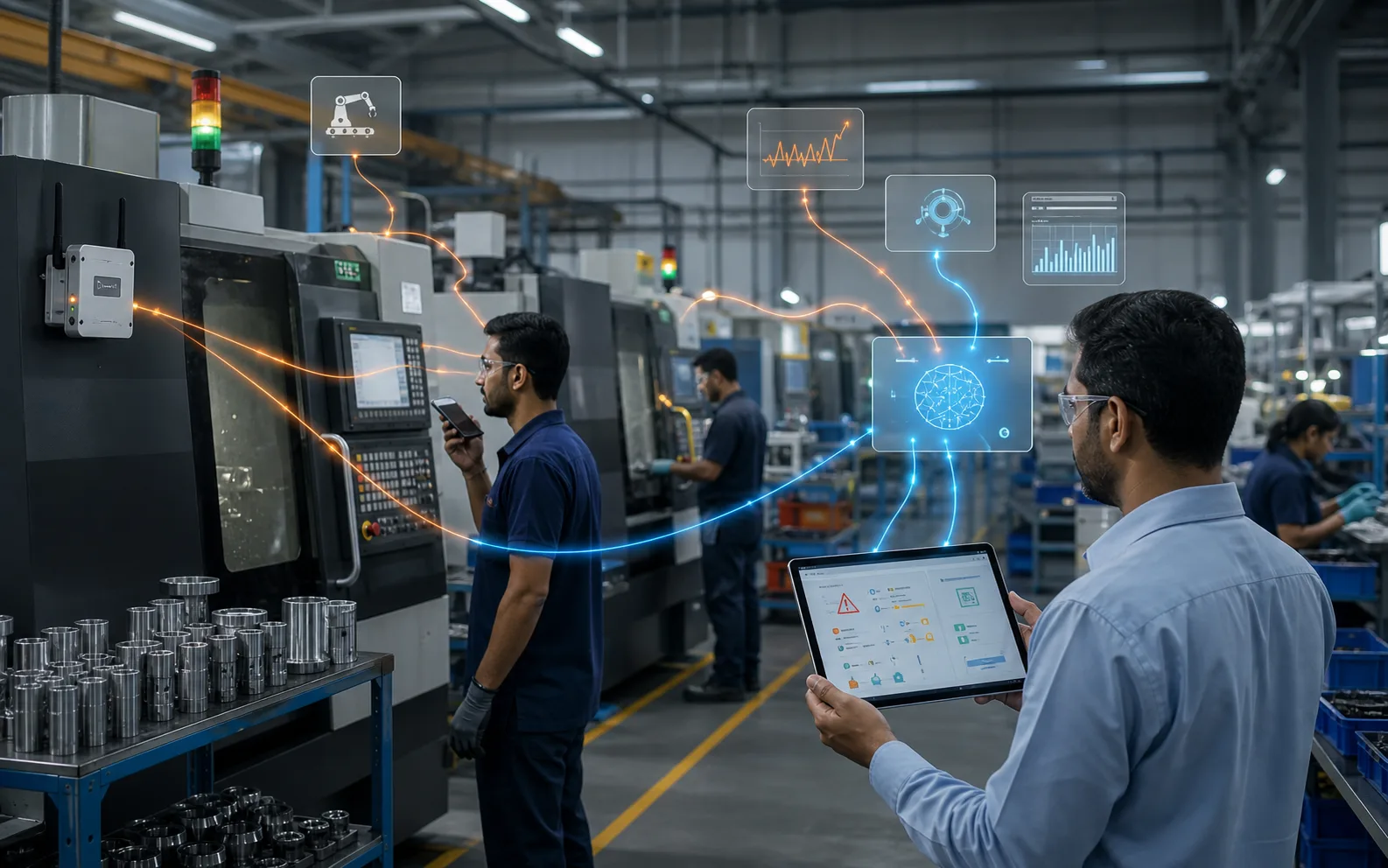
How Long Does It Take to Set Up AI in a Factory?
The time required to set up AI in a factory depends on the scope. A focused implementation for one workflow may begin showing value within weeks. A broader AI driven factory management rollout across production, inventory, purchase, quality, finance, reporting, and IoT can take longer because it involves data, people, process, and integration.
The mistake is thinking AI setup is only technical installation. In manufacturing, setup also means mapping workflows, cleaning data, training users, testing reports, defining responsibilities, and stabilizing daily usage.
A realistic timeline is phased, not rushed.
Phase 1: Discovery and Scope
This phase identifies the factory’s pain points, workflows, users, data sources, and first use cases. It may take a few days to a few weeks depending on complexity.
A clear scope prevents overbuilding. If the first goal is inventory risk, the team should not attempt every advanced feature at once.
Phase 2: Data Preparation
Data preparation includes item masters, BOMs, stock records, customers, vendors, machine details, production routes, quality categories, and opening balances where needed.
This can be quick if data is clean. It can take longer if records are scattered or inconsistent. Data quality is often the biggest timeline variable.
Phase 3: Configuration and Workflow Setup
The system is configured around the factory’s departments, approvals, reports, roles, and workflows. This phase should reflect how the factory actually runs, while also improving weak processes where necessary.
Good configuration balances standardization with practical flexibility.
Phase 4: Training and Go-Live
Users need role-based training before go-live. Operators, stores, production, purchase, quality, finance, and management all need different views.
Go-live should usually happen in a controlled way, with support available for mistakes and questions.
Phase 5: Stabilization
The first 30 to 60 days after go-live are critical. Teams build habits, correct data errors, close adoption gaps, and learn how to act on alerts.
This is when AI setup becomes real factory management.
Where AICAN Optiwise Fits
AICAN Optiwise helps manufacturers set up AI driven factory management through connected workflows across production, inventory, purchase, sales, finance, reporting, IoT readiness, and AI. The exact timeline depends on modules, users, data readiness, and factory scope.
Learn more at aican.co.in and About AICAN. For a practical timeline, manufacturers should discuss their current workflows with the AICAN team.
Founder’s Note
AICAN’s founder-led view is that speed matters, but adoption matters more. A rushed setup that users do not trust creates long-term problems. A practical phased setup creates confidence and measurable improvement.
AI should be implemented at the speed the factory can absorb responsibly.
FAQ
Can AI be set up in a few weeks?
A focused workflow can often begin in weeks, but full adoption and stabilization usually take longer.
What slows AI setup the most?
Messy data, unclear workflows, too much customization, weak user ownership, and poor training are common delays.
Should we implement everything at once?
Usually no. A phased rollout reduces risk and helps teams build confidence.
How long before results appear?
Visibility improvements may appear early. Financial and operational results often need 60 to 90 days or more.
Final Thought
AI setup is not complete when software goes live. It is complete when the factory uses it reliably to make better decisions. Plan the timeline around adoption, not only installation.
Next step: Visit AICAN Optiwise to discuss a phased AI factory setup for your operations.

Related Posts
Is AI Worth the Investment for My Factory?
Learn how to decide if AI is worth the investment for your factory by evaluating use cases, data readiness, costs, risks, ROI, and operational impact.
13 Jun 2026Read more →Manufacturing AI Mistakes to Avoid Before You Start
List manufacturing AI mistakes and controls for unclear use case, messy data, unsafe automation, no owner, weak security and unreviewed recommendations.
13 Jun 2026Read more →What's the Difference Between AI and Regular Automation?
Understand the difference between AI and regular automation in manufacturing, with practical examples for workflows, decisions, alerts, and predictive operations.
13 Jun 2026Read more →What Are the Risks of Using AI in Manufacturing?
Understand the risks of AI in manufacturing, including bad data, wrong recommendations, safety issues, security, job fear, over-automation, and implementation failure.
13 Jun 2026Read more →