
How Much Will AI Reduce My Production Downtime?
Learn how AI can reduce production downtime, what affects results, which metrics to track, and how factories should implement downtime reduction practically.
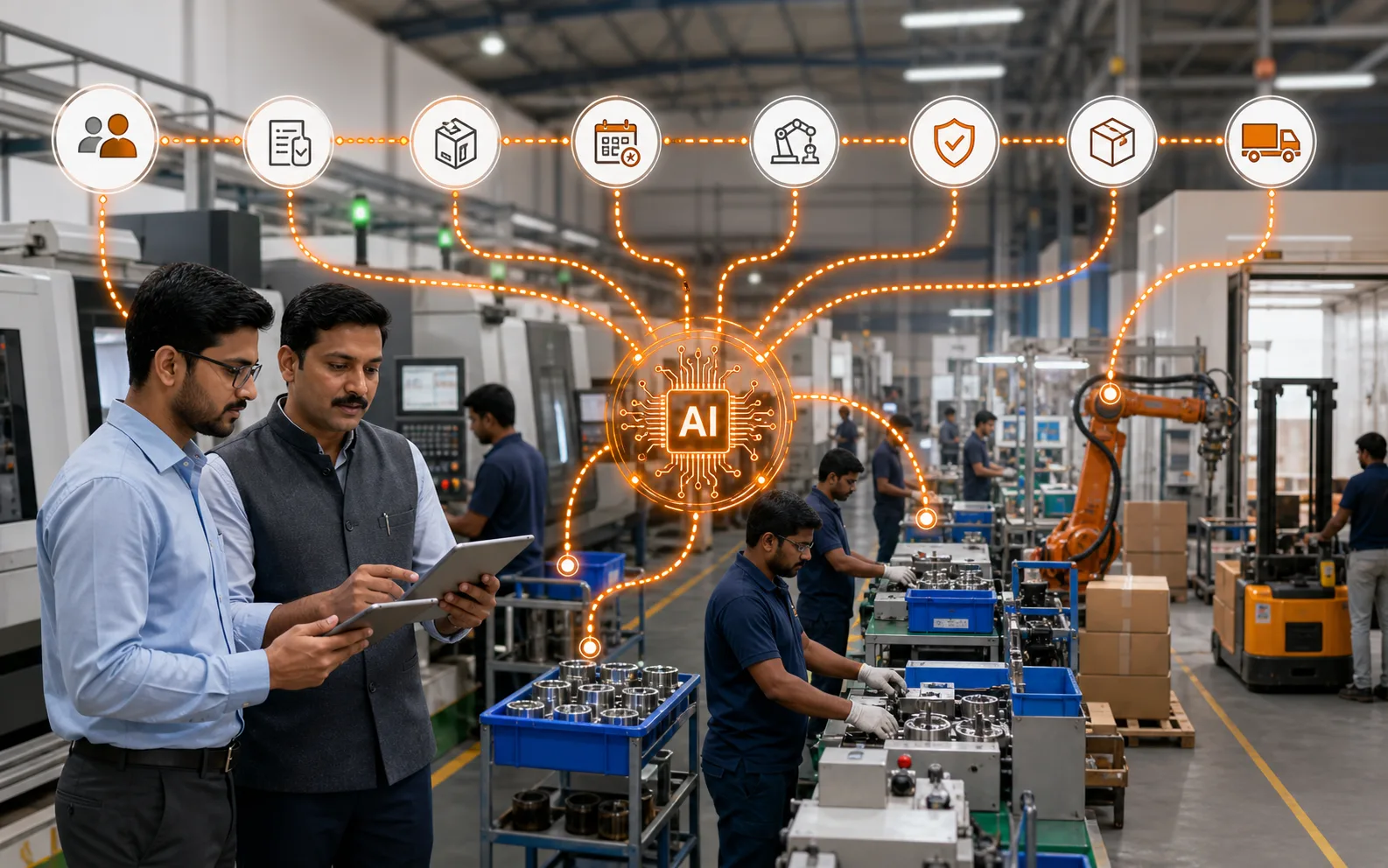
How Much Will AI Reduce My Production Downtime?
AI can reduce production downtime, but the exact amount depends on your current downtime causes, machine data, maintenance discipline, operator reporting, and how quickly teams act on alerts. No responsible system can promise a universal percentage for every factory.
AI driven factory management helps reduce downtime by making causes visible earlier. It can identify repeat machine issues, maintenance patterns, material-related stoppages, quality holds, manpower constraints, and scheduling conflicts.
The value comes from acting before downtime becomes unavoidable.
First Understand Your Downtime
Before AI can reduce downtime, the factory must record it properly. What stopped? When did it stop? Why did it stop? How long did it last? Was it machine, material, quality, manpower, tool, power, or planning related?
If every stoppage is recorded vaguely, AI cannot help much.
AI Finds Repeat Patterns
AI can identify machines that fail often, shifts where downtime is higher, products that create more stoppages, or maintenance actions that are not reducing problems.
This helps maintenance and production teams focus on root causes instead of only reacting.
Predictive Maintenance Can Help
Where machine data is available, AI can detect changes in vibration, temperature, current, cycle time, or other signals that may indicate failure risk. Even without sensors, downtime history and maintenance records can support early warnings.
Predictive maintenance reduces unplanned stoppages when teams respond in time.
Downtime Is Not Always Machine Failure
Many stoppages happen because material is missing, quality has held a batch, tools are unavailable, or planning changed suddenly. AI helps most when production, inventory, purchase, quality, and maintenance data are connected.
A machine may be ready, but production can still stop.
Metrics to Track
Track total downtime, unplanned downtime, downtime by reason, mean time between failures, mean time to repair, schedule adherence, and production loss by machine or process.
These metrics show whether AI is improving reliability.
Where AICAN Optiwise Fits
AICAN Optiwise connects production, inventory, purchase, sales, finance, reporting, IoT readiness, and AI workflows. This helps manufacturers see downtime in context, including whether stoppages are caused by machines, materials, quality, or planning.
Explore aican.co.in and About AICAN to learn more.
Founder’s Note
AICAN’s founder-led view is that downtime reduction starts with honest visibility. Factories cannot reduce what they do not record clearly. AI helps when teams capture the truth and act before issues repeat.
Reliability is built through data, discipline, and response.
FAQ
Can AI reduce downtime immediately?
It can improve visibility quickly, but measurable downtime reduction usually needs proper data, maintenance action, and process follow-through.
What data is needed?
Downtime logs, reason codes, machine history, maintenance records, production schedules, and sensor data where available.
Does AI only reduce machine downtime?
No. It can also help identify material, quality, manpower, and planning-related stoppages.
How should downtime reduction be measured?
Measure unplanned downtime, downtime by reason, MTBF, MTTR, and lost production hours.
Final Thought
AI reduces downtime when it helps the factory see why stoppages happen and respond before they repeat. The improvement depends on data honesty and maintenance discipline.
Next step: Visit AICAN Optiwise to explore downtime visibility through connected AI driven factory management.

Related Posts

Is AI Worth the Investment for My Factory?
Learn how to decide if AI is worth the investment for your factory by evaluating use cases, data readiness, costs, risks, ROI, and operational impact.
13 Jun 2026Read more →Manufacturing AI Mistakes to Avoid Before You Start
List manufacturing AI mistakes and controls for unclear use case, messy data, unsafe automation, no owner, weak security and unreviewed recommendations.
13 Jun 2026Read more →What's the Difference Between AI and Regular Automation?
Understand the difference between AI and regular automation in manufacturing, with practical examples for workflows, decisions, alerts, and predictive operations.
13 Jun 2026Read more →What Are the Risks of Using AI in Manufacturing?
Understand the risks of AI in manufacturing, including bad data, wrong recommendations, safety issues, security, job fear, over-automation, and implementation failure.
13 Jun 2026Read more →