
Industry-Specific ERP Solutions for Manufacturing, Retail, and Services
Learn how ERP needs differ for manufacturing, retail, distribution, and services, and how small businesses should choose industry-fit workflows instead of generic software.
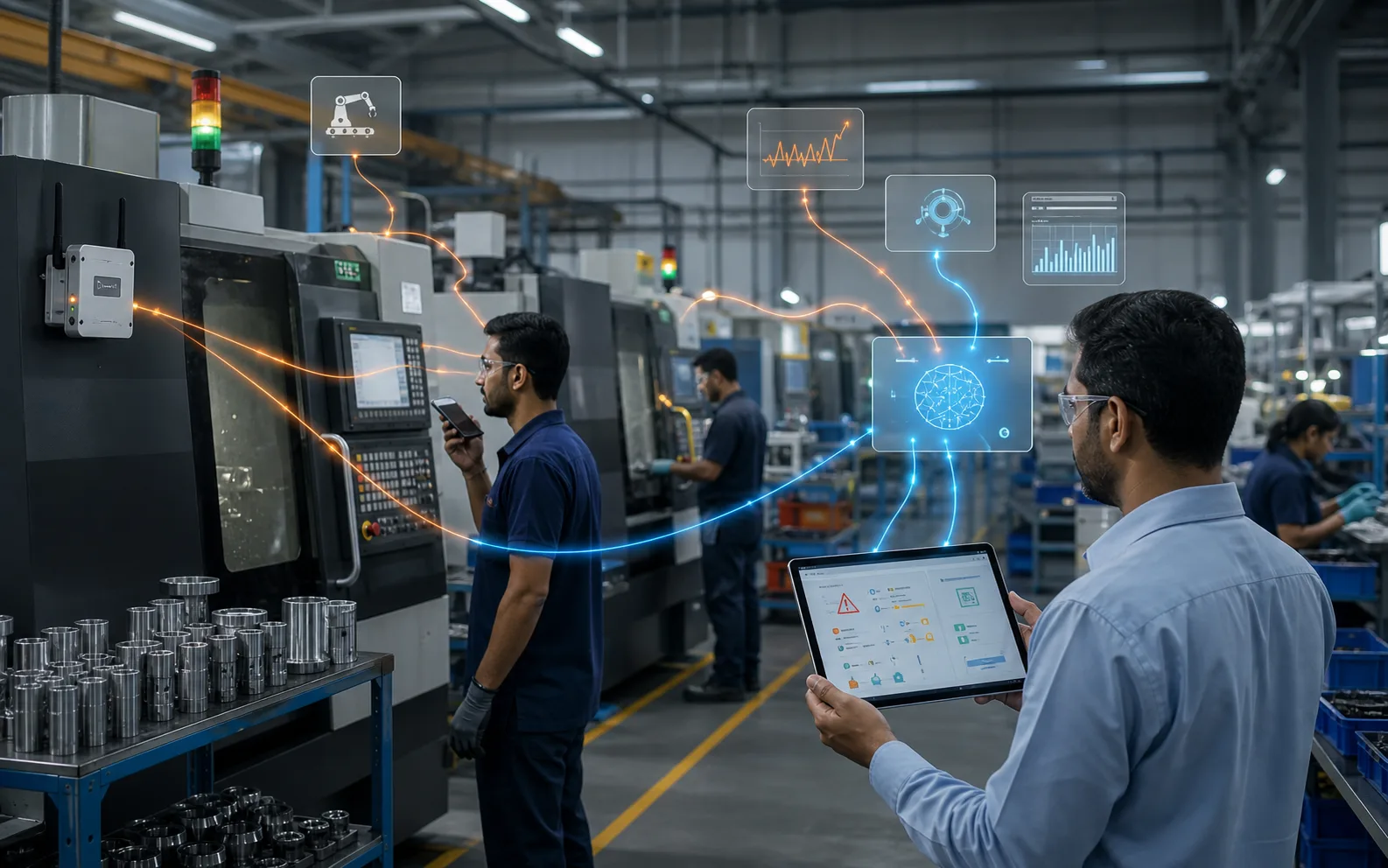
Industry-Specific ERP Solutions for Manufacturing, Retail, and Services
Different industries need different ERP workflows. A manufacturer needs production and inventory control. A retailer needs point-of-sale and stock movement. A service business may need projects, billing, and resource planning.
That is why small businesses should not choose ERP only by popularity. They should choose based on industry fit.
Manufacturing ERP
Manufacturers need:
- BOMs
- Work orders
- Inventory
- Purchase planning
- Production tracking
- Quality checks
- Dispatch
- Costing
Manufacturing ERP must connect shopfloor activity with sales and finance.
Retail ERP
Retail businesses need:
- POS integration
- Stock across stores
- Pricing and discounts
- Purchase planning
- Customer loyalty
- Returns
- Sales analytics
The focus is fast transactions and stock accuracy.
Distribution ERP
Distributors need:
- Warehouse stock
- Sales orders
- Purchase orders
- Dispatch
- Route or delivery tracking
- Credit control
- Batch or serial tracking where needed
Services ERP
Service businesses may need:
- Project tracking
- Resource planning
- Billing
- Time tracking
- Contracts
- Customer support
- Profitability reports
How to Choose Industry Fit
Ask vendors to demonstrate your actual workflow. If you manufacture, do not accept a retail-style demo. If you run services, do not judge only inventory screens.
Where AICAN Optiwise Fits
AICAN Optiwise is strongest for MSME manufacturing and operational businesses that need sales, purchase, inventory, production, quality, dispatch, finance visibility, and AI-assisted insights in one connected system.
FAQ
Is industry-specific ERP necessary?
It is helpful when your workflow has industry-specific complexity.
Can generic ERP work?
Sometimes, if it is configurable enough and implementation is strong.
What should manufacturers prioritize?
Inventory, production, quality, dispatch, and costing workflows.
What should retailers prioritize?
POS, inventory, pricing, returns, and sales reporting.
Final Thought
ERP should fit how your business actually creates value.
Industry fit saves time, reduces customization, and improves adoption.

Related Posts
Is AI Worth the Investment for My Factory?
Learn how to decide if AI is worth the investment for your factory by evaluating use cases, data readiness, costs, risks, ROI, and operational impact.
13 Jun 2026Read more →Manufacturing AI Mistakes to Avoid Before You Start
List manufacturing AI mistakes and controls for unclear use case, messy data, unsafe automation, no owner, weak security and unreviewed recommendations.
13 Jun 2026Read more →What's the Difference Between AI and Regular Automation?
Understand the difference between AI and regular automation in manufacturing, with practical examples for workflows, decisions, alerts, and predictive operations.
13 Jun 2026Read more →What Are the Risks of Using AI in Manufacturing?
Understand the risks of AI in manufacturing, including bad data, wrong recommendations, safety issues, security, job fear, over-automation, and implementation failure.
13 Jun 2026Read more →