
Is AI Production Planning Reliable?
Learn when AI production planning is reliable, what affects planning accuracy, and how manufacturers can build trust with data, controls, and human review.
Is AI Production Planning Reliable?
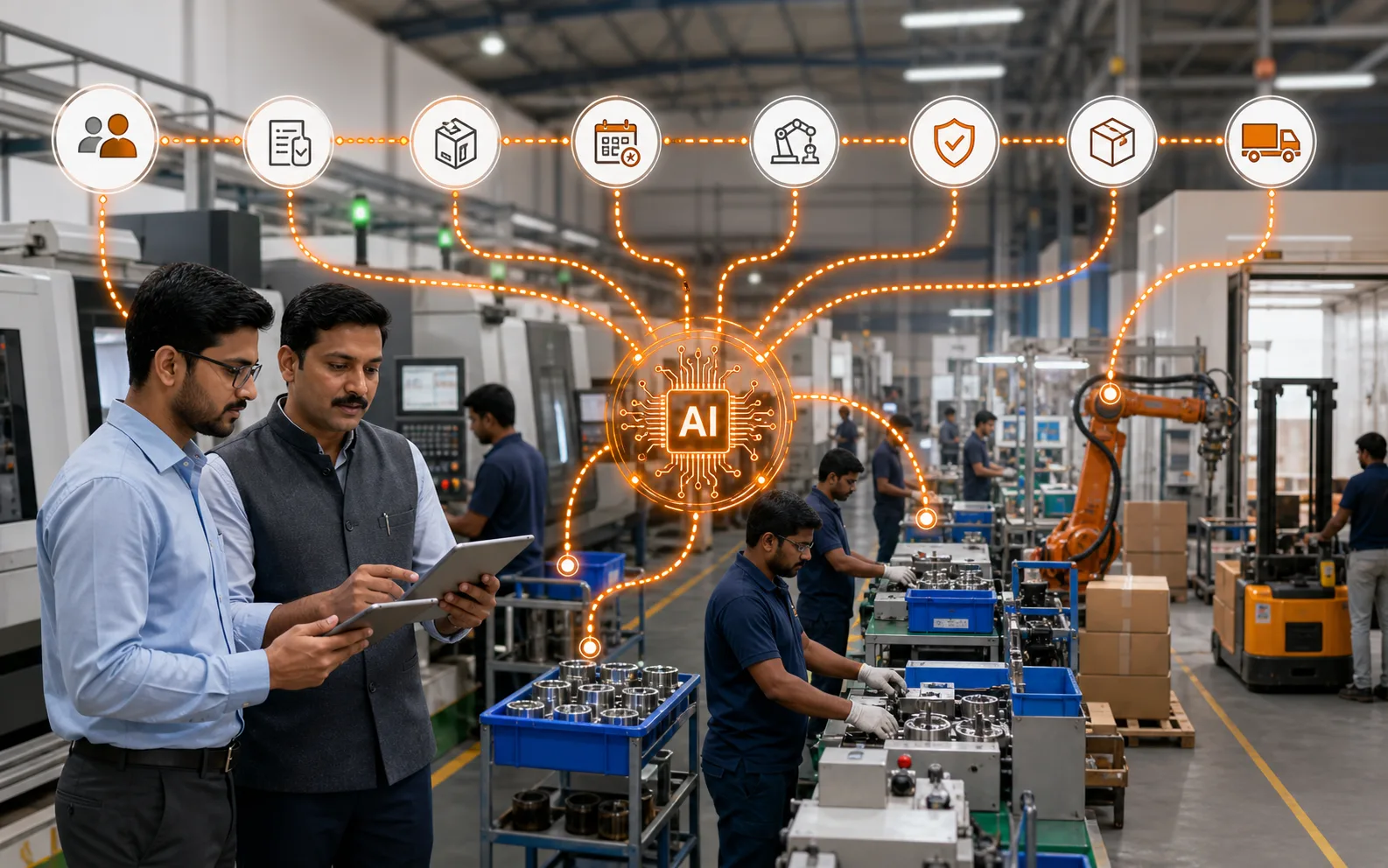
AI production planning can be reliable when the factory has accurate data, clear workflows, realistic constraints, and human review. It becomes unreliable when stock is wrong, production status is delayed, BOMs are inaccurate, machine capacity is guessed, or teams ignore system updates.
AI for production planning is only as dependable as the operating information behind it. A planning algorithm cannot create a realistic schedule from false inventory or missing purchase dates.
Reliability is built through data discipline and practical implementation.
Reliable Planning Needs Reliable Inputs
AI planning depends on orders, BOMs, inventory, purchase status, routing, machine availability, quality holds, manpower, and delivery dates. If any of these are inaccurate, the plan may look good but fail in execution.
Factories should clean critical data before expecting strong recommendations.
Human Review Improves Reliability
Production planners should review AI recommendations before final decisions, especially in early adoption. They may know customer context, machine behaviour, or shopfloor realities that the system does not yet capture.
Human review does not weaken AI. It makes adoption safer.
Start With Alerts Before Automation
Factories should begin with AI alerts and planning recommendations rather than fully automatic schedules. Once teams see that recommendations are useful, automation can be expanded selectively.
Trust grows through repeated proof.
Measure Reliability
Track schedule adherence, material-related delays, planning changes, forecast accuracy, order delays, and planner overrides. These metrics show whether AI planning is becoming more dependable.
If planners override the system often, review why.
Keep Improving the Model
AI planning improves when users correct data, close exceptions, and review results. Reliability is not a one-time setup. It is a continuous operating habit.
Where AICAN Optiwise Fits
AICAN Optiwise connects production planning with production, inventory, purchase, sales, finance, reporting, IoT readiness, and AI workflows. This connected foundation helps improve planning reliability because constraints are visible in one place.
Explore AICAN Optiwise and About AICAN for more context.
Founder’s Note
AICAN’s founder-led view is that planning reliability starts with operational honesty. AI can improve planning only when the factory records what is actually happening.
Reliable plans come from reliable data plus responsible judgement.
FAQ
Can AI create reliable production schedules?
Yes, when data is accurate, constraints are realistic, and planners review recommendations.
What makes AI planning unreliable?
Wrong stock, poor BOMs, delayed production updates, unclear capacity, missing purchase dates, and weak user adoption.
Should AI schedules be automatic?
Start with recommendations and human review. Automate only after the system proves reliable.
How do I measure reliability?
Track schedule adherence, planner overrides, material delays, order delays, and forecast accuracy.
Final Thought
AI production planning is reliable when the factory gives it reliable truth. The system can improve planning, but the organization must maintain the data and discipline that make planning possible.
Next step: Visit AICAN Optiwise to build production planning on connected, reliable factory data.

Related Posts
Is AI Worth the Investment for My Factory?
Learn how to decide if AI is worth the investment for your factory by evaluating use cases, data readiness, costs, risks, ROI, and operational impact.
13 Jun 2026Read more →Manufacturing AI Mistakes to Avoid Before You Start
List manufacturing AI mistakes and controls for unclear use case, messy data, unsafe automation, no owner, weak security and unreviewed recommendations.
13 Jun 2026Read more →What's the Difference Between AI and Regular Automation?
Understand the difference between AI and regular automation in manufacturing, with practical examples for workflows, decisions, alerts, and predictive operations.
13 Jun 2026Read more →What Are the Risks of Using AI in Manufacturing?
Understand the risks of AI in manufacturing, including bad data, wrong recommendations, safety issues, security, job fear, over-automation, and implementation failure.
13 Jun 2026Read more →