
How Can I Tell If an AI Tool Is Right for My Manufacturing Business?
Learn how to evaluate whether an AI tool is right for your manufacturing business using use cases, data readiness, ROI, security, and adoption fit.
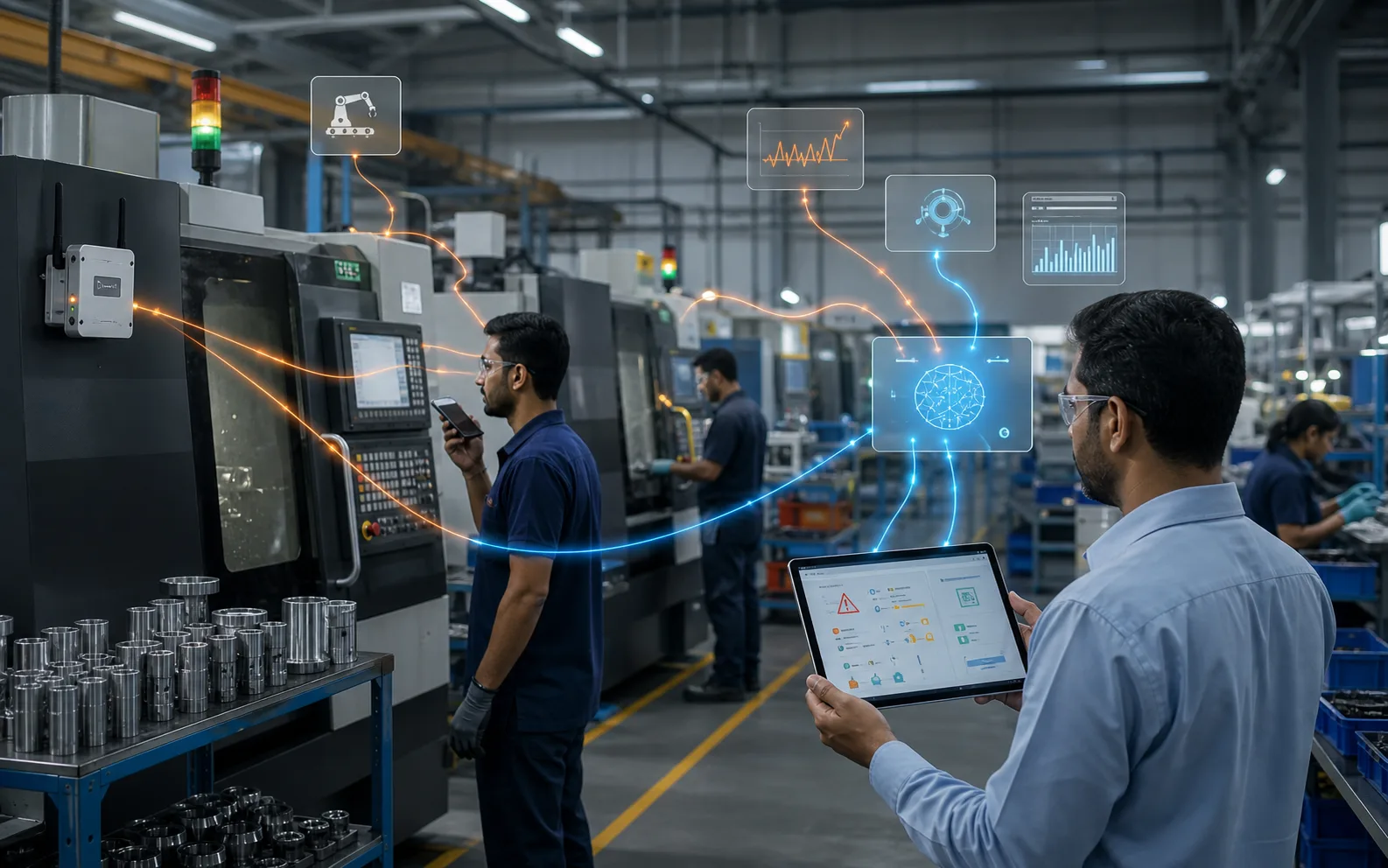
How Can I Tell If an AI Tool Is Right for My Manufacturing Business?
An AI tool is right for your manufacturing business only if it solves a real operational problem. A tool can sound advanced and still be useless if it does not fit your workflows, data, people, or budget.
Start with the problem, then evaluate the tool.
Define the Use Case
Ask what the AI tool will improve: reporting, inventory, production planning, quality, maintenance, documentation, training, or customer communication. If the vendor cannot connect the tool to a specific use case, be careful.
Check Data Requirements
Find out what data the tool needs and whether your factory already captures it. AI for predictive maintenance needs different data than AI for SOP writing.
Evaluate Ease of Use
Factory teams need tools that fit daily work. If the tool requires too much manual preparation or technical knowledge, adoption may suffer.
Review Security
Ask how the tool handles BOMs, costs, production data, customer information, and vendor details. Sensitive data should not be uploaded casually.
Measure ROI
A good AI tool should help you measure time saved, defects reduced, downtime avoided, stock improved, or reports prepared faster.
Where AICAN Optiwise Fits
AICAN Optiwise helps manufacturers use AI inside connected ERP workflows, reducing the risk of disconnected AI tools. It ties AI to sales, purchase, inventory, production, quality, dispatch, and finance visibility.
FAQ
What should I ask an AI vendor?
Ask about use cases, data needs, security, implementation, support, and ROI measurement.
Should I choose the most advanced AI tool?
No. Choose the tool that fits your workflow and creates measurable value.
Can small manufacturers evaluate AI tools easily?
Yes, by starting with one problem and one pilot.
Final Thought
The right AI tool should make your factory clearer, faster, or more controlled. If it cannot prove that, it is probably not the right fit yet.

Related Posts
Is AI Worth the Investment for My Factory?
Learn how to decide if AI is worth the investment for your factory by evaluating use cases, data readiness, costs, risks, ROI, and operational impact.
13 Jun 2026Read more →Manufacturing AI Mistakes to Avoid Before You Start
List manufacturing AI mistakes and controls for unclear use case, messy data, unsafe automation, no owner, weak security and unreviewed recommendations.
13 Jun 2026Read more →What's the Difference Between AI and Regular Automation?
Understand the difference between AI and regular automation in manufacturing, with practical examples for workflows, decisions, alerts, and predictive operations.
13 Jun 2026Read more →What Are the Risks of Using AI in Manufacturing?
Understand the risks of AI in manufacturing, including bad data, wrong recommendations, safety issues, security, job fear, over-automation, and implementation failure.
13 Jun 2026Read more →