
How Do I Know If My Factory Is Ready for AI?
Check if your factory is ready for AI by assessing data quality, process clarity, digital adoption, leadership support, integration, and use-case readiness.
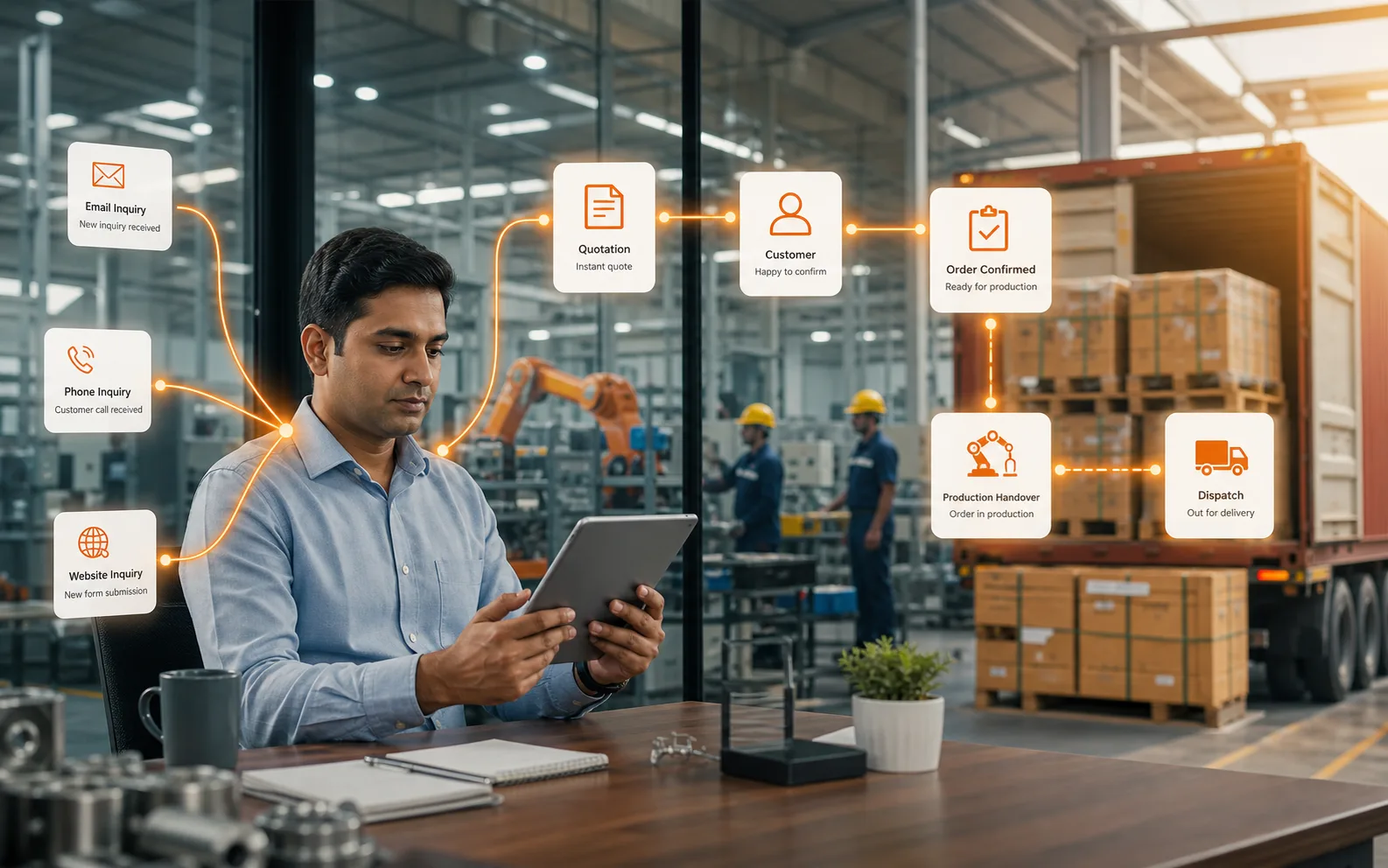
How Do I Know If My Factory Is Ready for AI?
Your factory is ready for AI when it has a clear problem to solve, enough reliable data, process discipline, leadership support, and people willing to use the system.
AI readiness does not mean the factory must be perfect. It means the business is prepared to start with a practical use case and improve from there.
The best first step is an honest readiness check.
Do You Have a Clear Use Case?
AI works best when focused.
Common use cases include downtime analysis, predictive maintenance, production scheduling, quality alerts, inventory shortages, purchase delays, and management reporting.
If the use case is vague, implementation becomes difficult.
Is Your Data Reliable Enough?
AI needs data to learn from.
Check whether production output, downtime, machine status, quality records, inventory movement, and purchase data are captured consistently.
Are Processes Clearly Defined?
If nobody agrees how work should happen, software will struggle.
Process clarity helps AI understand what normal and abnormal look like.
AICAN Optiwise helps manufacturers build connected workflows across production, inventory, purchase, sales, finance, reports, IoT readiness, and AI processes.
Are People Ready to Use It?
AI readiness includes user readiness.
Operators, supervisors, managers, and support teams need training and communication.
Is Leadership Ready to Act on Insights?
AI alerts and dashboards are useful only if leaders review and act on them.
If warnings are ignored, the value disappears.
Where AICAN Optiwise Fits
AICAN Optiwise helps manufacturers start AI adoption through connected operational visibility. Factories can begin with practical workflows and expand as data maturity improves.
Learn more at About AICAN.
Founder’s Note
AI readiness is not about being advanced. It is about being honest. Know your data, your problems, your people, and your willingness to improve.
That honesty makes AI adoption safer.
FAQ
Does a factory need perfect data before AI?
No. But data should be reliable enough for the chosen use case.
What is a good first AI use case?
Start with downtime, production visibility, inventory alerts, or reporting.
Is leadership support important?
Yes. AI insights must lead to action.
Can small factories be AI-ready?
Yes, if they start with practical goals and manageable workflows.
Final Thought
Your factory is ready for AI when it is ready to solve a real problem with better data and discipline.
Start focused, learn quickly, and expand with confidence. That is the practical AI journey AICAN supports.

Related Posts

Is AI Worth the Investment for My Factory?
Learn how to decide if AI is worth the investment for your factory by evaluating use cases, data readiness, costs, risks, ROI, and operational impact.
13 Jun 2026Read more →Manufacturing AI Mistakes to Avoid Before You Start
List manufacturing AI mistakes and controls for unclear use case, messy data, unsafe automation, no owner, weak security and unreviewed recommendations.
13 Jun 2026Read more →What's the Difference Between AI and Regular Automation?
Understand the difference between AI and regular automation in manufacturing, with practical examples for workflows, decisions, alerts, and predictive operations.
13 Jun 2026Read more →What Are the Risks of Using AI in Manufacturing?
Understand the risks of AI in manufacturing, including bad data, wrong recommendations, safety issues, security, job fear, over-automation, and implementation failure.
13 Jun 2026Read more →