
What Should I Ask Before Buying a Manufacturing AI Tool?
Use this practical checklist before buying a manufacturing AI tool, covering use cases, data, integrations, security, ROI, support, explainability, and adoption.
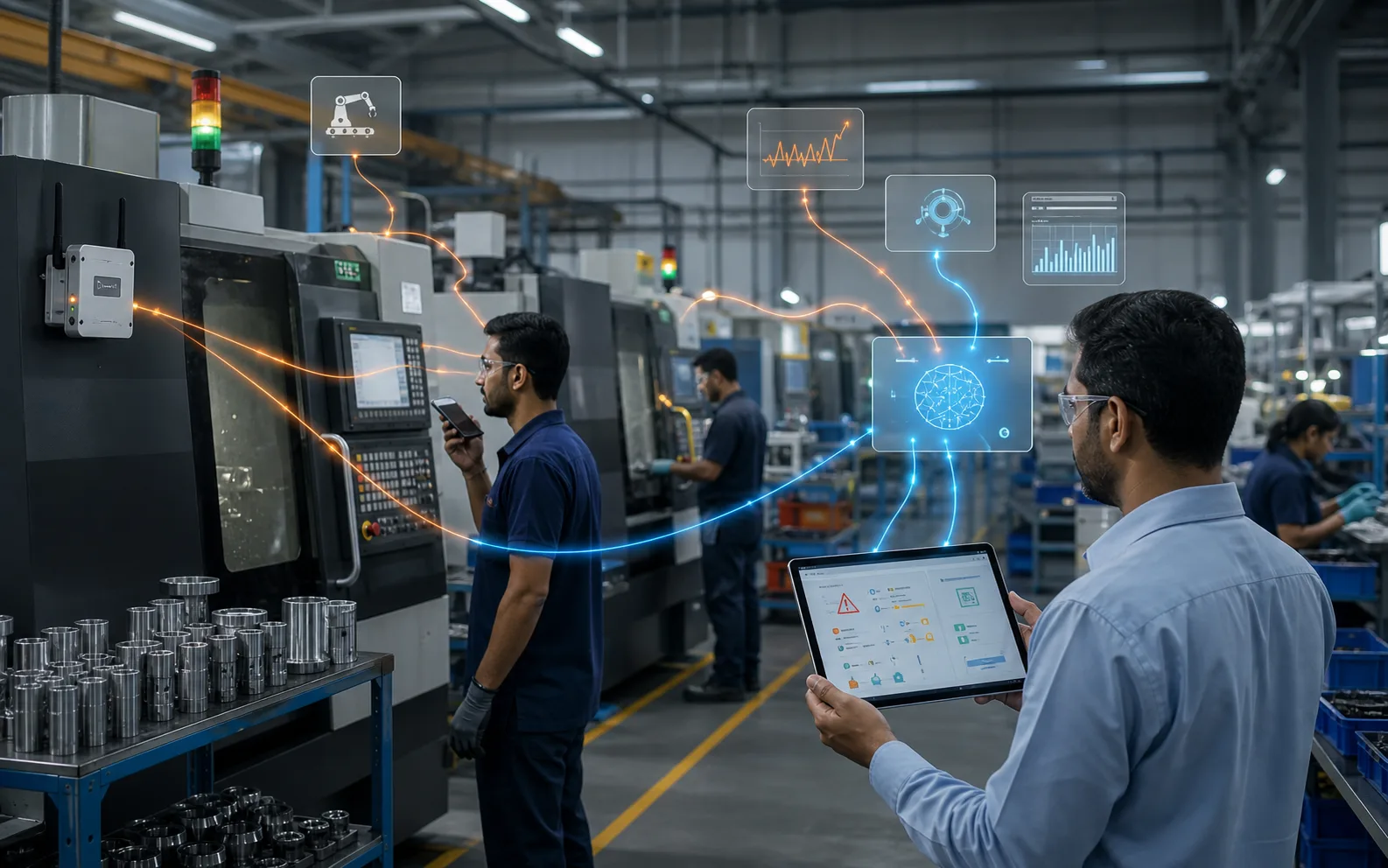
What Should I Ask Before Buying a Manufacturing AI Tool?
Before buying a manufacturing AI tool, ask whether it solves a real operational problem, works with your data, fits your workflows, protects your information, and produces measurable outcomes.
A good AI tool should survive practical questions. If a vendor can only show a polished demo but cannot explain implementation, data needs, support, or ROI, the risk is high.
Buying AI is not about choosing the most advanced promise. It is about choosing the tool your factory can actually use.
What Problem Does It Solve?
Start with the use case. Does the tool reduce downtime, improve planning, detect defects, forecast inventory, prepare reports, or support customer updates?
If the problem is vague, the value will be vague.
What Data Does It Need?
Ask exactly what data is required and where it will come from. Does the tool need ERP data, machine data, maintenance logs, quality records, sales orders, purchase history, or manual inputs?
Also ask what happens if the data is incomplete.
Can It Integrate With Existing Systems?
AI works best when connected to real workflows. Ask whether the tool can integrate with ERP, production systems, inventory records, purchase data, quality records, or dashboards.
Disconnected AI often becomes another isolated tool.
How Explainable Are the Recommendations?
If the AI recommends action, can users see why? Does it show supporting data, confidence, source records, or patterns?
Explainability builds trust and supports accountability.
What Security Controls Are Included?
Ask about access control, data storage, encryption, retention, audit logs, and whether your data is used to train shared models.
Manufacturing data is sensitive and should be protected.
How Will ROI Be Measured?
Ask the vendor how success will be measured. Strong answers include downtime reduction, reporting time saved, stockout reduction, scrap reduction, delivery improvement, or user adoption.
Avoid vague answers like “better efficiency” without metrics.
What Support Is Available?
Ask about onboarding, training, issue resolution, workflow changes, and continuous improvement. AI needs support after launch, not only during sales.
Where AICAN Optiwise Fits
AICAN Optiwise helps manufacturers evaluate AI through the lens of connected operations: production, inventory, purchase, sales, finance, and reporting. This makes it easier to judge whether an AI tool can work inside real business workflows.
AICAN supports practical technology decisions focused on measurable outcomes. Learn more at About AICAN.
Founder’s Note
The best buying question is simple: will this tool help our people make better decisions with less friction?
If the answer is not clear after a pilot, the tool is not ready for your factory.
FAQ
Should I buy AI before cleaning data?
You can explore AI, but serious implementation needs usable data for the chosen use case.
What is the most important vendor question?
Ask for proof that the tool works with real manufacturing data and workflows like yours.
Should I demand a pilot?
Yes. A pilot reduces risk and creates evidence before scaling.
What security question matters most?
Ask who can access your data and whether it is used to train shared models.
Final Thought
Buy manufacturing AI with operational discipline. Ask practical questions, test with real data, and measure value before expanding.

Related Posts
Is AI Worth the Investment for My Factory?
Learn how to decide if AI is worth the investment for your factory by evaluating use cases, data readiness, costs, risks, ROI, and operational impact.
13 Jun 2026Read more →Manufacturing AI Mistakes to Avoid Before You Start
List manufacturing AI mistakes and controls for unclear use case, messy data, unsafe automation, no owner, weak security and unreviewed recommendations.
13 Jun 2026Read more →What's the Difference Between AI and Regular Automation?
Understand the difference between AI and regular automation in manufacturing, with practical examples for workflows, decisions, alerts, and predictive operations.
13 Jun 2026Read more →What Are the Risks of Using AI in Manufacturing?
Understand the risks of AI in manufacturing, including bad data, wrong recommendations, safety issues, security, job fear, over-automation, and implementation failure.
13 Jun 2026Read more →