
Real-Time Production Monitoring Systems
Learn how real-time production monitoring systems help manufacturers track output, WIP, downtime, quality, machine status, and dispatch risk with AI support.
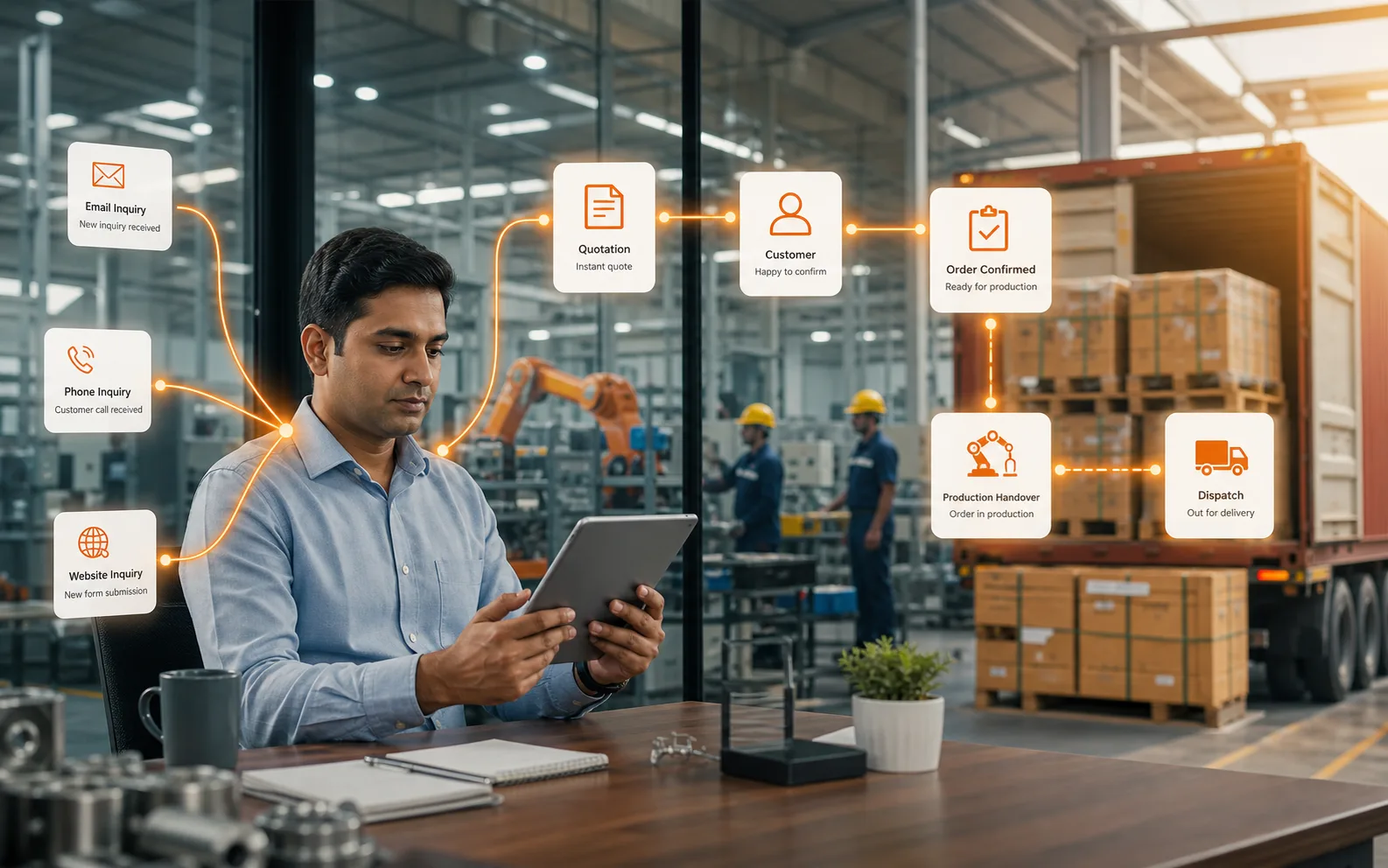
Real-Time Production Monitoring Systems
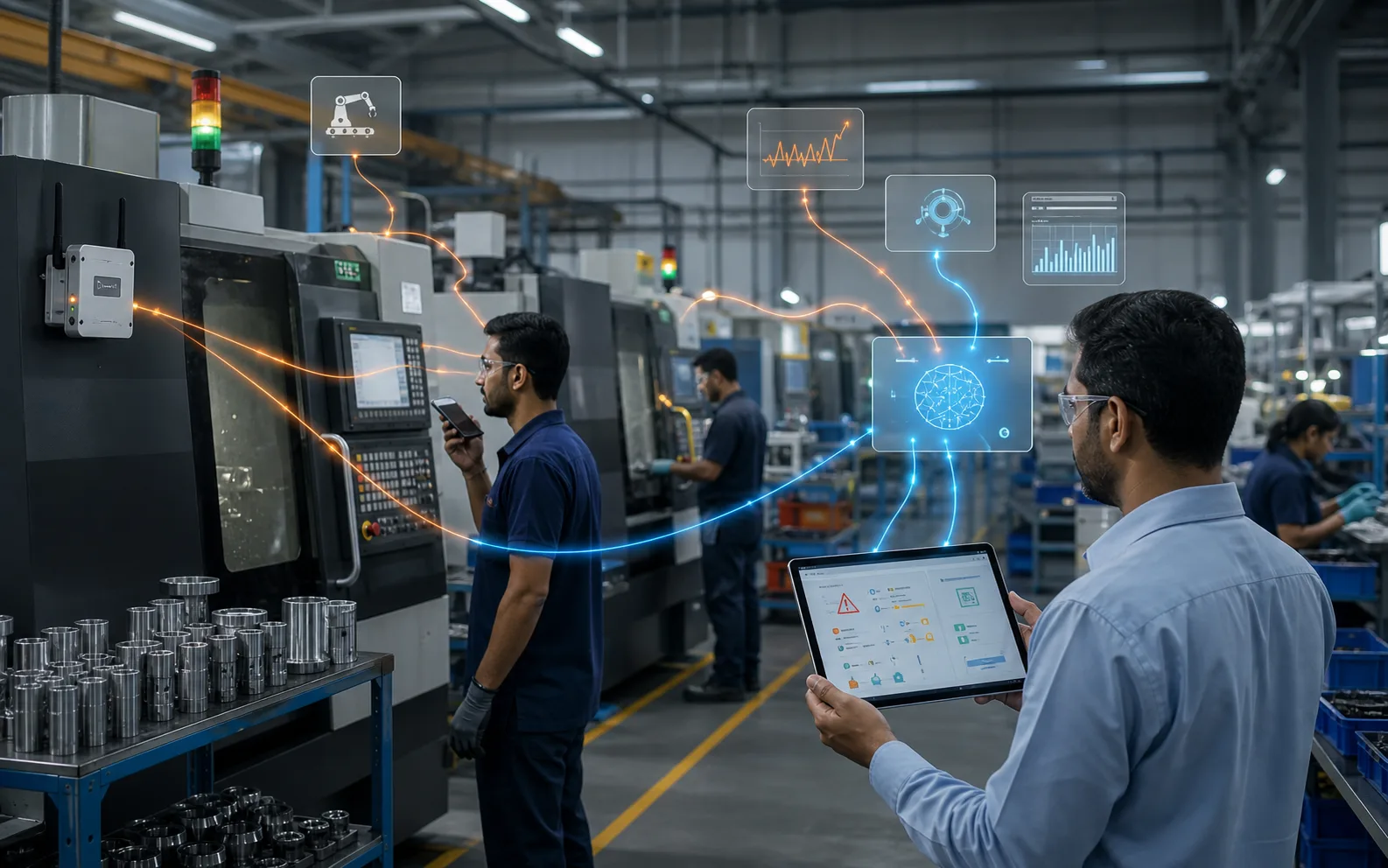
A real-time production monitoring system helps manufacturers see what is happening on the shopfloor as work happens. Instead of waiting for end-of-day updates, managers can track production output, WIP, downtime, quality issues, and delays during the shift.
When AI is added, the system can do more than display data. It can highlight risks, summarize exceptions, and help teams act faster.
Why Real-Time Monitoring Matters
Delayed information creates delayed decisions. If a material shortage is discovered after the line stops, the loss has already started. If quality rejection is reviewed only at the end of the day, rework may already be high.
Real-time monitoring helps teams respond while there is still time.
What Real-Time Production Monitoring Tracks
A good system can track:
- Work order status
- Planned vs actual output
- WIP
- Machine status
- Downtime
- Operator entries
- Quality checks
- Rejection
- Material consumption
- Shift performance
- Dispatch readiness
This gives production teams a live operating view.
How Data Is Captured
Data may come from:
- Operator screens
- Barcode scans
- ERP entries
- IoT sensors
- Machine signals
- Quality forms
- Weighing scales
- PLC integrations
- Mobile apps
Not every factory needs every source on day one. Start with the most important workflow.
What AI Adds
AI can help identify:
- Jobs likely to be delayed
- Output below trend
- Repeated downtime reasons
- Quality issues increasing
- Material shortages affecting production
- Bottlenecks
- Shift-level exceptions
It can also summarize daily production performance for managers.
Real-Time Monitoring Is Not Surveillance
A good monitoring system should improve coordination, not create fear. Teams should understand what is being tracked and why.
The purpose is better production flow, not blaming people for every variation.
Implementation Tips
Start with one line, one process, or one product family. Define what you want to track and who will act on alerts.
Avoid too many dashboards. Focus on actionable information.
Where AICAN Optiwise Fits
AICAN Optiwise connects production, shopfloor, inventory, quality, dispatch, and reports in one AI-native manufacturing operating system. Real-time monitoring becomes more valuable when it links with purchase, material readiness, quality status, and dispatch commitments.
Learn more at AICAN Optiwise and About AICAN.
Founder’s Note
AICAN’s belief is that manufacturers should not have to wait until the end of the day to know what happened. By then, many decisions are already late.
Optiwise is built to bring live operational visibility to MSME manufacturers so teams can act during the shift, not after the loss is recorded.
FAQ
What is real-time production monitoring?
It is tracking production status, output, downtime, WIP, and quality as work happens.
Does real-time monitoring require IoT?
Not always. It can start with operator entries, barcode scans, and ERP updates.
What does AI add to monitoring?
AI highlights risks, summarizes exceptions, and identifies patterns.
Can small factories use real-time monitoring?
Yes. They can start with one production line or workflow.
What is the biggest benefit?
Faster visibility into delays, downtime, quality issues, and material readiness.
Final Thought
Real-time production monitoring helps manufacturers move from delayed reporting to active control. AI makes that control smarter by showing what needs attention first.
Next step: Explore AICAN Optiwise if your factory needs real-time production visibility connected with ERP and AI workflows.

Related Posts
Is AI Worth the Investment for My Factory?
Learn how to decide if AI is worth the investment for your factory by evaluating use cases, data readiness, costs, risks, ROI, and operational impact.
13 Jun 2026Read more →Manufacturing AI Mistakes to Avoid Before You Start
List manufacturing AI mistakes and controls for unclear use case, messy data, unsafe automation, no owner, weak security and unreviewed recommendations.
13 Jun 2026Read more →What's the Difference Between AI and Regular Automation?
Understand the difference between AI and regular automation in manufacturing, with practical examples for workflows, decisions, alerts, and predictive operations.
13 Jun 2026Read more →What Are the Risks of Using AI in Manufacturing?
Understand the risks of AI in manufacturing, including bad data, wrong recommendations, safety issues, security, job fear, over-automation, and implementation failure.
13 Jun 2026Read more →