
How to Reduce Machine Downtime Using AI
Learn how AI can reduce machine downtime through failure pattern detection, maintenance history, spare planning, production impact analysis, and predictive alerts.
How to Reduce Machine Downtime Using AI
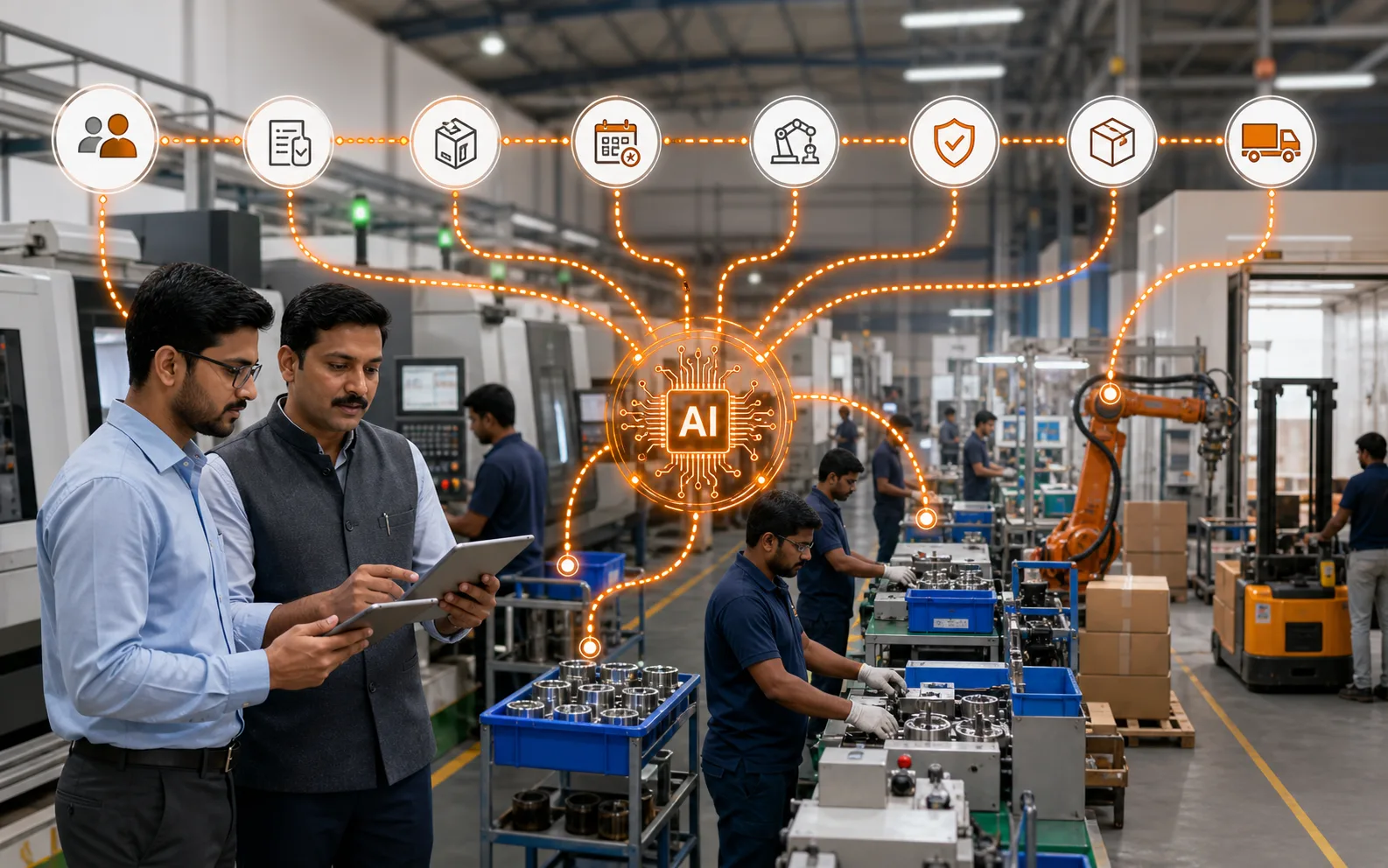
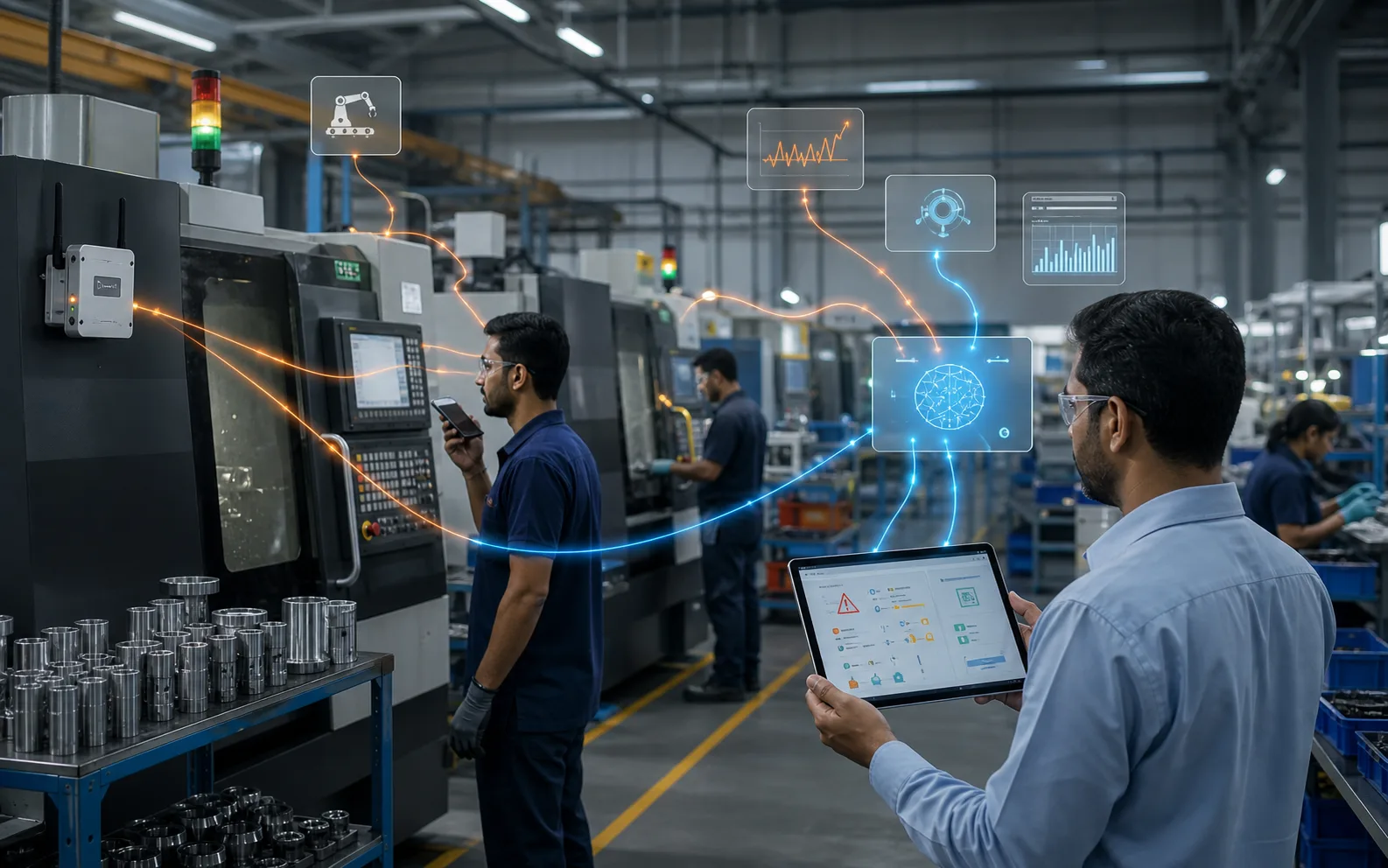
AI can help reduce machine downtime by identifying risk patterns earlier than manual review. It can analyze downtime history, maintenance actions, spare usage, production load, machine behavior, and quality signals to show where failure risk is increasing.
AI does not replace maintenance teams. It gives them better warning and better context.
Downtime reduction depends on action, not alerts alone.
Start With Downtime Data
AI needs downtime history to learn from. Record machine, reason, duration, symptoms, corrective action, spare used, technician, and production impact.
Vague entries like “machine problem” are not enough.
Identify Recurring Failures
AI can group repeated breakdowns and highlight machines with rising stoppage frequency.
This helps teams focus on root causes instead of treating every breakdown as isolated.
Connect Spares With Maintenance
Downtime often extends because spares are unavailable. AI can help identify likely spare requirements based on past failures and usage trends.
Maintenance, stores, and purchase should share visibility.
Prioritize by Production Impact
Not every machine failure has the same impact. AI can help prioritize machines linked to urgent orders, bottleneck processes, or high-value production.
This makes maintenance planning more business-aware.
Use Predictive Alerts Carefully
AI alerts should be reviewed by maintenance teams. A warning is a signal for inspection, not automatic proof of failure.
Human judgment remains essential.
Where AICAN Optiwise Fits
AICAN Optiwise connects production, inventory, purchase, sales, finance, and reporting so downtime risk can be seen with operational impact.
AICAN helps manufacturers build AI-ready visibility for maintenance and production decisions. Learn more at About AICAN.
Founder’s Note
AI is useful in maintenance when it gives teams time. Time to inspect, arrange spares, adjust production, and prevent avoidable stoppage.
That is how alerts become real value.
FAQ
Can AI eliminate machine downtime?
No. But it can reduce avoidable downtime by identifying risks earlier.
What data is needed?
Downtime records, maintenance history, spare usage, machine load, production plans, and sensor data where available.
Do I need sensors?
Sensors help, but useful AI can begin with maintenance and downtime history.
Who should act on AI alerts?
Maintenance teams should review alerts and decide corrective action.
Final Thought
AI reduces machine downtime when it turns history into early warning. Record failures clearly, act on recurring patterns, and connect maintenance with production priorities.

Related Posts
Is AI Worth the Investment for My Factory?
Learn how to decide if AI is worth the investment for your factory by evaluating use cases, data readiness, costs, risks, ROI, and operational impact.
13 Jun 2026Read more →Manufacturing AI Mistakes to Avoid Before You Start
List manufacturing AI mistakes and controls for unclear use case, messy data, unsafe automation, no owner, weak security and unreviewed recommendations.
13 Jun 2026Read more →What's the Difference Between AI and Regular Automation?
Understand the difference between AI and regular automation in manufacturing, with practical examples for workflows, decisions, alerts, and predictive operations.
13 Jun 2026Read more →What Are the Risks of Using AI in Manufacturing?
Understand the risks of AI in manufacturing, including bad data, wrong recommendations, safety issues, security, job fear, over-automation, and implementation failure.
13 Jun 2026Read more →