
Salary Trends in AI-Affected Industries
Understand salary trends in AI-affected industries, including pressure on repetitive roles and higher value for AI fluency, data skills, domain expertise, and judgment.
Salary Trends in AI-Affected Industries
AI affects salaries by changing what work is scarce and valuable. Tasks that become easy to automate may face pricing pressure. Skills that help companies use AI effectively may become more valuable.
The salary story is not simply up or down. It is a shift.
Roles Facing Pressure
Roles may face pressure if they rely heavily on:
- Repetitive reporting
- Basic data entry
- Generic writing
- Routine admin
- Predictable documentation
- Simple analysis
When AI reduces the effort required, employers may pay less for the task.
Roles Gaining Value
Salaries may improve for people who combine:
- AI tool fluency
- Domain expertise
- Data literacy
- Process improvement
- Human judgment
- Customer trust
- Technical troubleshooting
Manufacturing Salary Trends
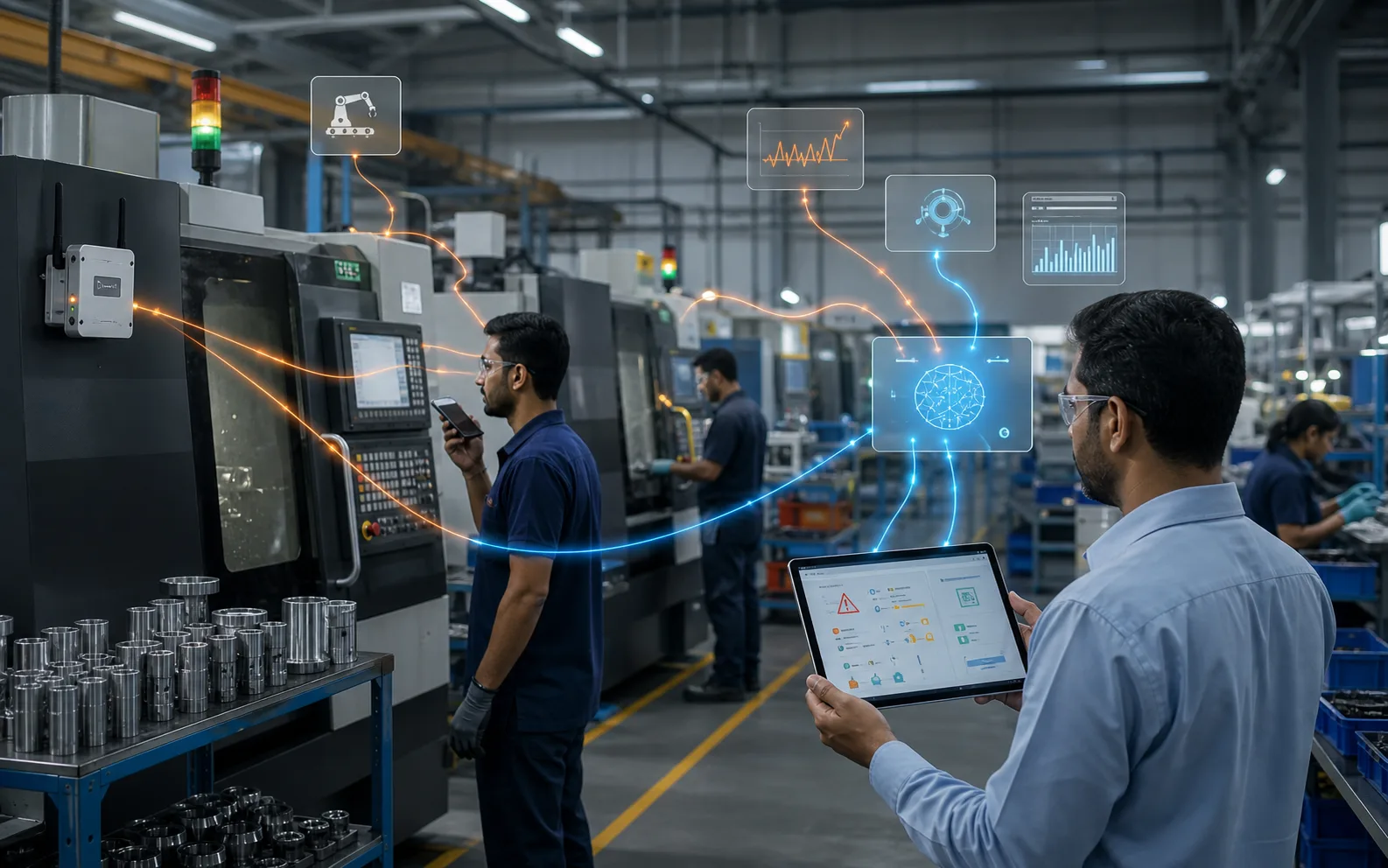
In manufacturing, value may shift toward roles involving automation maintenance, AI-assisted planning, quality analytics, ERP implementation, data quality, and digital operations.
Traditional roles do not disappear overnight, but expectations change.
Location and Industry Matter
Salary trends vary by region, industry maturity, and company size. AI adoption is faster in some sectors than others.
How Workers Can Respond
- Learn AI tools
- Build domain depth
- Track measurable impact
- Move toward decision-support roles
- Improve communication
- Stay adaptable
Where AICAN Optiwise Fits
AICAN Optiwise helps manufacturing teams use AI operationally. Workers who can use AI insights to improve sales, purchase, inventory, production, quality, dispatch, and finance outcomes can strengthen their earning value.
FAQ
Will AI reduce salaries?
It may reduce value for some repetitive tasks, but increase value for AI-enabled roles.
Which skills may increase earning power?
AI fluency, data literacy, domain expertise, judgment, and process improvement.
Will manufacturing salaries change?
Some roles will shift toward digital and AI-assisted skills.
How do I protect compensation?
Show measurable impact and learn skills that increase business value.
Final Thought
AI changes salary power by changing skill scarcity.
Become valuable where AI needs human context and action.

Related Posts
Is AI Worth the Investment for My Factory?
Learn how to decide if AI is worth the investment for your factory by evaluating use cases, data readiness, costs, risks, ROI, and operational impact.
13 Jun 2026Read more →Manufacturing AI Mistakes to Avoid Before You Start
List manufacturing AI mistakes and controls for unclear use case, messy data, unsafe automation, no owner, weak security and unreviewed recommendations.
13 Jun 2026Read more →What's the Difference Between AI and Regular Automation?
Understand the difference between AI and regular automation in manufacturing, with practical examples for workflows, decisions, alerts, and predictive operations.
13 Jun 2026Read more →What Are the Risks of Using AI in Manufacturing?
Understand the risks of AI in manufacturing, including bad data, wrong recommendations, safety issues, security, job fear, over-automation, and implementation failure.
13 Jun 2026Read more →