
How Do I Start Small With AI Without a Huge Investment?
Learn how manufacturers can start small with AI through focused use cases, phased rollout, clean data, practical workflows, and measurable ROI.
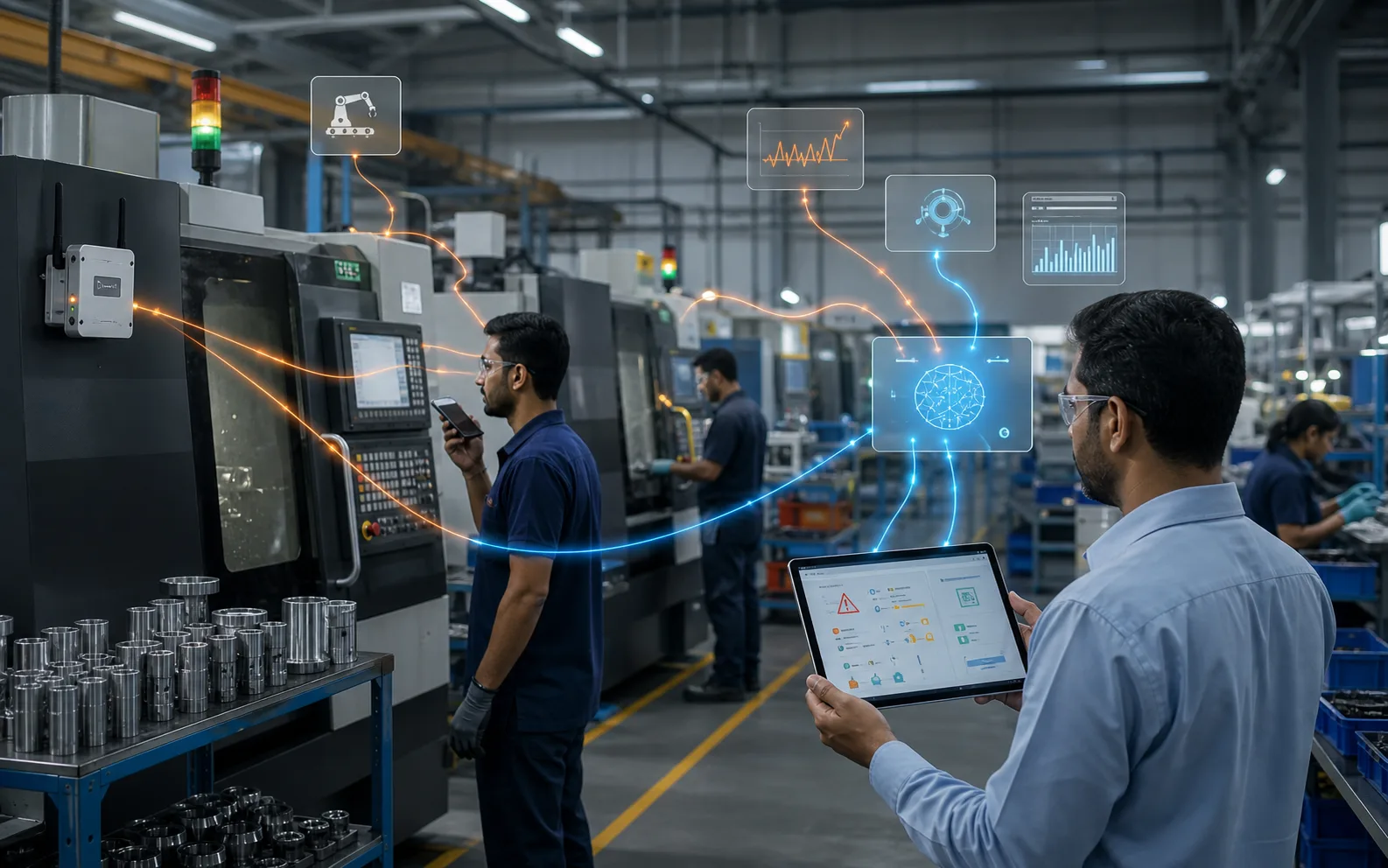
How Do I Start Small With AI Without a Huge Investment?
You can start small with AI by choosing one factory problem, connecting the data required for that problem, training the users involved, and measuring improvement before expanding. AI does not need to begin with robots, sensors everywhere, or a large transformation project.
AI driven factory management can start with practical use cases such as inventory risk, production visibility, purchase follow-up, quality trends, manual reporting, or dispatch alerts. These areas often create daily pressure and can be improved without overbuilding the first phase.
The safest AI investment is focused, measurable, and useful from the beginning.
Choose One Painful Problem
Do not start with a broad goal like "make the factory AI-powered." Start with something specific: reduce stockouts, reduce manual reporting time, improve production status visibility, reduce repeat defects, or identify dispatch risk earlier.
A focused problem keeps cost and complexity under control.
Use Existing Data First
Many factories can begin with data they already have: sales orders, purchase orders, stock records, production entries, quality records, and dispatch schedules. You may need to clean this data, but you may not need expensive new hardware in the first phase.
Use what exists before buying more.
Avoid Over-Customization
Over-customization increases cost, slows rollout, and makes future upgrades harder. Start with standard workflows where possible and customize only where the business need is real.
A simple workflow that users adopt is better than a complex setup that nobody trusts.
Train a Small Team First
Start with the department directly connected to the first use case. If you begin with inventory risk, train stores, purchase, production planning, and supervisors. If you begin with quality trends, train quality and production teams.
This builds internal confidence before wider rollout.
Measure the First Win
Track one or two outcomes: fewer stockouts, faster reporting, fewer manual calls, improved update timeliness, reduced rework, or earlier dispatch risk visibility.
Early proof helps justify the next phase.
Where AICAN Optiwise Fits
AICAN Optiwise helps manufacturers start AI driven factory management through connected workflows across production, inventory, purchase, sales, finance, reporting, IoT readiness, and AI. Because the system covers core operations, factories can begin with focused modules and expand as adoption grows.
Learn more at AICAN Optiwise and About AICAN.
Founder’s Note
AICAN’s founder-led belief is that manufacturers should not be forced into oversized AI projects. Real transformation often begins with one painful workflow made clearer and more reliable.
Small starts are powerful when they are chosen carefully.
FAQ
What is the best first AI use case for a small start?
Inventory risk, production visibility, quality trends, manual reporting, and dispatch alerts are common starting points because they are measurable.
Do I need IoT sensors to start?
Not always. Many AI driven workflows can begin with ERP and operational data before machine sensors are added.
How do I keep the investment low?
Limit the first phase, avoid unnecessary customization, use existing data, train only the relevant users, and measure one clear outcome.
When should I expand?
Expand after users adopt the first workflow and measurable value is visible.
Final Thought
Starting small with AI is not a compromise. It is often the smartest way to build trust, control cost, and prove value before scaling.
Next step: Visit AICAN Optiwise to explore a phased AI driven factory management path for your business.

Related Posts
Is AI Worth the Investment for My Factory?
Learn how to decide if AI is worth the investment for your factory by evaluating use cases, data readiness, costs, risks, ROI, and operational impact.
13 Jun 2026Read more →Manufacturing AI Mistakes to Avoid Before You Start
List manufacturing AI mistakes and controls for unclear use case, messy data, unsafe automation, no owner, weak security and unreviewed recommendations.
13 Jun 2026Read more →What's the Difference Between AI and Regular Automation?
Understand the difference between AI and regular automation in manufacturing, with practical examples for workflows, decisions, alerts, and predictive operations.
13 Jun 2026Read more →What Are the Risks of Using AI in Manufacturing?
Understand the risks of AI in manufacturing, including bad data, wrong recommendations, safety issues, security, job fear, over-automation, and implementation failure.
13 Jun 2026Read more →