
How Do I Use AI to Improve My Manufacturing Processes?
Learn practical ways to use AI to improve manufacturing processes, including planning, inventory, quality, maintenance, documentation, and decision support.

How Do I Use AI to Improve My Manufacturing Processes?
To use AI well in manufacturing, start with a specific process problem. Do not begin with the question, “How do we use AI?” Begin with, “Where are we losing time, money, quality, or visibility?”
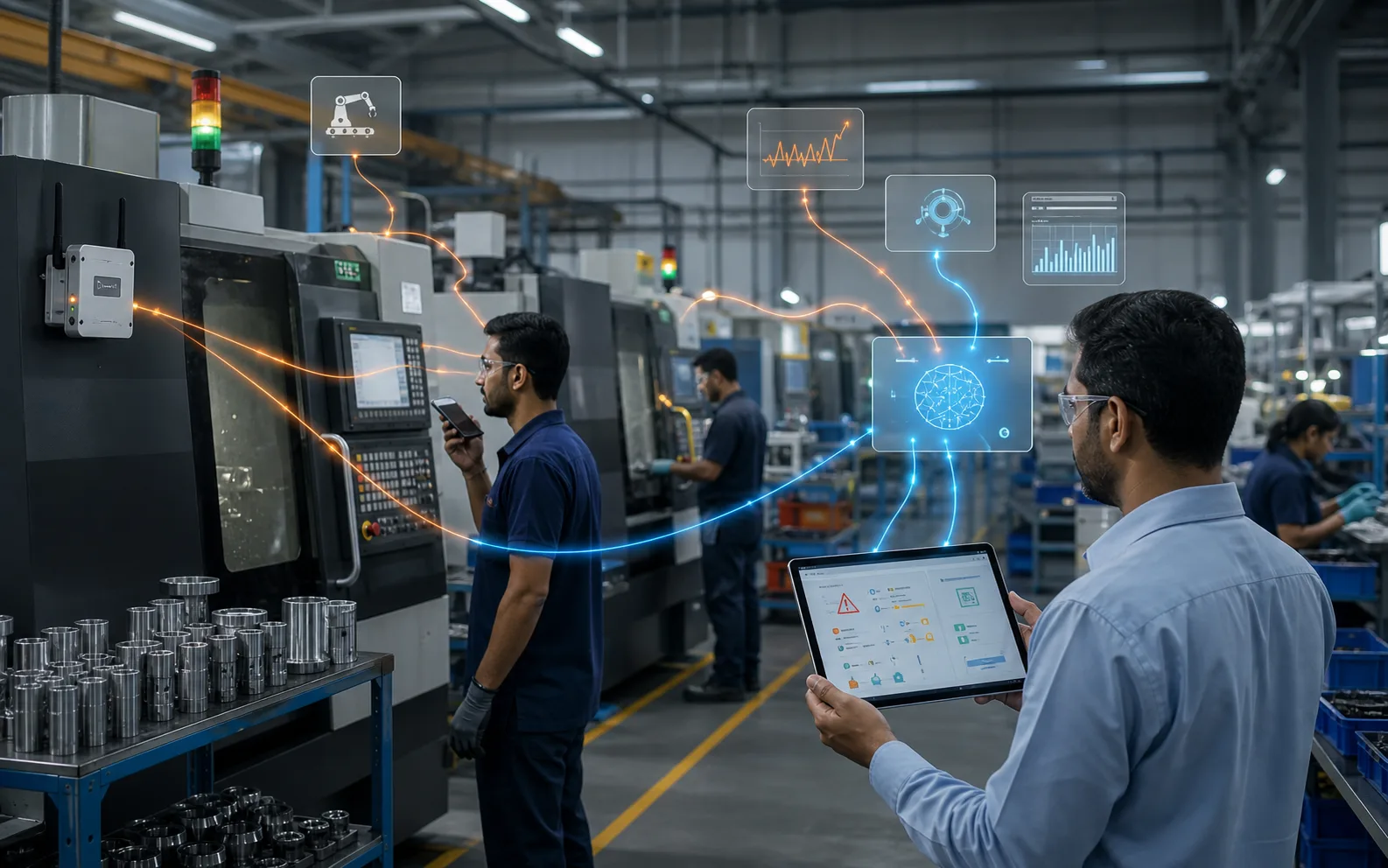
AI works best when it is connected to a clear workflow and reliable data.
Improve Planning
AI can help summarize pending orders, identify delayed jobs, suggest priorities, and highlight material shortages. It can support planners by giving faster visibility into risks.
Improve Inventory Control
AI can analyze stock ageing, abnormal consumption, reorder patterns, and slow-moving items. This helps purchase and stores teams make better decisions.
Improve Quality
AI can summarize rejection reasons, identify repeated defects, compare supplier quality, and suggest areas for investigation. In advanced setups, computer vision can support visual inspection.
Improve Maintenance
AI can analyze machine data, breakdown history, and maintenance logs to flag likely issues before failure.
Improve Documentation
AI can create SOPs, training guides, audit notes, and compliance documents faster, as long as experts review the output.
Where AICAN Optiwise Fits
AICAN Optiwise connects manufacturing data across sales, purchase, inventory, production, quality, dispatch, and finance visibility. AI becomes more powerful when it can work with connected operational context instead of isolated spreadsheets.
FAQ
What is the best first AI use case in manufacturing?
Start with reporting, documentation, planning support, or quality trend analysis.
Do I need perfect data?
No, but cleaner data gives better AI results. Start improving data discipline early.
Can AI run my manufacturing process automatically?
Not at first. Use AI for support and recommendations before automation.
Final Thought
AI improves manufacturing when it helps people see patterns, reduce manual work, and act sooner. Start with one real process pain and build from there.

Related Posts
Is AI Worth the Investment for My Factory?
Learn how to decide if AI is worth the investment for your factory by evaluating use cases, data readiness, costs, risks, ROI, and operational impact.
13 Jun 2026Read more →Manufacturing AI Mistakes to Avoid Before You Start
List manufacturing AI mistakes and controls for unclear use case, messy data, unsafe automation, no owner, weak security and unreviewed recommendations.
13 Jun 2026Read more →What's the Difference Between AI and Regular Automation?
Understand the difference between AI and regular automation in manufacturing, with practical examples for workflows, decisions, alerts, and predictive operations.
13 Jun 2026Read more →What Are the Risks of Using AI in Manufacturing?
Understand the risks of AI in manufacturing, including bad data, wrong recommendations, safety issues, security, job fear, over-automation, and implementation failure.
13 Jun 2026Read more →