
What Manufacturing Tasks Can AI Actually Do Right Now?
See what AI can realistically do in manufacturing today, including reports, SOPs, quality analysis, planning support, maintenance alerts, and data summaries.
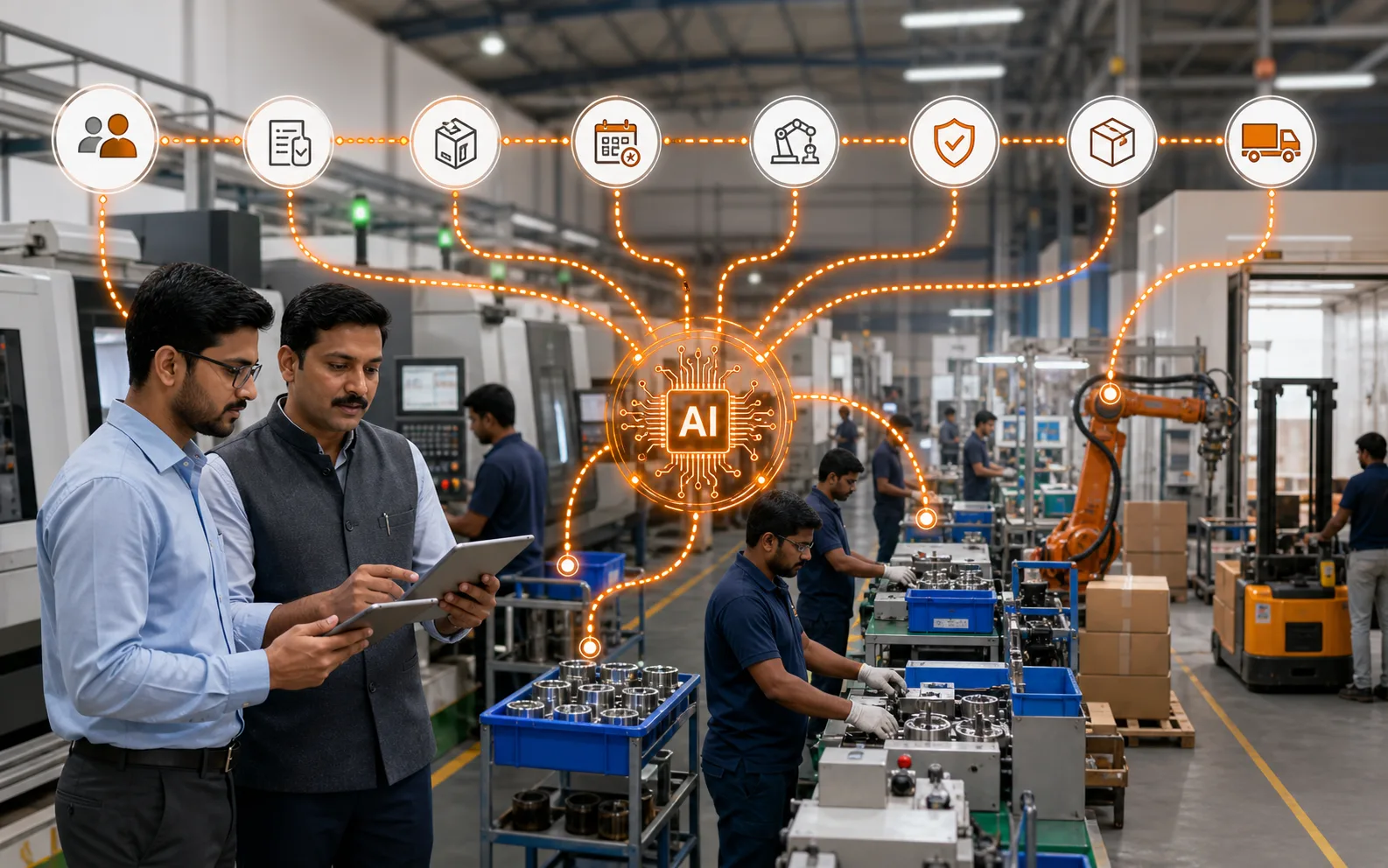
What Manufacturing Tasks Can AI Actually Do Right Now?
AI can already help manufacturers with many practical tasks, but it is important to separate useful reality from hype. AI is not a magic factory manager. It is strongest when helping with information-heavy work, pattern recognition, documentation, and decision support.
Here are tasks AI can do right now.
Summarize Reports
AI can summarize production, inventory, purchase, dispatch, and quality reports. It can help managers understand what changed, what is delayed, and what needs attention.
Draft SOPs and Training Material
AI can turn process notes into SOPs, checklists, onboarding guides, and quizzes. This is one of the easiest and safest use cases.
Analyze Quality Trends
AI can review rejection data, defect reasons, customer complaints, and inspection notes to highlight repeated issues.
Support Production Planning
AI can help planners compare pending orders, material availability, capacity constraints, and delay risks. Human approval is still important.
Predict Maintenance Risks
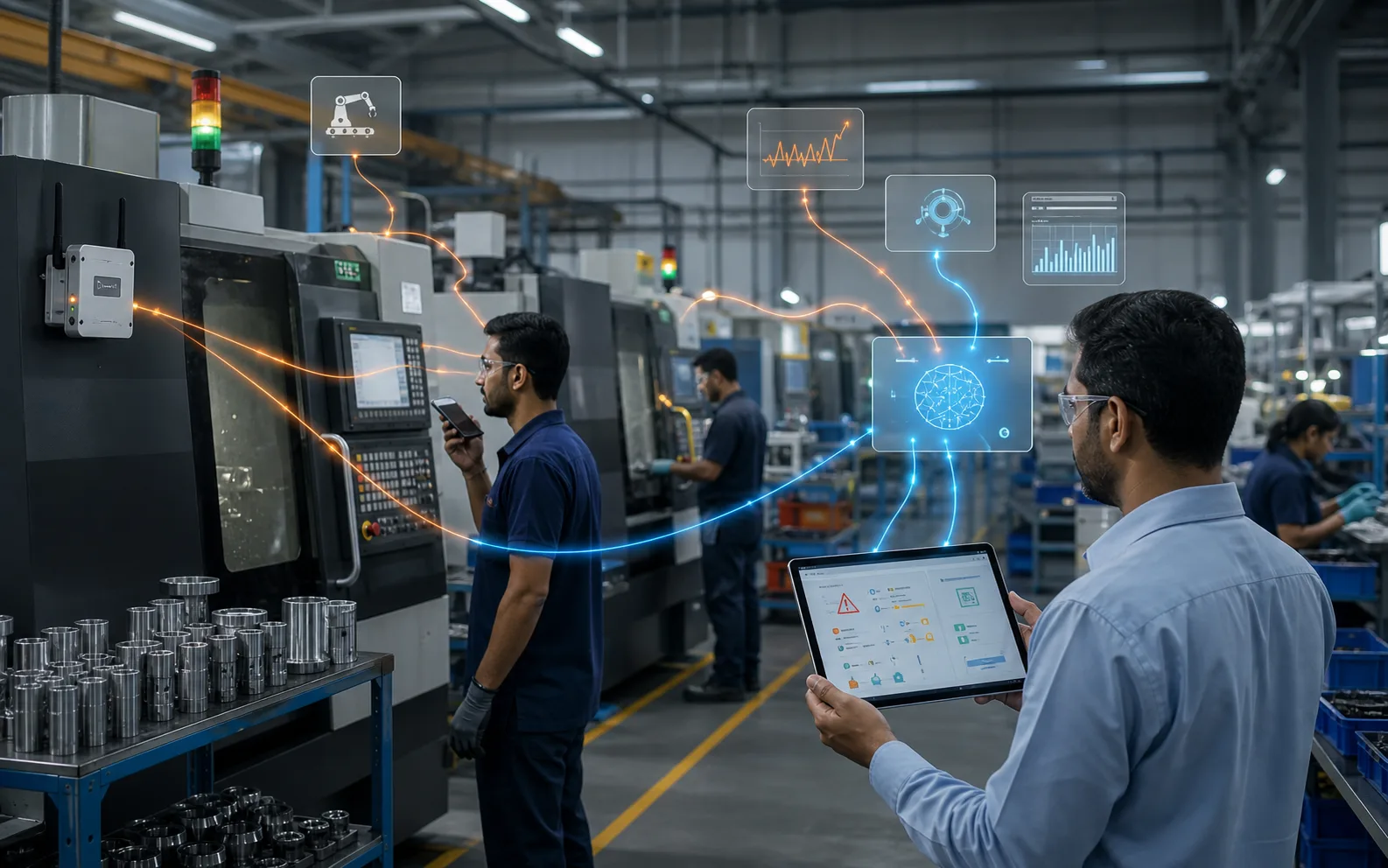
With machine data or maintenance logs, AI can identify unusual patterns and suggest equipment that may need attention.
Answer Operational Questions
When connected to ERP data, AI can help answer questions such as “Which orders are delayed?” or “Which items have high rejection this month?”
Where AICAN Optiwise Fits
AICAN Optiwise is designed to bring AI into manufacturing workflows with connected ERP data. This makes AI more practical because it can support real questions across inventory, production, quality, dispatch, and finance visibility.
FAQ
Can AI make production decisions alone?
It should not at first. AI should support decisions, while people approve important actions.
What AI use case is easiest to start with?
Report summaries, SOP creation, and training material are good starting points.
Does AI need ERP data?
AI can work with documents and spreadsheets, but ERP-connected data makes it far more useful.
Final Thought
AI can do useful work in manufacturing today, but the best results come from practical use cases, clean data, and human review.

Related Posts
Is AI Worth the Investment for My Factory?
Learn how to decide if AI is worth the investment for your factory by evaluating use cases, data readiness, costs, risks, ROI, and operational impact.
13 Jun 2026Read more →Manufacturing AI Mistakes to Avoid Before You Start
List manufacturing AI mistakes and controls for unclear use case, messy data, unsafe automation, no owner, weak security and unreviewed recommendations.
13 Jun 2026Read more →What's the Difference Between AI and Regular Automation?
Understand the difference between AI and regular automation in manufacturing, with practical examples for workflows, decisions, alerts, and predictive operations.
13 Jun 2026Read more →What Are the Risks of Using AI in Manufacturing?
Understand the risks of AI in manufacturing, including bad data, wrong recommendations, safety issues, security, job fear, over-automation, and implementation failure.
13 Jun 2026Read more →