
AI for Preventive Maintenance Scheduling
Learn how AI improves preventive maintenance scheduling by using runtime, downtime history, machine risk, spare planning, production schedules, and maintenance priorities.
AI for Preventive Maintenance Scheduling
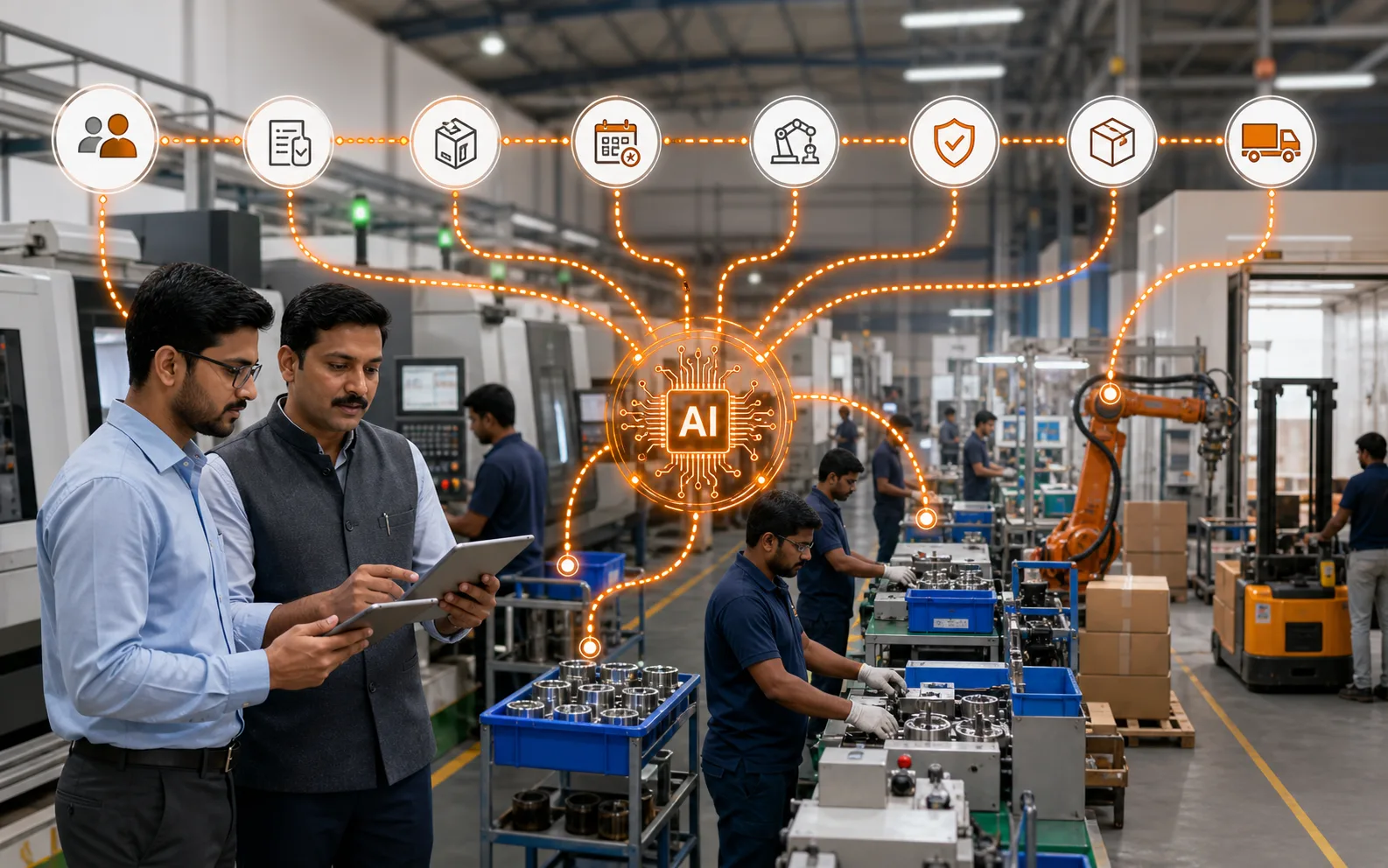
AI improves preventive maintenance scheduling by helping manufacturers decide when maintenance should happen, which machines need attention first, and how maintenance affects production plans.
Traditional preventive maintenance often follows fixed schedules. AI can make those schedules smarter by using real equipment and production data.
Preventive Maintenance vs Predictive Maintenance
Preventive maintenance is planned maintenance based on time, usage, or schedule. For example, inspect a machine every month or replace a part after a fixed number of hours.
Predictive maintenance uses data to estimate when failure may happen.
AI can support both. It can improve preventive schedules and add predictive signals where data is available.
Why Fixed Schedules Are Not Always Enough
Fixed schedules are useful, but they can be inefficient.
A machine may be maintained too early, wasting time and parts. Another machine may fail before its scheduled service because it was overloaded or running under harsh conditions.
AI helps by comparing the schedule with actual machine behavior.
Data AI Can Use
AI can improve maintenance scheduling using:
- Machine runtime
- Downtime history
- Maintenance records
- Spare replacement history
- Vibration data
- Temperature data
- Energy usage
- Alarm history
- Production load
- Operator notes
- Quality issues linked to machines
This helps maintenance teams prioritize based on risk.
Connecting Maintenance With Production
Maintenance cannot be planned in isolation. A machine may need service, but production may also have urgent orders.
AI can help compare machine risk with production schedules and dispatch commitments. This helps teams choose the least disruptive maintenance window.
Spare Planning
AI can also help identify which spares are needed for upcoming maintenance and which parts are frequently used.
This reduces the chance of scheduling maintenance and then discovering that a spare is unavailable.
Reducing Emergency Maintenance
Better preventive scheduling reduces emergency breakdowns. That saves money through lower downtime, fewer urgent purchases, less overtime, and better production reliability.
Human Review Still Matters
AI can recommend maintenance timing, but maintenance engineers should review the machine condition and production context.
AI should support decisions, not blindly control them.
Where AICAN Optiwise Fits
AICAN Optiwise connects production, shopfloor, inventory, purchase, quality, dispatch, and AI workflows. Preventive maintenance scheduling becomes stronger when maintenance is connected with spare availability, production plans, and dispatch impact.
Learn more at AICAN Optiwise and About AICAN.
Founder’s Note
AICAN’s view is that maintenance planning should be connected to the rest of the factory. A maintenance decision affects production, inventory, purchase, and customer commitments.
Optiwise is built to bring those signals together so AI can help teams plan maintenance with context.
FAQ
Can AI create preventive maintenance schedules automatically?
AI can suggest schedules, but maintenance teams should review and approve them.
What data is needed?
Runtime, downtime, maintenance history, spare usage, alarms, and production schedules are useful.
Is preventive maintenance different from predictive maintenance?
Yes. Preventive is planned by schedule or usage. Predictive uses data to estimate failure risk.
Can small manufacturers use AI for maintenance scheduling?
Yes, starting with critical machines and basic downtime history.
Does AI reduce maintenance cost?
It can reduce emergency repairs, downtime, overtime, and spare shortages.
Final Thought
AI makes preventive maintenance scheduling smarter by connecting machine risk with production reality. Better timing means fewer surprises and less disruption.
Next step: Explore AICAN Optiwise if your factory wants maintenance planning connected with production and inventory visibility.

Related Posts
How Sensors Help With Quality Control in Manufacturing
Explain quality-control sensors through measured property, tolerance, calibration evidence, sampling, false alerts and human disposition.
11 Jun 2026Read more →
Track Quality Issues in ERP: Inspection to Disposition
Follow an inspection issue through stock hold, approved rework or scrap, quantity reconciliation and corrective-action checks, with a 50-part example.
28 May 2026Read more →How Can IoT Improve My Quality Control Process?
Learn how IoT improves quality control by connecting inspection data, batch traceability, machine conditions, process parameters, and corrective action.
13 May 2026Read more →Predictive Maintenance Software: A Growing Manufacturing Tech Career
Learn why predictive maintenance software is creating manufacturing tech careers in IoT, analytics, AI, machine data, and ERP-connected operations.
3 May 2026Read more →