
How AI Can Help with Quality Control in Production
Learn how AI supports quality control in production planning by linking schedules, inspection status, defect trends, batch risk, and delivery commitments.

How AI Can Help with Quality Control in Production
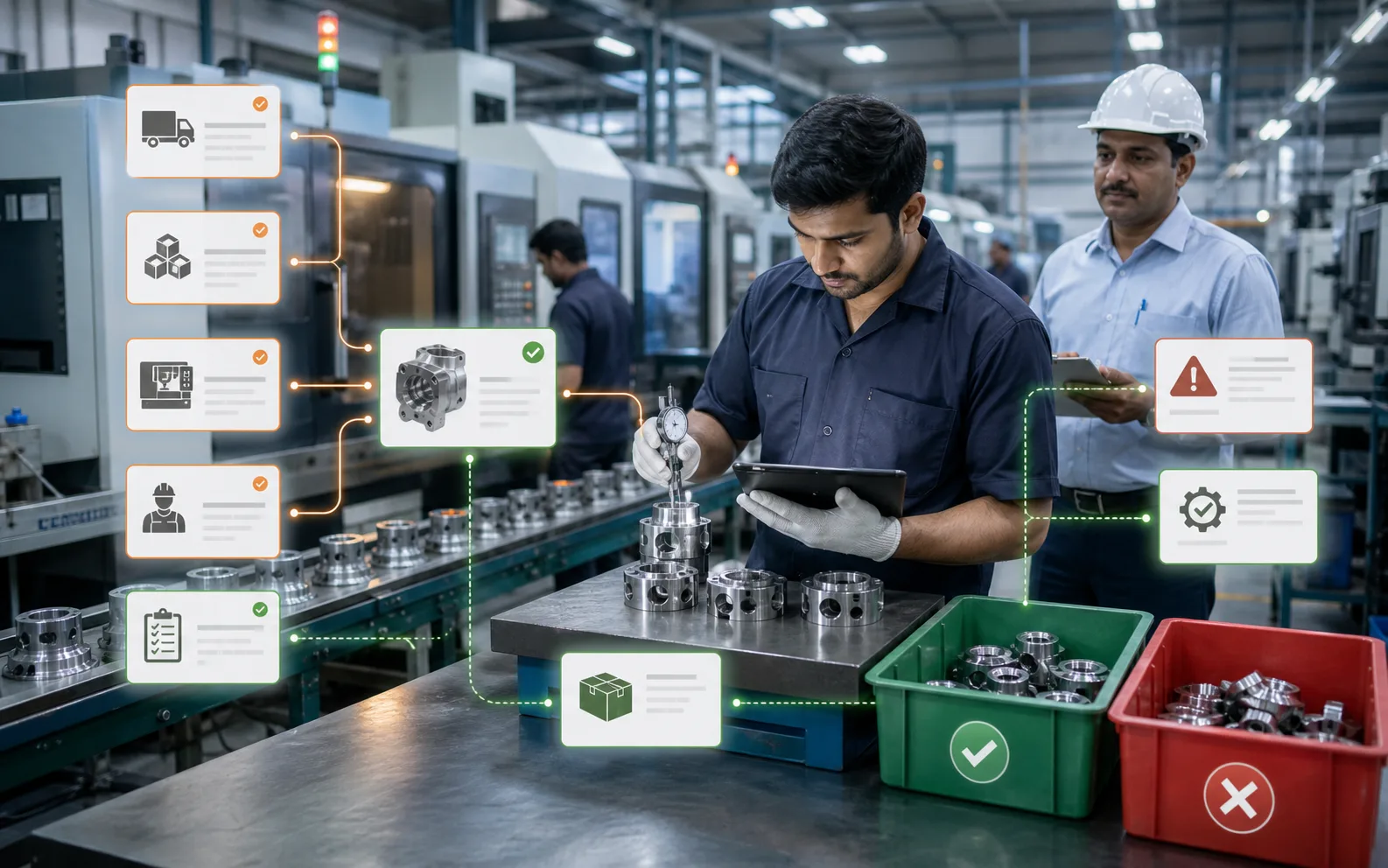
AI can help with quality control in production by connecting quality signals to planning decisions. In many factories, production planning and quality control are treated separately. The planner creates a schedule, and quality issues appear later as delays, rework, holds, or customer complaints. AI helps bring quality risk into the planning conversation earlier.
AI for production planning can show which batches are on hold, which products have repeat defect trends, which suppliers create quality risk, and which orders may miss dispatch because inspection is pending. This helps planners create schedules that reflect quality reality.
Quality should not be discovered after the plan is already broken.
Quality Holds and Schedule Risk
If a batch is waiting for inspection or has failed a quality check, the production and dispatch plan must reflect that. AI can flag orders where quality status threatens delivery.
This prevents planners from assuming material is ready when it is not actually releasable.
Defect Trend Visibility
AI can analyse defect patterns by product, process, machine, batch, supplier, or shift. Planners can use this information to avoid risky sequencing or prepare extra inspection where needed.
Planning becomes stronger when quality history is visible.
Rework and Capacity Impact
Rework consumes capacity that could have been used for new production. AI can help planners see when rework will affect schedules and delivery dates.
This makes the plan more realistic.
Better Customer Communication
When quality-related delays are visible early, sales and dispatch teams can communicate more honestly. Customers trust early warning more than last-minute explanations.
Where AICAN Optiwise Fits
AICAN Optiwise connects production planning with quality-related workflows, inventory, purchase, sales, finance, reporting, IoT readiness, and AI. This helps manufacturers plan with quality status in view, not as an afterthought.
Explore AICAN Optiwise and About AICAN.
Founder’s Note
AICAN’s founder-led view is that production planning and quality control must talk to each other. AI is valuable when it helps teams prevent quality issues from quietly becoming delivery failures.
A good plan protects both output and customer trust.
FAQ
Can AI prevent quality problems?
AI can identify patterns and risks earlier, but teams must act through inspection, root-cause analysis, and corrective action.
How does quality affect production planning?
Quality holds, defects, rework, and inspection delays can change schedules and dispatch commitments.
What data is needed?
Inspection results, defect reasons, batch records, supplier information, production status, and dispatch dates are useful.
Does AI replace quality inspectors?
No. It supports inspectors and planners with better visibility.
Final Thought
AI helps quality control in production by making quality risk visible before it becomes a delivery problem. Better planning includes quality truth.
Next step: Visit AICAN Optiwise to connect production planning with quality visibility.

Related Posts
How Sensors Help With Quality Control in Manufacturing
Explain quality-control sensors through measured property, tolerance, calibration evidence, sampling, false alerts and human disposition.
11 Jun 2026Read more →Track Quality Issues in ERP: Inspection to Disposition
Follow an inspection issue through stock hold, approved rework or scrap, quantity reconciliation and corrective-action checks, with a 50-part example.
28 May 2026Read more →How Can IoT Improve My Quality Control Process?
Learn how IoT improves quality control by connecting inspection data, batch traceability, machine conditions, process parameters, and corrective action.
13 May 2026Read more →
Predictive Maintenance Software: A Growing Manufacturing Tech Career
Learn why predictive maintenance software is creating manufacturing tech careers in IoT, analytics, AI, machine data, and ERP-connected operations.
3 May 2026Read more →