
AI-Powered Quality Inspection Systems
Learn how AI-powered quality inspection systems work, including defect detection, computer vision, inspection records, quality analytics, and human review.
AI-Powered Quality Inspection Systems
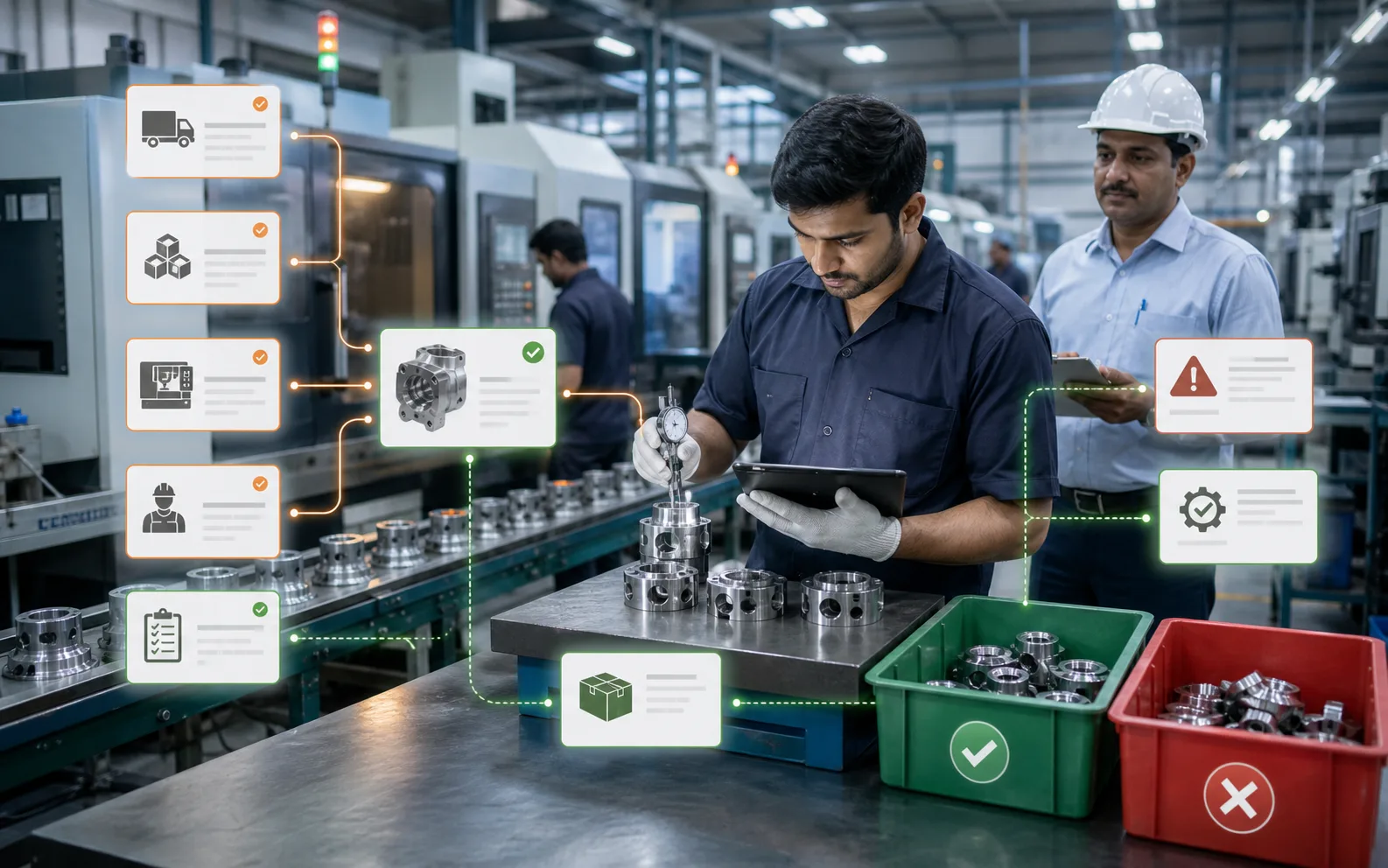
AI-powered quality inspection systems help manufacturers detect defects, analyze rejection patterns, and improve quality decisions. Some systems use computer vision to inspect images. Others analyze inspection records, complaint notes, supplier data, and production history.
The best quality AI does not replace quality teams. It helps them find issues earlier and act with better evidence.
Two Types of AI Quality Inspection
There are two main types.
The first is visual inspection AI. It uses cameras and computer vision to detect visible defects such as scratches, cracks, missing parts, color variation, shape problems, surface issues, or label errors.
The second is quality analytics AI. It analyzes inspection results, rejection reasons, customer complaints, supplier batches, and corrective actions.
Many manufacturers can start with quality analytics before investing in computer vision.
How Computer Vision Inspection Works
A computer vision system needs:
- Cameras
- Controlled lighting
- Consistent image capture
- Good product positioning
- Defect examples
- Labeled images
- Model training or configuration
- Validation by quality experts
The system compares product images against known acceptable and defective patterns.
When Computer Vision Works Best
Computer vision is most useful when defects are visible, repeatable, and can be captured clearly.
It may work well for:
- Surface defects
- Missing components
- Label checks
- Shape variation
- Packaging errors
- Assembly defects
- Color mismatch
It may struggle where defects are internal, subjective, rare, or hard to capture.
Quality Analytics Without Cameras
Manufacturers can use AI to analyze existing quality data.
AI can identify:
- Repeated defect reasons
- Supplier-linked issues
- Product-wise rejection
- Machine-wise defects
- Shift patterns
- Customer complaint themes
- CAPA delays
This is often a practical first step.
Human Review Is Essential
AI can flag defects and patterns, but quality teams must validate findings. False positives and false negatives are possible.
Quality decisions affect customers, compliance, cost, and reputation. Human accountability remains necessary.
Data Needed
Useful data includes:
- Inspection records
- Rejection reasons
- Defect images
- Batch details
- Supplier information
- Machine and process data
- Customer complaints
- Corrective actions
- Product specifications
Better data creates better quality insights.
Where AICAN Optiwise Fits
AICAN Optiwise connects quality with production, purchase, inventory, shopfloor, dispatch, and AI workflows. Quality issues become more useful when linked to supplier batches, production stages, and dispatch impact.
Optiwise helps manufacturers move from isolated inspection records to connected quality visibility.
Learn more at AICAN Optiwise and About AICAN.
Founder’s Note
AICAN’s view is that quality should not be a final gate where problems are discovered too late. Quality data should help the whole factory improve.
Optiwise is built to connect quality with the rest of operations so AI can help teams prevent repeated defects, not just record them.
FAQ
Does AI replace quality inspectors?
No. AI supports inspectors by detecting patterns and assisting inspection, but human review remains essential.
Do I need cameras for AI quality inspection?
Only for visual inspection. Quality analytics can start with inspection and rejection records.
What defects can computer vision detect?
Visible defects such as scratches, missing parts, shape issues, surface problems, and label errors.
Can small manufacturers use AI for quality?
Yes. They can start by analyzing rejection reasons and complaint notes.
What is the biggest risk?
Using AI output without validation. Quality decisions need review.
Final Thought
AI-powered quality inspection works best when it supports quality teams with better visibility, not when it is treated as a replacement for expertise.
Next step: Explore AICAN Optiwise if your factory wants quality insights connected with production, purchase, and dispatch workflows.

Related Posts
How Sensors Help With Quality Control in Manufacturing
Explain quality-control sensors through measured property, tolerance, calibration evidence, sampling, false alerts and human disposition.
11 Jun 2026Read more →
Track Quality Issues in ERP: Inspection to Disposition
Follow an inspection issue through stock hold, approved rework or scrap, quantity reconciliation and corrective-action checks, with a 50-part example.
28 May 2026Read more →How Can IoT Improve My Quality Control Process?
Learn how IoT improves quality control by connecting inspection data, batch traceability, machine conditions, process parameters, and corrective action.
13 May 2026Read more →
Predictive Maintenance Software: A Growing Manufacturing Tech Career
Learn why predictive maintenance software is creating manufacturing tech careers in IoT, analytics, AI, machine data, and ERP-connected operations.
3 May 2026Read more →