
Can AI Help Me Reduce Manufacturing Defects?
Learn how AI can help reduce manufacturing defects through quality data analysis, defect trends, supplier insights, inspection support, and process alerts.
Can AI Help Me Reduce Manufacturing Defects?
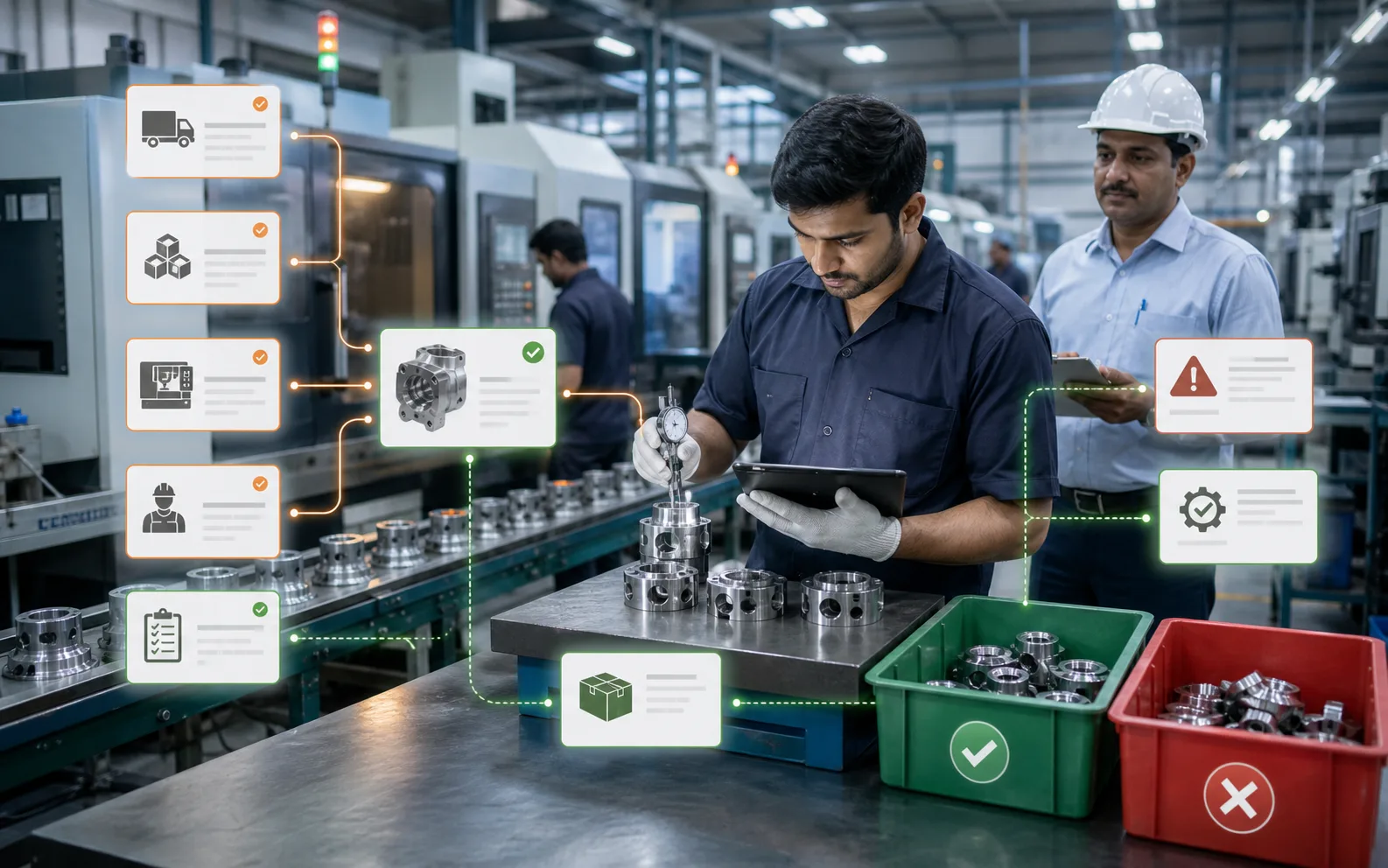
AI can help reduce manufacturing defects, but it needs good quality data and a clear process. It is not enough to say “use AI for quality.” The factory must capture inspection results, rejection reasons, batch details, machine data, supplier information, and corrective actions.
Once that data exists, AI can help find patterns faster than manual review.
Identify Repeated Defect Patterns
AI can analyze rejection records and highlight repeated defects by item, batch, machine, operator, supplier, shift, or process stage. This helps quality teams focus on the biggest causes.
Summarize Quality Notes
Many quality teams write inspection remarks and customer complaint notes. AI can summarize these notes and group similar issues together.
Support Root Cause Analysis
AI can help compare defect history with production conditions, material lots, supplier batches, or machine downtime. It does not replace investigation, but it can point teams in the right direction.
Assist Visual Inspection
In some cases, computer vision can help inspect surface defects, missing components, shape variation, or packaging issues. This requires proper images, lighting, and model training.
Create Better Corrective Actions
AI can help draft corrective action reports, inspection checklists, and training material based on repeated defects.
Where AICAN Optiwise Fits
AICAN Optiwise connects quality data with production, inventory, purchase, and dispatch workflows. AI becomes more useful when defect data is not isolated, because teams can see whether issues come from suppliers, processes, machines, or handling.
FAQ
Can AI eliminate defects completely?
No. AI can help reduce defects by finding patterns and supporting better decisions.
What data is needed?
Inspection results, rejection reasons, product details, batch data, supplier data, and corrective actions are useful.
Is computer vision required?
No. Many quality AI use cases start with existing inspection and rejection data.
Final Thought
AI helps quality teams move from reactive inspection to pattern-based improvement. The better the data, the stronger the defect reduction opportunity.

Related Posts
Is AI Worth the Investment for My Factory?
Learn how to decide if AI is worth the investment for your factory by evaluating use cases, data readiness, costs, risks, ROI, and operational impact.
13 Jun 2026Read more →Manufacturing AI Mistakes to Avoid Before You Start
List manufacturing AI mistakes and controls for unclear use case, messy data, unsafe automation, no owner, weak security and unreviewed recommendations.
13 Jun 2026Read more →What's the Difference Between AI and Regular Automation?
Understand the difference between AI and regular automation in manufacturing, with practical examples for workflows, decisions, alerts, and predictive operations.
13 Jun 2026Read more →What Are the Risks of Using AI in Manufacturing?
Understand the risks of AI in manufacturing, including bad data, wrong recommendations, safety issues, security, job fear, over-automation, and implementation failure.
13 Jun 2026Read more →