
What's the Difference Between AI and Just Better Software?
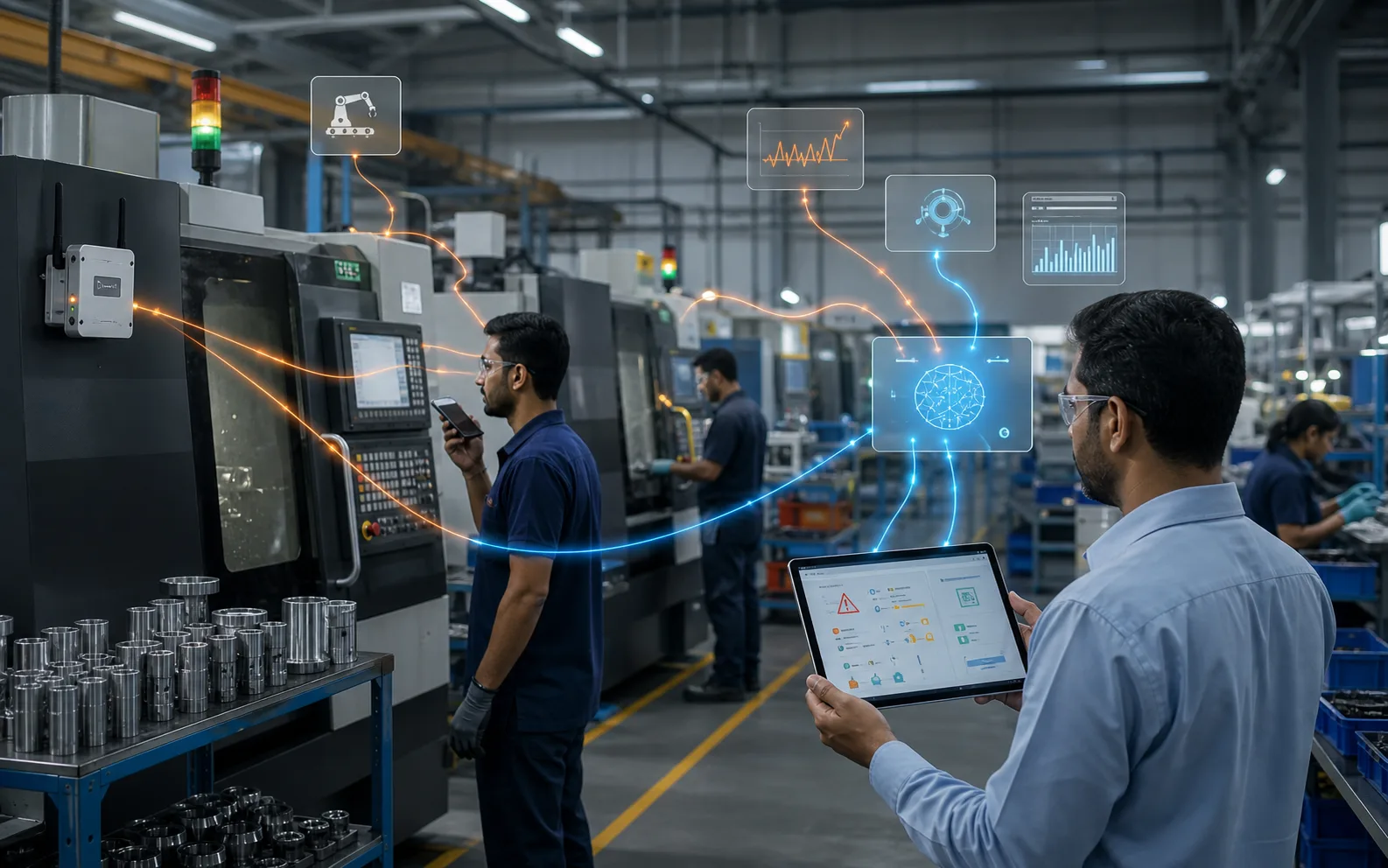
Better software organizes workflows, while AI learns from patterns and supports predictions, recommendations, alerts, and decision-making on the shop floor.
What's the Difference Between AI and Just Better Software?
Better software helps teams record, organize, and access information. AI helps systems recognize patterns, predict risks, recommend actions, and summarize what needs attention.
Both are useful. The difference is that traditional software usually follows rules, while AI can learn from data patterns.
For manufacturers, the best results often come from combining both.
What Better Software Does
Good software improves structure.
It helps manage production orders, inventory, purchase requests, sales orders, finance entries, reports, and approvals. It reduces scattered spreadsheets and creates a common operating view.
What AI Adds
AI can analyze patterns across data.
It can identify likely stockouts, predict machine breakdown risk, flag supplier delays, detect unusual production performance, summarize reports, and recommend next actions.
AICAN Optiwise combines connected manufacturing workflows with AI-native capabilities across production, inventory, purchase, sales, finance, reports, IoT readiness, and AI workflows.
Example on the Shop Floor
Traditional software may record machine downtime.
AI may analyze downtime patterns and identify which machine is likely to cause future delays or which shift has repeated issues.
AI Still Needs Good Software
AI is weak if data is messy.
Better software creates the data discipline AI needs. Without structured workflows, AI recommendations may be unreliable.
Where AICAN Optiwise Fits
AICAN Optiwise is designed to be more than a digital register. It connects operations and adds AI workflows to help manufacturers make faster and smarter decisions.
Learn more at About AICAN.
Founder’s Note
AI should not be used as a fancy label. It should solve problems that normal software cannot solve as easily: prediction, pattern detection, and decision support.
But the foundation is still clean operations.
FAQ
Is AI the same as automation?
No. Automation follows defined steps. AI can analyze patterns and support decisions.
Do manufacturers need both software and AI?
Yes. Software structures data; AI uses that data for insights.
Can AI work without clean data?
Not reliably. Good data discipline is essential.
What is a practical AI use case?
Predictive maintenance, shortage alerts, supplier risk, and production exception summaries.
Final Thought
Better software organizes the factory. AI helps the factory learn from its own data.
Manufacturers need both to move from record-keeping to decision intelligence. That is the direction AICAN is building with Optiwise.

Related Posts
Is AI Worth the Investment for My Factory?
Learn how to decide if AI is worth the investment for your factory by evaluating use cases, data readiness, costs, risks, ROI, and operational impact.
13 Jun 2026Read more →Manufacturing AI Mistakes to Avoid Before You Start
List manufacturing AI mistakes and controls for unclear use case, messy data, unsafe automation, no owner, weak security and unreviewed recommendations.
13 Jun 2026Read more →What's the Difference Between AI and Regular Automation?
Understand the difference between AI and regular automation in manufacturing, with practical examples for workflows, decisions, alerts, and predictive operations.
13 Jun 2026Read more →What Are the Risks of Using AI in Manufacturing?
Understand the risks of AI in manufacturing, including bad data, wrong recommendations, safety issues, security, job fear, over-automation, and implementation failure.
13 Jun 2026Read more →