
Can AI Spot Quality Issues Before They Become Problems?
Learn how AI can help manufacturers spot quality issues early through defect trends, process variation, inspection history, supplier patterns, and production signals.

Can AI Spot Quality Issues Before They Become Problems?
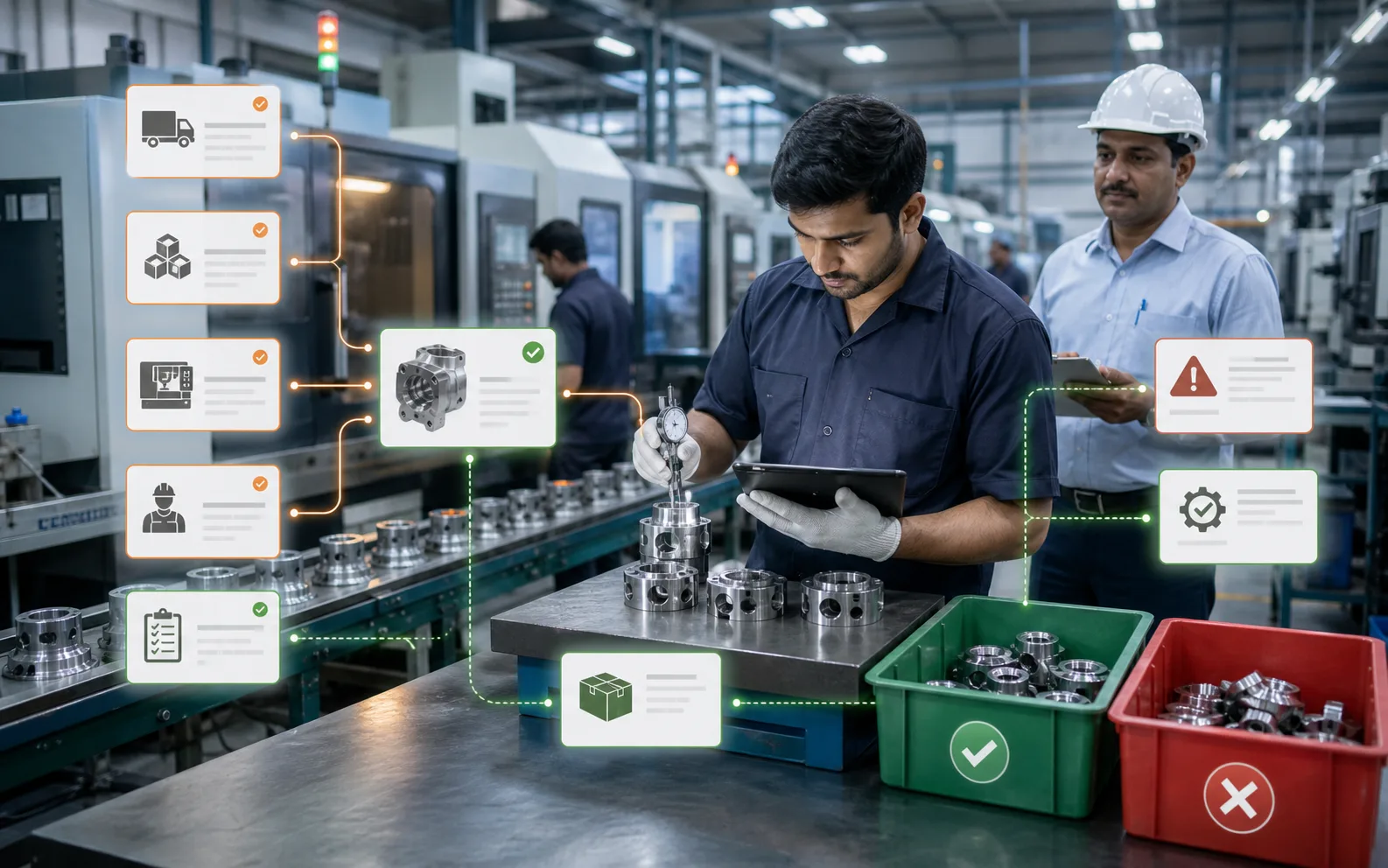
Yes, AI can help spot quality issues before they become larger problems, especially when inspection data, production records, machine information, and material details are captured consistently.
AI is useful because quality problems often begin as small signals: a repeated minor defect, a slight increase in rework, one supplier linked to more variation, or a machine creating inconsistent output. If teams see these signals early, they can intervene before a full batch is affected.
Detect Repeating Defects
AI can analyze defect categories, product types, batches, shifts, machines, and operators to identify repeated patterns.
Instead of waiting for a monthly review, quality teams can see emerging trends sooner.
Connect Quality With Process Conditions
Quality issues may connect to machine settings, material batches, production load, tooling condition, supplier variation, or environmental conditions.
AI can help compare these signals and point teams toward likely areas of investigation.
Supplier and Material Patterns
If certain suppliers, batches, or raw material lots are linked to higher rejection or rework, AI can flag the pattern.
This helps purchase and quality teams work together on supplier improvement.
Prevent Downstream Waste
Early quality alerts reduce rework, scrap, customer complaints, and dispatch delays. The earlier a defect is detected, the cheaper it is to correct.
AI helps by making early warnings more visible.
Humans Still Validate
AI can highlight risk, but quality teams still inspect, validate, and decide corrective action. Manufacturing quality requires accountability.
AI should support the quality process, not replace it.
Where AICAN Optiwise Fits
AICAN Optiwise connects quality-related insights with production, inventory, purchase, sales, finance, and reporting. This helps manufacturers understand not only what defect occurred, but where it affects cost and delivery.
AICAN supports manufacturers who want quality visibility to become earlier, clearer, and more actionable. Learn more at About AICAN.
Founder’s Note
Quality issues rarely become expensive in one moment. They build quietly until someone notices too late.
AI is valuable when it helps teams notice earlier. But the discipline to correct the process still belongs to people.
FAQ
Can AI replace quality inspectors?
No. AI supports inspectors by highlighting patterns and risks, but inspection and validation remain human responsibilities.
What data helps AI detect quality issues?
Inspection results, defect reasons, batch data, machine records, material details, supplier information, and rework history.
Can AI prevent defects completely?
No. It can reduce avoidable issues by improving early detection and root cause visibility.
Where should factories start?
Start with recurring defect categories or high-cost quality problems.
Final Thought
AI can spot quality risk earlier when the factory captures the right signals. Early visibility turns quality control from reaction into prevention.

Related Posts
How Sensors Help With Quality Control in Manufacturing
Explain quality-control sensors through measured property, tolerance, calibration evidence, sampling, false alerts and human disposition.
11 Jun 2026Read more →
Track Quality Issues in ERP: Inspection to Disposition
Follow an inspection issue through stock hold, approved rework or scrap, quantity reconciliation and corrective-action checks, with a 50-part example.
28 May 2026Read more →How Can IoT Improve My Quality Control Process?
Learn how IoT improves quality control by connecting inspection data, batch traceability, machine conditions, process parameters, and corrective action.
13 May 2026Read more →Predictive Maintenance Software: A Growing Manufacturing Tech Career
Learn why predictive maintenance software is creating manufacturing tech careers in IoT, analytics, AI, machine data, and ERP-connected operations.
3 May 2026Read more →