
How Does AI Predict and Prevent Manufacturing Problems?
Learn how AI predicts and prevents manufacturing problems using data patterns, alerts, maintenance signals, inventory risk, quality trends, and workflow visibility.

How Does AI Predict and Prevent Manufacturing Problems?
Many factory problems are not truly sudden. A machine breakdown may follow repeated minor stoppages. A material shortage may follow delayed purchase orders. A quality issue may follow a supplier change or process drift. A dispatch delay may begin days before the customer calls. AI helps manufacturers notice these signals earlier.
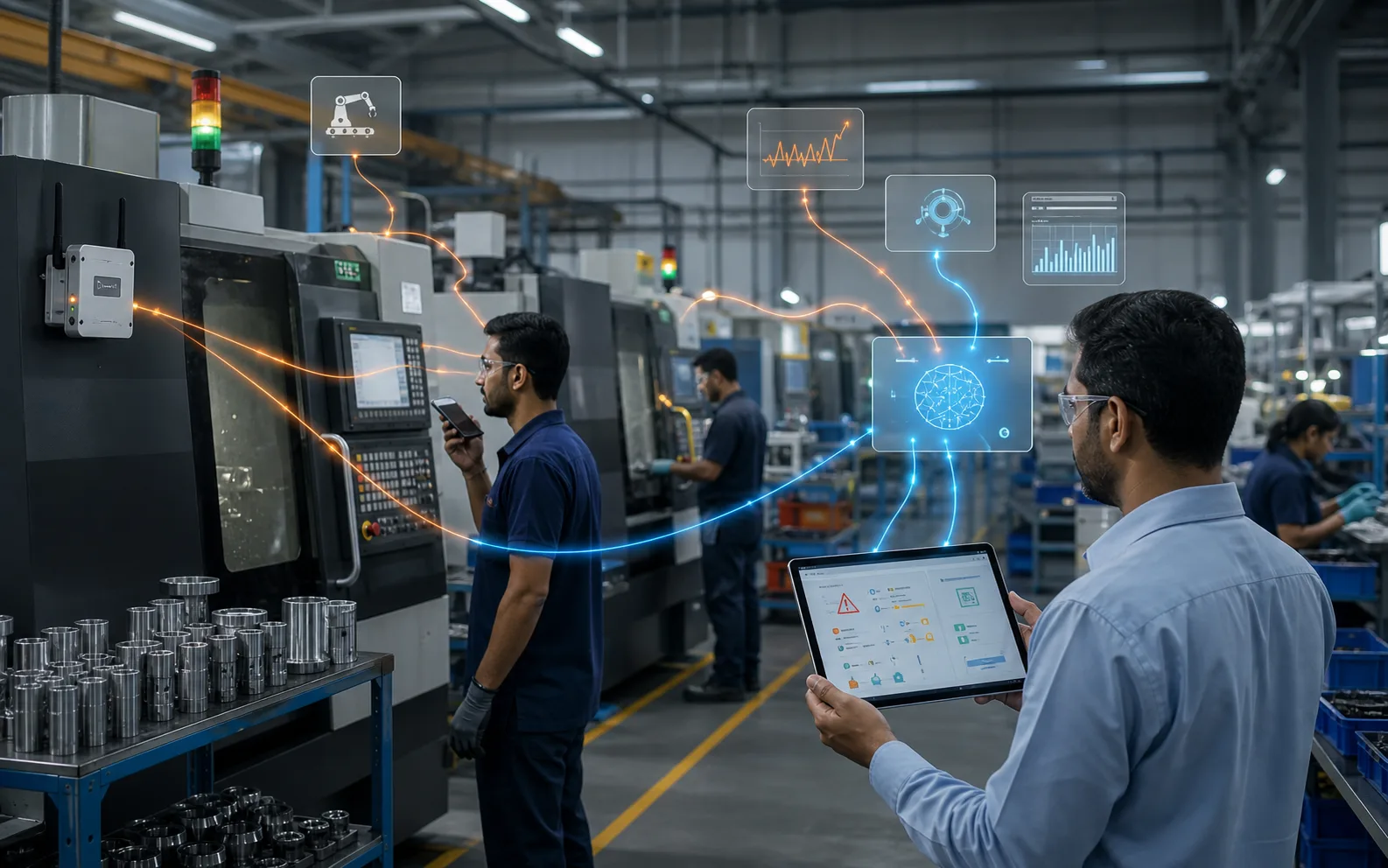
Artificial intelligence in manufacturing predicts problems by studying patterns in operational data. It compares what is happening now with what has happened before, then highlights risk. Prevention happens when the team acts on that risk before the problem becomes expensive.
This is the key point: AI does not prevent problems alone. It gives people earlier warnings and better context so they can prevent problems.
AI Learns From Historical Patterns
Manufacturing creates a large amount of data: production output, machine downtime, material consumption, purchase lead times, quality defects, customer orders, inspection results, and dispatch timelines. AI can analyse this history to identify patterns that humans may miss.
For example, if a certain machine usually fails after a pattern of minor stoppages, AI can flag maintenance risk. If a raw material frequently causes delays because of supplier lead time variation, AI can warn purchase teams earlier. If a product type repeatedly faces rejection after a process stage, quality teams can investigate.
The system becomes more useful as the factory records data consistently.
Predictive Maintenance
Predictive maintenance is one of the most known AI use cases. It uses machine data, downtime records, operating hours, sensor readings where available, and maintenance history to estimate when equipment may need attention.
This helps factories reduce unplanned downtime. Instead of waiting for failure, maintenance teams can plan inspections, spares, and repairs at a better time.
Even without full sensor integration, factories can begin by recording downtime reasons properly and analysing repeat issues.
Inventory and Material Risk Prediction
AI can predict material shortages by comparing current stock, open purchase orders, lead times, production plans, and consumption trends. This helps teams act before production stops.
It can also flag excess inventory risk. If material is not moving, if demand changes, or if purchase quantities are too high, the system can warn management before cash gets blocked.
This gives the factory better control over both continuity and working capital.
Quality Risk Prediction
Quality problems often repeat through patterns. AI can identify relationships between defects and machines, suppliers, batches, operators, shifts, process conditions, or product types.
Early warnings help quality teams inspect more carefully, hold risky batches, or correct process parameters before defects spread.
Order and Dispatch Risk Prediction
AI can compare order due dates, production status, material readiness, inspection progress, packing, and dispatch schedules to identify orders at risk. This helps teams communicate earlier and recover before customer trust is damaged.
For many factories, this is one of the most practical benefits because delayed delivery affects reputation directly.
Where AICAN Optiwise Fits
AICAN Optiwise supports predictive manufacturing by connecting production, inventory, purchase, sales, finance, reporting, IoT readiness, and AI workflows. When these workflows are connected, the system can see relationships between delays, shortages, quality issues, and customer commitments.
Optiwise helps manufacturers move from late reporting to earlier warnings. Learn more at aican.co.in and About AICAN.
Founder’s Note
AICAN’s founder-led belief is that a factory should not have to wait for problems to become visible through loss. The system should help teams see risk while there is still time to act.
That is the real promise of AI in manufacturing: fewer surprises and more controlled execution.
FAQ
How does AI predict manufacturing problems?
AI studies historical and current data to find patterns linked to downtime, shortages, defects, delays, and other risks.
Can AI prevent machine breakdowns?
AI can help predict breakdown risk and support preventive maintenance, but maintenance teams must still inspect, repair, and act on alerts.
What data is needed for prediction?
Useful data includes production records, downtime logs, inventory, purchase orders, quality defects, machine data, and dispatch timelines.
Can small factories use predictive AI?
Yes. They can start with simple risk alerts based on production, inventory, purchase, and downtime records before adding advanced sensors.
Final Thought
AI predicts problems by making weak signals visible early. Prevention happens when teams trust the signal, understand the context, and act before the loss spreads.
Next step: Explore AICAN Optiwise to see how connected workflows can help your factory move from reactive firefighting to early warning.

Related Posts
Is AI Worth the Investment for My Factory?
Learn how to decide if AI is worth the investment for your factory by evaluating use cases, data readiness, costs, risks, ROI, and operational impact.
13 Jun 2026Read more →Manufacturing AI Mistakes to Avoid Before You Start
List manufacturing AI mistakes and controls for unclear use case, messy data, unsafe automation, no owner, weak security and unreviewed recommendations.
13 Jun 2026Read more →What's the Difference Between AI and Regular Automation?
Understand the difference between AI and regular automation in manufacturing, with practical examples for workflows, decisions, alerts, and predictive operations.
13 Jun 2026Read more →What Are the Risks of Using AI in Manufacturing?
Understand the risks of AI in manufacturing, including bad data, wrong recommendations, safety issues, security, job fear, over-automation, and implementation failure.
13 Jun 2026Read more →