
How Does Lean Manufacturing Work With AI?
Lean manufacturing and AI work together by reducing waste, improving visibility, predicting problems, and helping factories act faster with better data.
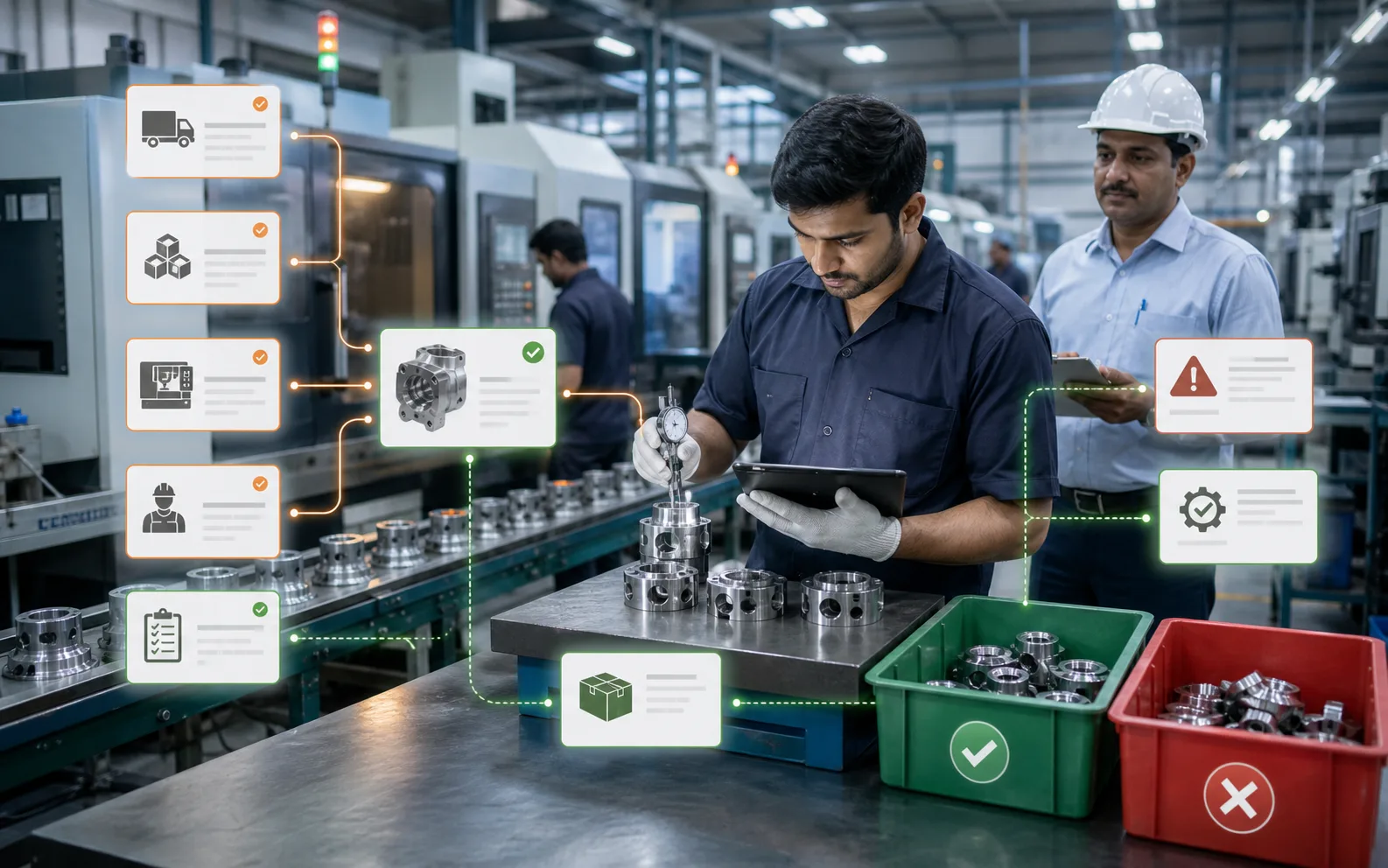
How Does Lean Manufacturing Work With AI?
Lean manufacturing and AI work well together because both focus on improving flow, reducing waste, and making problems visible.
Lean teaches factories to remove waste, standardize work, improve quality, and solve root causes. AI helps by detecting patterns, surfacing exceptions, predicting risks, and giving teams faster visibility into what is happening on the shop floor.
AI does not replace lean thinking. It can strengthen it.
Lean Needs Visibility
Lean improvement depends on seeing waste clearly.
If downtime, defects, waiting time, excess inventory, rework, and delays are hidden in manual reports, improvement becomes slow. AI-supported systems can help identify these issues earlier.
AI Helps Detect Patterns
AI can analyze production data, downtime reasons, quality issues, material shortages, and machine performance.
This helps teams see repeated problems that may not be obvious day to day.
Lean Keeps AI Practical
AI can produce many alerts, but lean thinking helps decide what matters.
A lean team asks: does this alert reduce waste, improve flow, protect quality, or help customers? If not, it may be noise.
AICAN Optiwise supports this connection by linking production, inventory, purchase, sales, finance, reports, IoT readiness, and AI workflows.
AI Can Support Continuous Improvement
AI can help measure improvement projects.
If a factory changes a process, AI-supported dashboards can show whether downtime, defects, output variation, or material delays actually improved.
Lean Still Needs People
Lean is a people-driven system.
AI can show patterns, but teams must investigate root causes, test improvements, and sustain discipline.
Where AICAN Optiwise Fits
AICAN Optiwise helps manufacturers combine lean thinking with connected data. By making production, inventory, purchase, and reporting visible together, Optiwise supports practical continuous improvement.
Learn more at About AICAN.
Founder’s Note
Lean and AI should not compete. Lean gives discipline. AI gives visibility. Together, they help factories move from reaction to improvement.
The strongest manufacturing systems use technology to make better habits easier.
FAQ
Does AI replace lean manufacturing?
No. AI supports lean by improving visibility and pattern detection.
What lean wastes can AI help identify?
Waiting, defects, excess inventory, downtime, rework, overproduction, and unnecessary motion or follow-up.
Do workers still matter in lean AI systems?
Yes. People identify root causes and implement improvements.
What should factories start with?
Start with visible pain points such as downtime, quality issues, material delays, or reporting gaps.
Final Thought
Lean manufacturing works with AI when technology supports disciplined improvement.
AI helps teams see problems earlier. Lean helps teams solve them properly. That is the practical operating model AICAN supports.

Related Posts
How Sensors Help With Quality Control in Manufacturing
Explain quality-control sensors through measured property, tolerance, calibration evidence, sampling, false alerts and human disposition.
11 Jun 2026Read more →
Track Quality Issues in ERP: Inspection to Disposition
Follow an inspection issue through stock hold, approved rework or scrap, quantity reconciliation and corrective-action checks, with a 50-part example.
28 May 2026Read more →How Can IoT Improve My Quality Control Process?
Learn how IoT improves quality control by connecting inspection data, batch traceability, machine conditions, process parameters, and corrective action.
13 May 2026Read more →
Predictive Maintenance Software: A Growing Manufacturing Tech Career
Learn why predictive maintenance software is creating manufacturing tech careers in IoT, analytics, AI, machine data, and ERP-connected operations.
3 May 2026Read more →