
What Happens to Quality Control When AI Takes Over?
Learn how AI changes factory quality control, what humans still own, and how manufacturers can use AI for better inspection, traceability, and prevention.

What Happens to Quality Control When AI Takes Over?
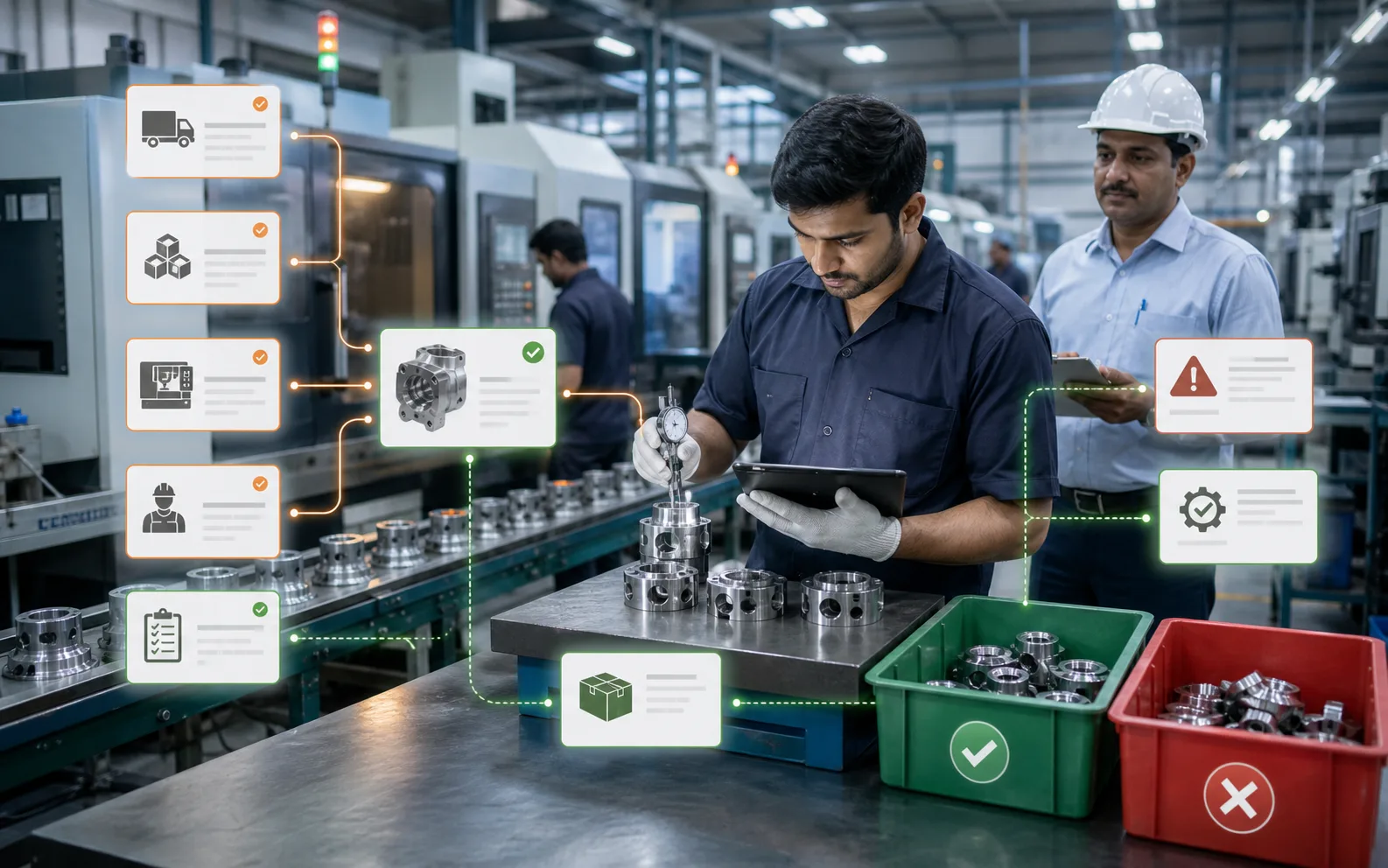
When AI enters quality control, the work should become more preventive, consistent, and traceable. It should not become careless or fully detached from human judgement. In manufacturing, quality is too important to hand over blindly to any system.
AI driven factory management can help quality teams detect defects earlier, identify patterns, standardize inspection data, and connect quality issues to production, material, machine, supplier, and customer context. But people still own verification, root cause, corrective action, and customer accountability.
The best quality control model is not AI alone. It is AI-supported quality management.
AI Improves Detection and Pattern Recognition
AI can identify defect trends across batches, shifts, machines, suppliers, process stages, and product types. It can also support visual inspection where defects are visible and repeatable.
This helps teams move beyond simply recording rejection. They can understand why defects keep happening.
Humans Still Handle Judgement
Quality decisions often involve context. Is a borderline case acceptable? Is the defect cosmetic or functional? Does the customer specification allow tolerance? What corrective action is practical?
AI can support these decisions, but experienced quality professionals remain essential.
Traceability Becomes Stronger
AI is more useful when quality records are connected to batch, material, machine, operator, inspection, and dispatch data. This traceability helps contain issues faster and prevent repeat failures.
Without traceability, quality teams may know what failed but not why.
Avoid Blind Trust
AI quality outputs should be validated. If the system flags defects, misses issues, or shows unusual trends, the team should review and improve the process.
Quality teams should treat AI like a powerful inspection assistant, not an unquestionable authority.
Where AICAN Optiwise Fits
AICAN Optiwise connects quality-related workflows with production, inventory, purchase, sales, finance, reporting, IoT readiness, and AI. This gives manufacturers the context needed to move from inspection to prevention.
Explore aican.co.in and About AICAN to learn more about AICAN’s manufacturing-first approach.
Founder’s Note
AICAN’s founder-led view is that AI should strengthen quality ownership, not weaken it. Better systems should help teams find root causes faster and protect customer trust with more confidence.
Quality is still a human promise, supported by better intelligence.
FAQ
Will AI replace quality inspectors?
AI may reduce repetitive inspection work, but inspectors remain important for verification, judgement, root cause, and corrective action.
Can AI prevent defects?
AI can help identify patterns and risk earlier, allowing teams to prevent repeat defects when they act on insights.
Is AI quality control safe?
It is safer when implemented with validation, human review, traceability, and clear quality ownership.
What data does AI quality need?
Inspection results, defect reasons, batch data, supplier information, machine data, process stages, and corrective actions are useful.
Final Thought
When AI supports quality control properly, factories catch problems earlier and learn faster. The goal is not less accountability. It is stronger quality discipline.
Next step: Explore AICAN Optiwise to see how connected workflows can support AI-ready quality management.

Related Posts
How Sensors Help With Quality Control in Manufacturing
Explain quality-control sensors through measured property, tolerance, calibration evidence, sampling, false alerts and human disposition.
11 Jun 2026Read more →Track Quality Issues in ERP: Inspection to Disposition
Follow an inspection issue through stock hold, approved rework or scrap, quantity reconciliation and corrective-action checks, with a 50-part example.
28 May 2026Read more →How Can IoT Improve My Quality Control Process?
Learn how IoT improves quality control by connecting inspection data, batch traceability, machine conditions, process parameters, and corrective action.
13 May 2026Read more →
Predictive Maintenance Software: A Growing Manufacturing Tech Career
Learn why predictive maintenance software is creating manufacturing tech careers in IoT, analytics, AI, machine data, and ERP-connected operations.
3 May 2026Read more →