
What Are the Top AI Tools for Production Planning?
Learn how to compare top AI tools for production planning by workflow fit, data needs, integrations, scheduling intelligence, ROI, support, and scalability.
What Are the Top AI Tools for Production Planning?
The top AI tools for production planning are not simply the tools with the most features. The best tool for your factory is the one that fits your products, workflows, data, planning complexity, team capability, and growth plans. A tool that works well for a large automotive supplier may not fit a smaller batch manufacturer. A tool built for forecasting may not solve shopfloor scheduling. A dashboard tool may not connect to execution.
AI for production planning should be evaluated by practical usefulness. Can it connect demand, inventory, purchase, capacity, production status, quality holds, and dispatch commitments? Can your team use it daily? Can it improve planning decisions that affect cost and delivery?
That is the real comparison.
Types of AI Production Planning Tools
Some tools focus on demand forecasting. These help predict future demand from sales history and patterns. Some focus on advanced scheduling and capacity planning. Others focus on inventory and material readiness. Some platforms connect production planning with broader factory operations such as purchase, inventory, sales, finance, reporting, IoT, and AI workflows.
The right category depends on your pain point. If you mainly struggle with material shortages, a forecasting-only tool may not be enough. If your biggest issue is machine capacity, scheduling intelligence matters more.
What to Compare
Compare tools on workflow fit, data requirements, integration options, user experience, implementation support, security, reporting, scalability, and ROI. Also ask whether the tool is built for manufacturing realities or generic analytics.
A planning tool must support decisions, not only generate charts.
Avoid Feature Overload
Many tools look powerful during demos. But if your team cannot maintain the data or understand the recommendations, the tool will not deliver. Start with the features your planning team can actually use.
Useful beats impressive.
Ask for Use-Case Proof
Ask vendors how their tool handles material shortages, urgent orders, capacity bottlenecks, quality holds, supplier delays, and schedule changes. These real scenarios reveal whether the tool can survive factory pressure.
Where AICAN Optiwise Fits
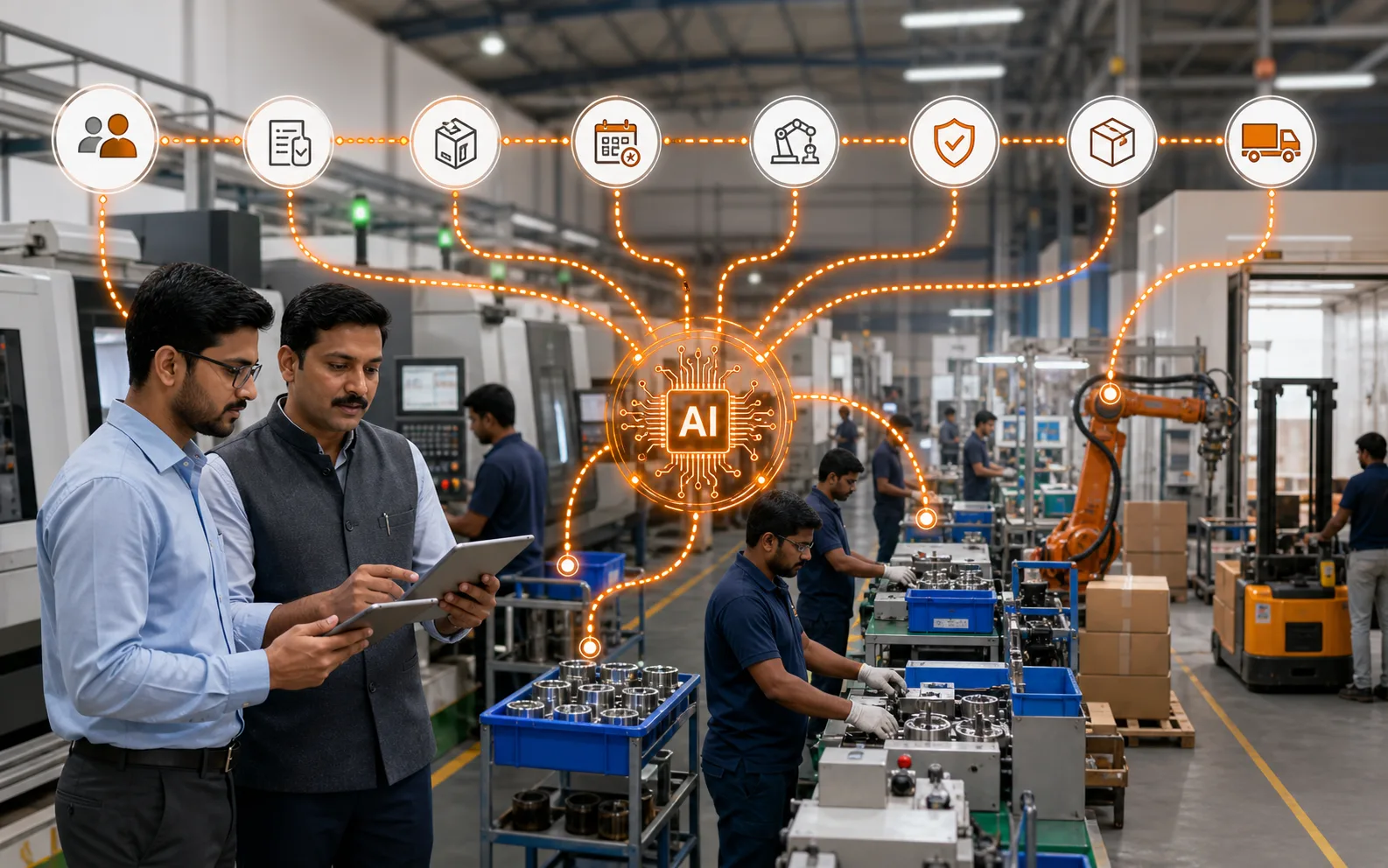
AICAN Optiwise fits the connected manufacturing operating system category, bringing production planning together with inventory, purchase, sales, finance, reporting, IoT readiness, and AI workflows. This matters when planning problems cross departments rather than staying inside one scheduling screen.
Explore AICAN Optiwise and About AICAN to learn more.
Founder’s Note
AICAN’s founder-led view is that manufacturers should choose planning tools by daily usefulness, not by software glamour. The best tool is the one that helps teams make clearer commitments and fewer avoidable mistakes.
A tool earns its place when planners trust it under pressure.
FAQ
What is the best AI production planning tool?
The best tool depends on your use case, factory complexity, data readiness, integrations, and team adoption. There is no single best tool for every manufacturer.
Should I choose a forecasting tool or full planning platform?
Choose forecasting if demand prediction is the main issue. Choose a connected platform if planning depends on inventory, purchase, production, quality, and dispatch workflows.
What is a warning sign in tool selection?
A tool that looks impressive but cannot explain data needs, implementation support, workflow ownership, or ROI clearly should be questioned.
How should I compare vendors?
Use a scorecard covering workflow fit, data readiness, integrations, support, security, user adoption, scalability, and measurable outcomes.
Final Thought
The top AI production planning tool is the one your factory can trust, adopt, and measure. Start with the planning problem, then choose the tool that fits the work.
Next step: Explore AICAN Optiwise to compare connected AI production planning with narrower planning tools.

Related Posts
Is AI Worth the Investment for My Factory?
Learn how to decide if AI is worth the investment for your factory by evaluating use cases, data readiness, costs, risks, ROI, and operational impact.
13 Jun 2026Read more →Manufacturing AI Mistakes to Avoid Before You Start
List manufacturing AI mistakes and controls for unclear use case, messy data, unsafe automation, no owner, weak security and unreviewed recommendations.
13 Jun 2026Read more →What's the Difference Between AI and Regular Automation?
Understand the difference between AI and regular automation in manufacturing, with practical examples for workflows, decisions, alerts, and predictive operations.
13 Jun 2026Read more →What Are the Risks of Using AI in Manufacturing?
Understand the risks of AI in manufacturing, including bad data, wrong recommendations, safety issues, security, job fear, over-automation, and implementation failure.
13 Jun 2026Read more →