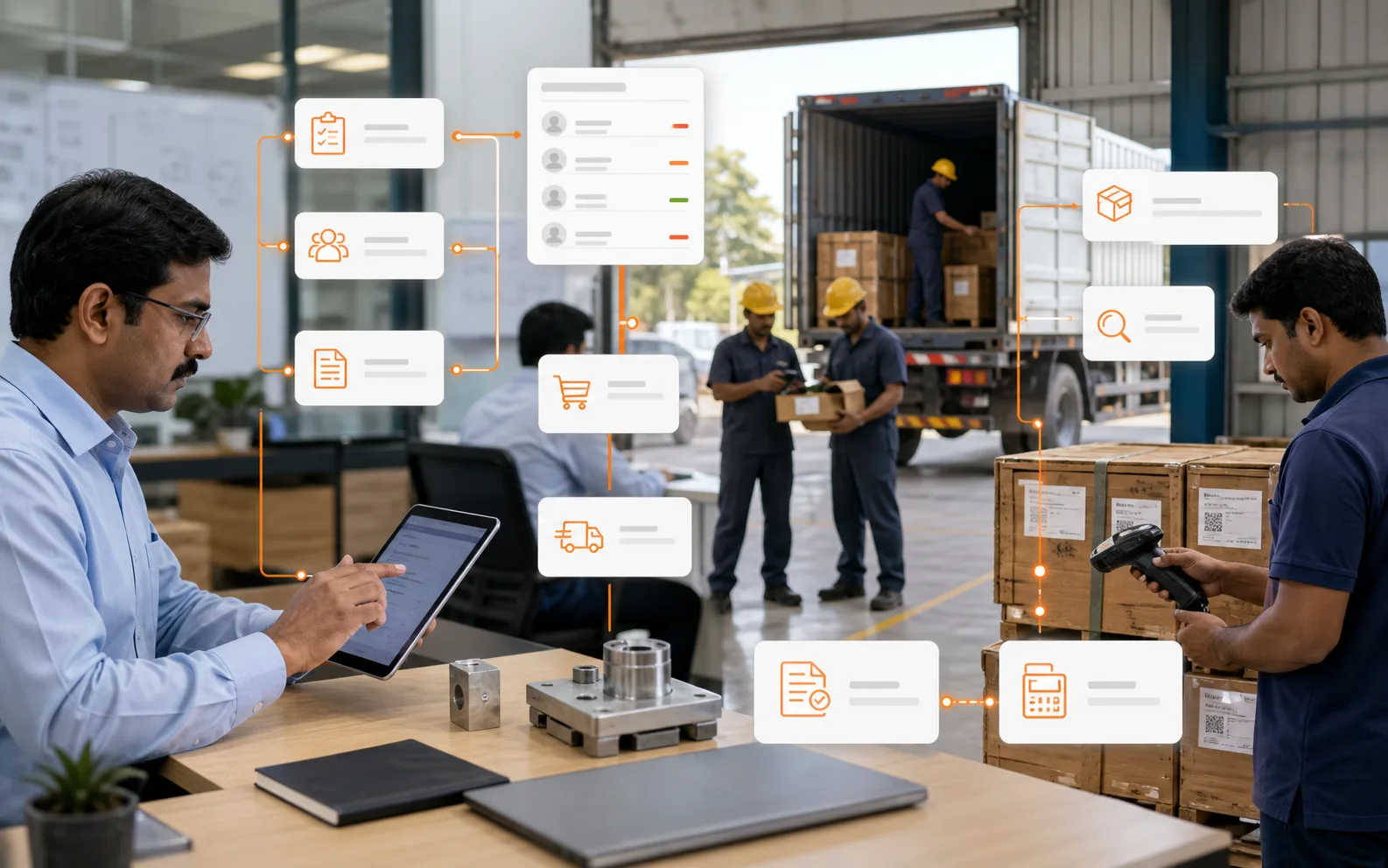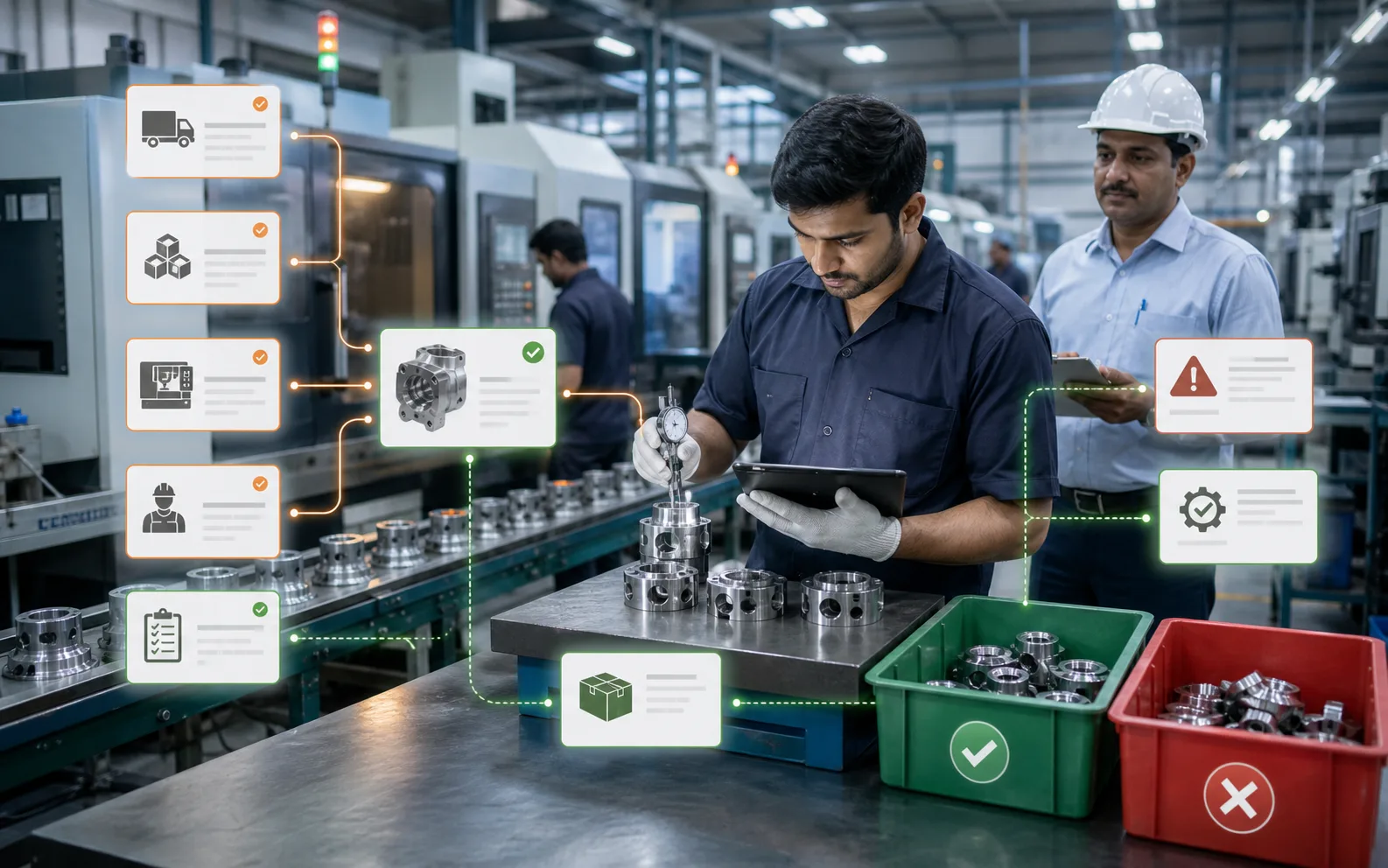

Cybersecurity in AI Manufacturing
Learn why cybersecurity matters in AI manufacturing, what risks factories face, and how manufacturers can protect data, machines, users, and connected workflows.
Loading Optiwise
A structured blog experience powered by the local AICAN CMS, with rich publishing, search visibility, and editorial control without WordPress.

Filter blog posts
1959 posts available, showing 625-648

Learn why cybersecurity matters in AI manufacturing, what risks factories face, and how manufacturers can protect data, machines, users, and connected workflows.

Learn how AI helps smaller manufacturers compete with larger companies through better visibility, faster decisions, quality control, inventory, planning, and customer responsiveness.

Learn why ERP is important for manufacturers, how it improves visibility, inventory, production, purchase, sales, accounts, and decision-making, and how Optiwise helps SMEs scale with control.

Understand how manufacturing software reduces costs through inventory control, waste reduction, better planning, fewer errors, and improved operational visibility.

Understand place of supply under GST, why it affects IGST/CGST/SGST, key goods examples, and why manufacturers need clean invoice and dispatch data.

Learn how electronics manufacturers can monitor SMT line performance using production plans, machine status, output, downtime, defects, changeovers, testing, rework, and ERP dashboards.

Understand the real difference between ERP and spreadsheets for small manufacturers. Learn when spreadsheets are enough and when ERP is needed for inventory, production, orders, reports, and control.

Compare Oracle, Optiwise, and modern manufacturing ERP options through the lens of SME needs, implementation complexity, cost, scalability, and operational fit.

Learn how to track batch production using ERP, from recipe planning and material issue to yield, quality, expiry, costing, and dispatch readiness.

Practical before-and-after patterns manufacturers can use to measure computer vision success without relying on vanity metrics or fake case-study claims.

Learn how IoT helps manufacturers respond to customer demands faster through production visibility, capacity planning, inventory accuracy, downtime alerts, quality control, and dispatch readiness.

Learn how ERP helps manufacturers plan production, schedule work orders, balance machine loads, track capacity, reduce delays, and improve shop-floor coordination.

AI agents and contractors solve different needs. AI fits repetitive digital work, while contractors offer human flexibility, judgment, and specialized skills.

A practical guide to ERP cost evaluation, including license fees, implementation, customisation, training, support, data migration, infrastructure, and ROI.

Learn how to position yourself as indispensable in an AI workplace by combining domain expertise, AI fluency, data judgment, communication, and process ownership.

Learn what overhead rate means, how it is calculated, why it matters in manufacturing costing, and how better ERP data improves cost visibility.

Learn why IoT can be valuable for factories that run 24/7, including downtime visibility, shift handover, maintenance, energy monitoring, quality control, and continuous operations.

Learn the practical skills needed to work alongside AI: domain expertise, data literacy, prompt clarity, judgment, communication, process thinking, and verification.

Learn how packaging companies can track production using job cards, material issue, printing, lamination, cutting, slitting, wastage, quality, packing, dispatch, and ERP dashboards.

Learn whether ERP implementation disrupts manufacturing operations, what slows teams down during setup, and how to roll out ERP without hurting daily production.

Small factories can benefit from AI through better production visibility, maintenance alerts, inventory control, quality tracking, and faster decisions.

Learn how ERP improves inventory management through live stock visibility, GRN, issue control, reorder planning, ageing, valuation, and production linkage.

Learn how production delay alerts help manufacturers detect schedule slippage, bottlenecks, material issues, downtime, and dispatch risks before it is too late.

Learn what ecommerce small businesses should look for in an ERP: inventory sync, order management, fulfillment, returns, marketplace integrations, accounting, and reporting.