

Manufacturing
Fabric Shade Groups: Allocate Rolls to a Cutting Lay
Allocate fabric rolls to cutting lays with shade-group approval, usable-length checks and remnant identity. Includes a two-group worked allocation example.
30 Sept 20264 min read
Loading Optiwise
A structured blog experience powered by the local AICAN CMS, with rich publishing, search visibility, and editorial control without WordPress.

Filter blog posts
2013 posts available, showing 1-24
Allocate fabric rolls to cutting lays with shade-group approval, usable-length checks and remnant identity. Includes a two-group worked allocation example.

Build a powder-coating reclaim record with parent lots, approved blend rules, mass reconciliation and job links. Includes a clearly illustrative balance example.

Use a torque-tool job-change record to connect joint revision, units, tool identity, setup verification and the first affected assembly without inventing settings.

Track partially used adhesive containers with opening dates, supplier limits, storage exceptions and an issue-return worksheet. Avoid invented expiry extensions.
Keep hydraulic oil analysis traceable with a sample-context register covering machine identity, sample point, hours, top-ups, report matching and exceptions.
Run a discussion-only factory disruption exercise with fictional injects, an observer worksheet, decision checks and evidence-based corrective-action retests.
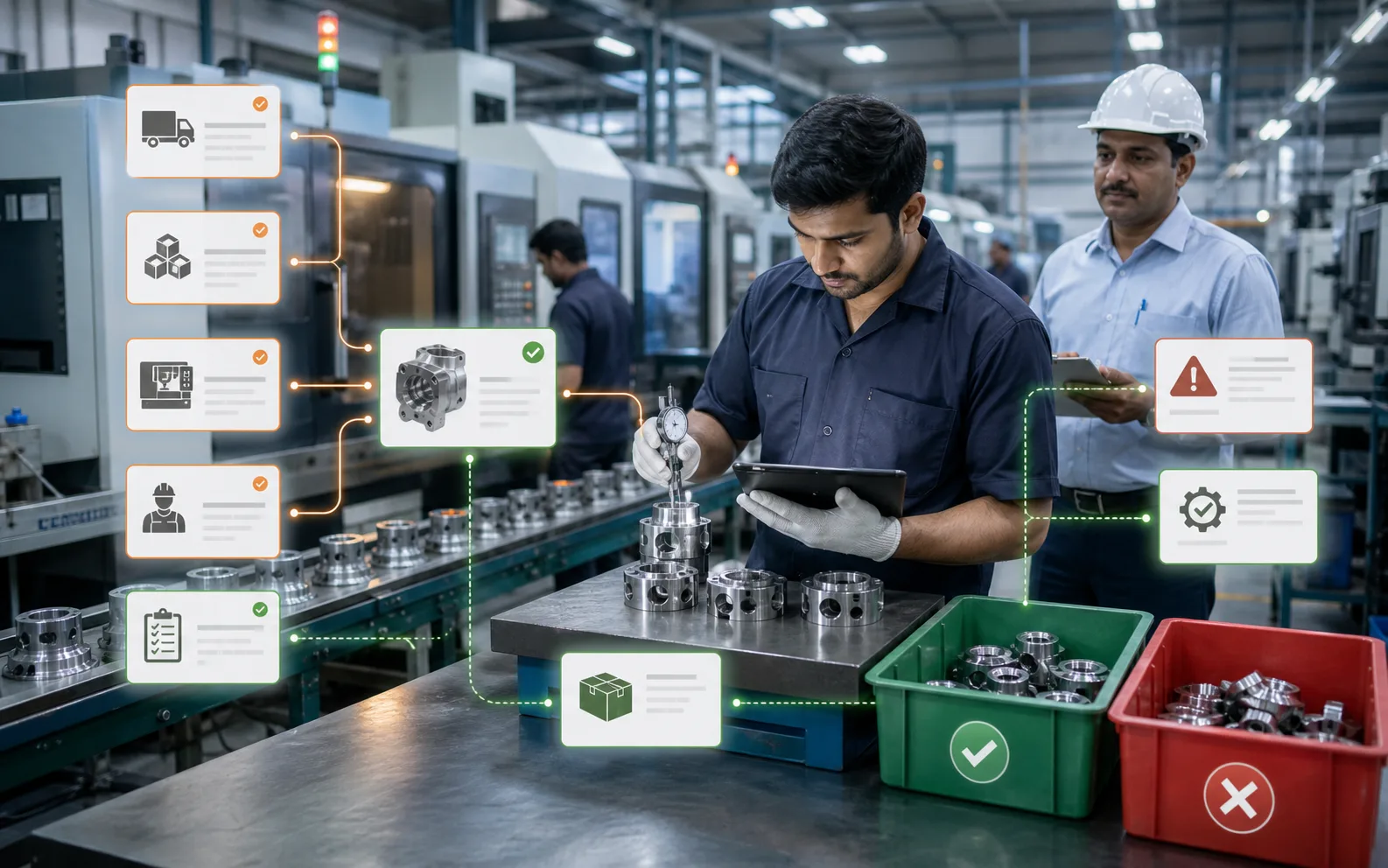
Control visual inspection reference samples with identities, approved criteria and repeated ratings. Includes an agreement example and revision checks.
Use a shop-floor retrieval log to separate missing identity, location and access. Includes a bounded search-time example and a matched retest checklist.
Plan a tool-room request queue using preparation load, production need times and explicit priority changes. Includes a three-request scheduling example.
Build a manufacturing KPI card with a reproducible formula, freshness check, response owner and a worked example of conflicting output percentages.

Recover vendor-held material after subcontract cancellation. Use a worked quantity reconciliation, stop acknowledgement and return-inspection checklist.
Compare a replacement motor with the approved specification. Record nameplate mismatches, receiving holds and engineering release evidence.

Check hydraulic filter identity and specifications before issue. Use a worksheet for receiving holds, service readings and maintenance handback.
Log coolant readings, supplier correction factors, authorised actions and rechecks. Includes an illustrative concentration calculation and review checks.
Reconcile factory water intake, discharge and storage in a daily worksheet. Avoid counting reuse twice and investigate unexplained differences.
Record manufacturing decisions with alternatives, assumptions and review triggers. Includes a worked inspection-capacity example and closure checks.
Calculate MTBF and MTTR from a machine event log. Compare two illustrative machines, separate waiting from repair, and handle open events and zero failures.
Build an SPC reaction plan with signal evidence, affected-output boundaries and release checks. Includes an illustrative control-limit example.
Build a COPQ worksheet for one defect event, reconcile a ₹7,580 example, and separate verified failure costs from estimates and lost-capacity assumptions.
Compare 100-part and 20-part transfers with a worked timing example, container record and acceptance checks for a controlled batch-to-flow trial.
Reconcile reusable transport crates by owner, type and customer, separating physical returns, damage and disputed balances from product quantities.
Track samples removed from a manufacturing lot through laboratory receipt, destructive use, retention and physical return with a quantity worksheet.
Preserve the original certificate, identify the correction and trace affected receipts, WIP and shipments before closing the review record.
Follow one job between departments, separate observed waiting from assumptions and test a proposed change with a handoff observation worksheet.