
Capture Operator Knowledge in Approved Work Instructions
Turn operator observations into approved instructions with a capture sheet, exception review and supervised knowledge-transfer acceptance checks.

Capture an experienced operator's knowledge by observing one recurring task, recording the cues behind each decision, having the process owner approve the method and watching a second qualified person use it. A useful instruction preserves the reason for the action as well as the action itself.
Practical knowledge can stay with one person. This guide turns that observation into a small capture exercise for a supervisor preparing cover for leave, a role change or a new operator.
Choose a task with a visible decision
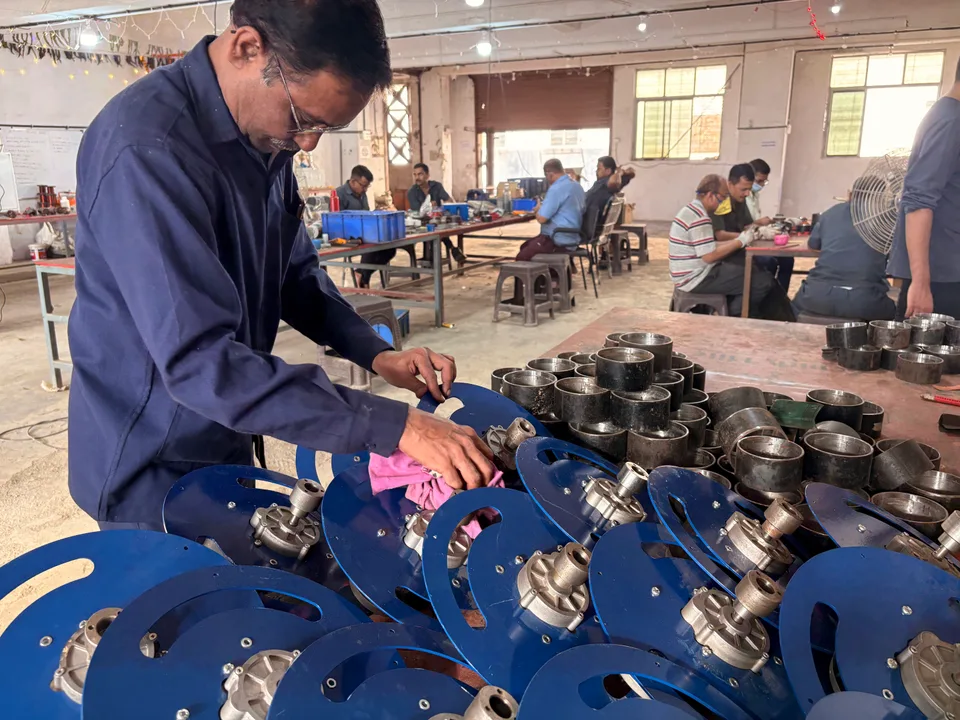
Start with one task where a replacement operator repeatedly asks for help. Examples include identifying an incomplete assembly kit, checking a setup before inspection or deciding when an abnormal observation needs escalation. Avoid beginning with an entire machine manual.
Bring the current approved instruction, a blank observation sheet, the normal acceptance criteria and any approved photographs. Ask the experienced operator to explain what they notice before acting. Record the operating conditions: part, material, machine, tool, revision and relevant environmental limits. A method that works for one combination may be wrong for another.
NIST's Training Within Industry overview describes job instruction through preparation, demonstration, trial and follow-up. The observation record below is our practical worksheet for capturing knowledge before that instruction is taught.
Separate the observation from the approved response
| Field | Example entry |
|---|---|
| Task and scope | Check kit K-41 for assembly job WO-811, current drawing revision |
| Cue noticed | Two similar spacer sizes are present in the tray |
| Reason it matters | The job requires the specified spacer; appearance alone is insufficient |
| Approved action | Compare item identity with the kit list and segregate the mismatch |
| Stop or escalation condition | Missing identity or unresolved mismatch: hold kit and contact supervisor |
| Evidence | Kit record, item references, approved photo and reviewer |
The example describes a record format, not a technical specification for a real assembly. The process owner supplies the correct acceptance criteria. Do not turn “I can tell by feel” into an instruction to accept a part by feel when the approved method requires measurement.
Ask about exceptions without endorsing workarounds
Ask what changes when the material lot, tooling or shift changes. Ask which symptoms require stopping and which can be handled within the approved method. Keep separate notes for observations that still need engineering or quality review.
If the operator reveals a workaround that contradicts the current instruction, preserve the observation and refer it for review. Do not publish the workaround as the new standard because it appears faster. Record the discrepancy, the affected task and who will decide the correction.
Give the contributor a chance to review the draft. Check whether the wording captures the cue accurately, whether an image shows the intended condition and whether the language is understandable to the people who will use it. Credit contributions through your normal internal practice without attaching blame to an unresolved process problem.
Test whether the knowledge transferred
Have a second appropriately qualified operator locate the instruction and explain the critical points back to the trainer. Observe a supervised trial under the approved conditions. Record where help was needed, which step was ambiguous and whether the required checks were completed.
For a small pilot, select three tasks and record one supervised transfer for each. Acceptance requires an approved instruction, an identified trainer, a recorded trial and no unresolved ambiguity in a critical step. A completed reading acknowledgement is useful evidence of access; it is not proof of competence.
Review the instruction after a relevant process change or a reported failure. Retain the prior version and the reason for revision. If the task has not been observed under a particular condition, record the limit instead of implying the instruction covers it.
Keep approved knowledge available at the process
In Optiwise, we provide machine- and process-linked SOPs with multimedia, version history, approval and operator acknowledgements. Configurable forms capture the observation, review and trial. Interactive SOP steps can collect execution data where the task requires it.
Connect the approved instruction to the relevant production process so an operator can reach it while doing the job. Keep proposed knowledge separate from released instructions, and assign a process owner to review additions.
Questions about operator knowledge capture
Should we record a video for every task?
Use video when motion or sequence matters and you have permission to record. A short annotated photograph or clear text may be easier to use for a simple identity check. Retain the approved instruction and its scope.
What if experienced operators disagree?
Record the conditions behind each method and ask the process owner to resolve the difference through an approved review or trial. Do not silently combine incompatible steps.
Bring one knowledge-dependent task to a demo. We can map its observation form, SOP approval and supervised-trial record in Optiwise.
Related Posts

Fabric Shade Groups: Allocate Rolls to a Cutting Lay
Allocate fabric rolls to cutting lays with shade-group approval, usable-length checks and remnant identity. Includes a two-group worked allocation example.
30 Sept 2026Read more →
Powder Coating Reclaim: Keep Each Blend Traceable
Build a powder-coating reclaim record with parent lots, approved blend rules, mass reconciliation and job links. Includes a clearly illustrative balance example.
30 Sept 2026Read more →
Torque Tool Job Changes: Record the Approved Setting
Use a torque-tool job-change record to connect joint revision, units, tool identity, setup verification and the first affected assembly without inventing settings.
30 Sept 2026Read more →
Opened Adhesive Containers: Record Dates Before Reissue
Track partially used adhesive containers with opening dates, supplier limits, storage exceptions and an issue-return worksheet. Avoid invented expiry extensions.
30 Sept 2026Read more →