
Erp Scalability | Optiwise
Learn what ERP scalability means, why it matters, and how growing businesses should evaluate users, locations, data, modules, integrations, and performance.
Loading Optiwise
A structured blog experience powered by the local AICAN CMS, with rich publishing, search visibility, and editorial control without WordPress.

Filter blog posts
1959 posts available, showing 457-480

Learn what ERP scalability means, why it matters, and how growing businesses should evaluate users, locations, data, modules, integrations, and performance.

Better software organizes workflows, while AI learns from patterns and supports predictions, recommendations, alerts, and decision-making on the shop floor.

Learn how manufacturers can improve GRN and quality control efficiency with digital workflows, inspection records, stock holds, vendor tracking, and Optiwise.

A detailed guide to inventory forecasting for manufacturing businesses: demand signals, BOM planning, safety stock, mistakes to avoid, and how Optiwise helps forecast material needs.

Learn how to budget for AI production planning implementation, including software, setup, training, integrations, data cleanup, support, and ROI tracking.

Explore freelance opportunities that remain valuable in the AI era by combining domain expertise, human judgment, client trust, implementation, training, and AI-enabled services.

Learn how to research manufacturing companies before applying for tech roles, including products, systems, digital maturity, ERP usage, and operational challenges.

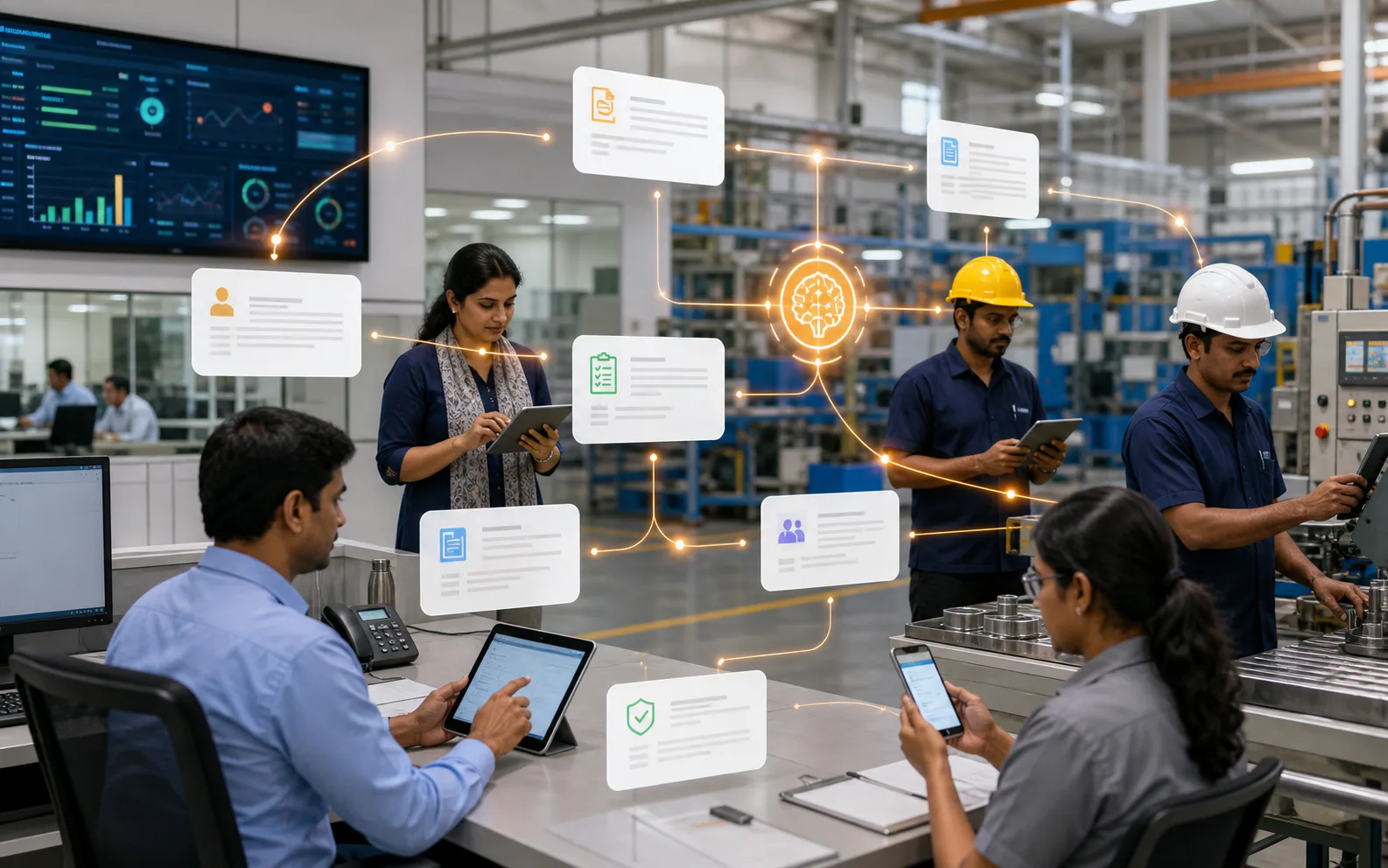
Learn how AI helps manufacturers create better documentation, including SOPs, work instructions, audit notes, training guides, quality reports, and compliance records.

Manufacturers may not need dedicated procurement AI specialists at first. Learn when to hire, when to train internally, and what skills matter.

Compare RFID and barcode inventory systems for cost, speed, accuracy, use cases, limitations, and manufacturing suitability.

Compare product costs and period costs with examples, formulas, and manufacturing use cases for better costing and profitability decisions.

Avoid common procurement AI implementation mistakes like poor data, unclear workflows, weak training, over-automation, and missing approval controls.

Learn how ERP can increase productivity in small manufacturing by reducing manual work, improving inventory, production planning, purchase visibility, quality, and reporting.

Learn MRO inventory for manufacturers: meaning, examples, risks, stock control methods, maintenance impact, and how Optiwise improves spare and consumable visibility.

Learn what process costing is, when manufacturers use it, how it differs from job costing, and why clean production data matters.

Learn how to manage production planning with demand visibility, material readiness, capacity planning, machine availability, scheduling, dispatch priorities, and ERP workflows.

Understand IoT security risks in manufacturing and how to reduce them with access control, network segmentation, device management, monitoring, backups, and governance.

Compare cloud ERP and on-premise ERP for manufacturing SMEs, including cost, access, maintenance, security, scalability, and how AICAN Optiwise supports operations.

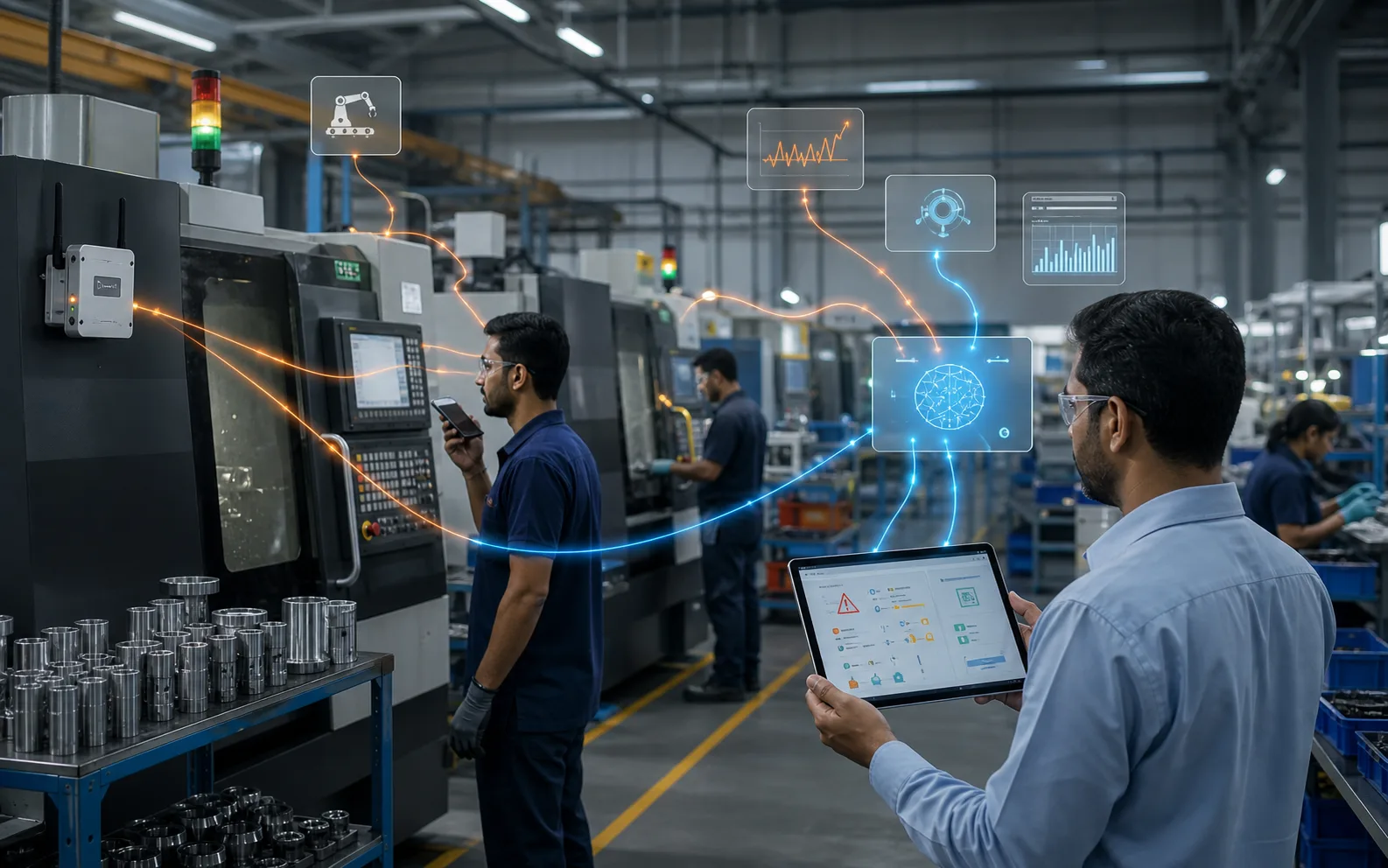
Learn what analytics manufacturers can get from IoT data, including machine utilization, downtime, OEE, energy, quality, maintenance, production planning, and management dashboards.

Learn how process manufacturing ERP helps manage product recalls through batch traceability, quality records, inventory holds, customer tracking, and Optiwise workflows.

AI is changing factory floor work through real-time visibility, predictive maintenance, quality alerts, digital workflows, and better production decisions.

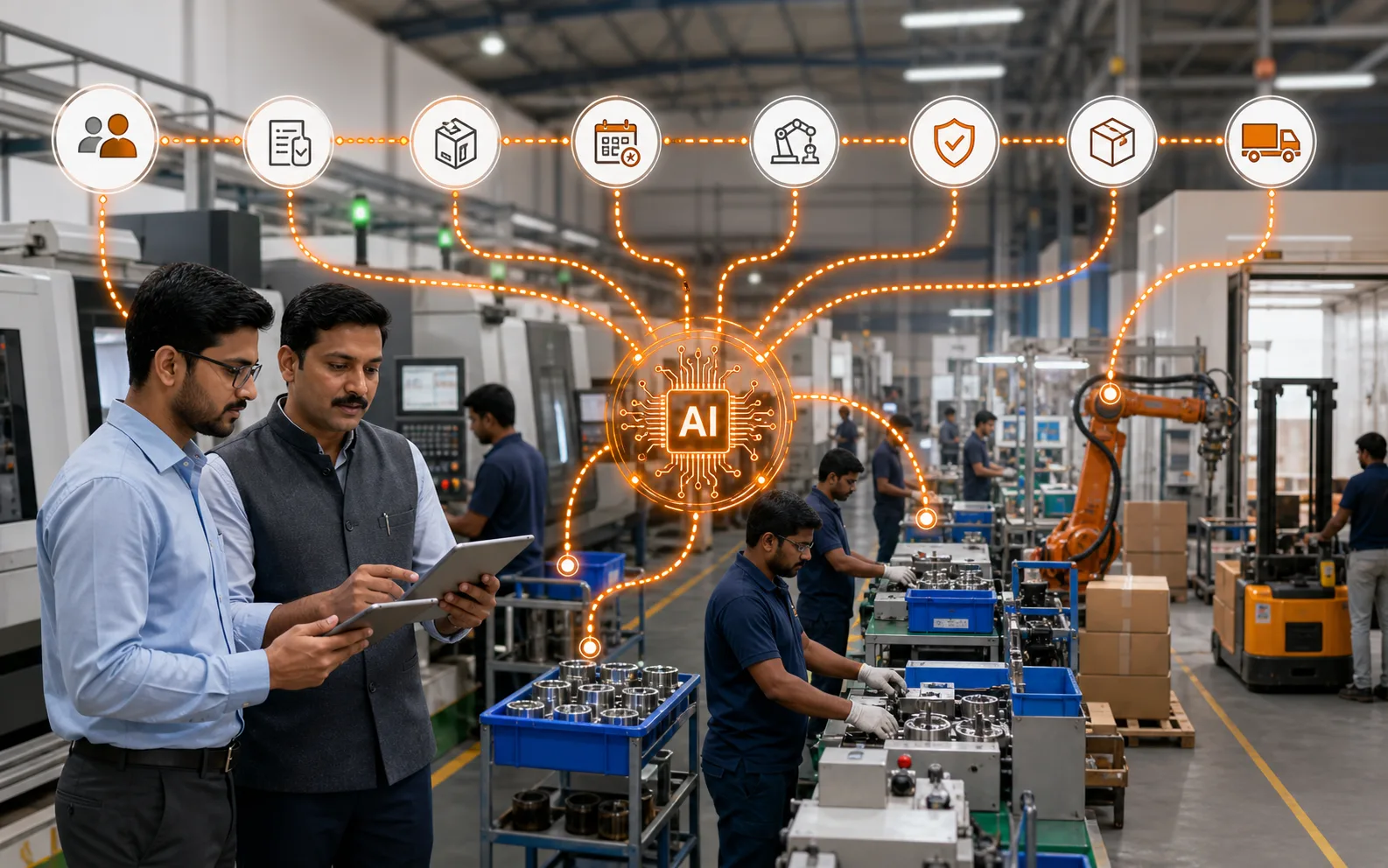
Learn how manufacturers use AI and automation for production planning, quality, predictive maintenance, inventory, purchase, sales, dispatch, and decision support.

Learn how CNC shops can improve shop floor visibility using job cards, machine status, WIP tracking, operator updates, quality status, downtime reasons, and ERP dashboards.

Learn how factories can use IoT with existing machines through retrofit sensors, gateways, meters, operator inputs, and phased modernization.