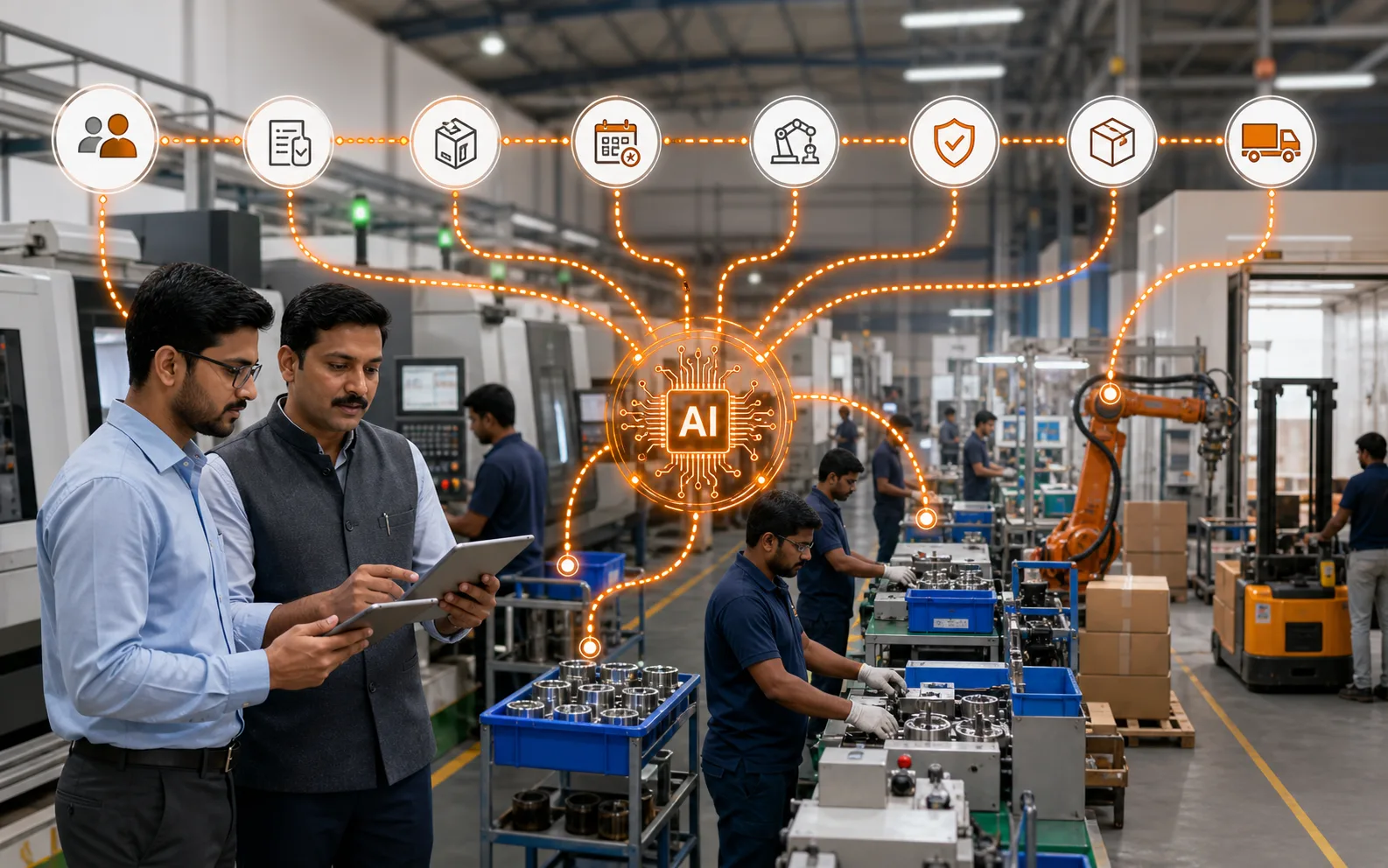
Startup Opportunities in the AI Ecosystem
Explore startup opportunities in the AI ecosystem, including vertical AI, manufacturing AI, data cleanup, workflow automation, training, governance, and implementation services.
Loading Optiwise
A structured blog experience powered by the local AICAN CMS, with rich publishing, search visibility, and editorial control without WordPress.

Filter blog posts
1959 posts available, showing 1729-1752

Explore startup opportunities in the AI ecosystem, including vertical AI, manufacturing AI, data cleanup, workflow automation, training, governance, and implementation services.

Learn how IoT data analytics turns machine, downtime, production, quality, and maintenance data into practical manufacturing insights for better decisions.

Learn how ERP helps apparel manufacturers manage styles, fabrics, trims, production planning, WIP, quality, packing, shipment, and order profitability.

AI reduces procurement cycle time by speeding up purchase requests, quote comparison, supplier follow-ups, approvals, PO drafting, and exception handling.

Learn what affects AI forecasting accuracy for production needs, how to measure it, and how manufacturers should combine forecasts with human judgement.

Learn how manufacturers can evaluate ERP user-friendliness before buying. Check daily tasks, role-wise screens, training needs, mobile access, reports, speed, and adoption risk.

Learn how sensors support predictive maintenance by tracking vibration, temperature, current, pressure, and operating patterns before equipment failures occur.

Learn how IoT can support GMP compliance discipline through real-time monitoring, alerts, equipment data, environmental tracking, audit trails, and ERP integration.

Learn capacity utilization in manufacturing, how to calculate it, why it matters, common causes of low utilization, and how Optiwise improves visibility.

Understand the difference between AI, automation, and better software in factory management, and how manufacturers should use each practically.

Learn practical machine downtime tracking strategies for manufacturers, including downtime reasons, thresholds, ownership, alerts, OEE context, and production impact.

Understand discrete manufacturing, how it differs from other production types, common examples, operational challenges, and how AICAN Optiwise helps manufacturers control production.

Learn how manufacturers can measure IoT ROI through downtime reduction, recovered output, energy savings, quality improvement, maintenance efficiency, and better delivery performance.

A practical ROI guide for small manufacturers evaluating IoT investment for downtime, energy, quality, production visibility, maintenance, and dispatch reliability.

Learn how AI improves production speed by reducing delays, improving planning, identifying bottlenecks, preventing downtime, improving quality, and speeding decisions.

Learn what a bill of materials is, why BOM matters, key BOM fields, BOM types, common mistakes, and how manufacturers use BOM for planning and costing.

Learn how real-time inventory tracking improves stock accuracy, production planning, purchase control, dispatch readiness, and decision-making for manufacturers.

Learn how predictive maintenance saves money by reducing downtime, emergency repairs, spare waste, production delays, quality loss, and planning disruption.

Learn how AI supports manufacturing process improvement through bottleneck detection, quality trends, waste reduction, scheduling, and continuous improvement.

Learn how MSME manufacturers can measure ERP ROI through inventory improvement, order fulfilment, production visibility, labour efficiency, reporting speed, quality reduction, and working capital control.

Learn how to measure ROI of manufacturing AI using baseline losses, savings, productivity gains, quality improvements, inventory control, and adoption metrics.

AI agents can work alongside existing teams by handling routine tasks, routing exceptions, summarizing work, and supporting employees with clear oversight.

Understand how Tally integration with manufacturing ERP reduces duplicate entry, improves accounting accuracy, and connects factory operations with finance.

Learn how manufacturers can track daily production goals with planned vs actual output, shift progress, downtime, quality, WIP, and real-time factory dashboards.