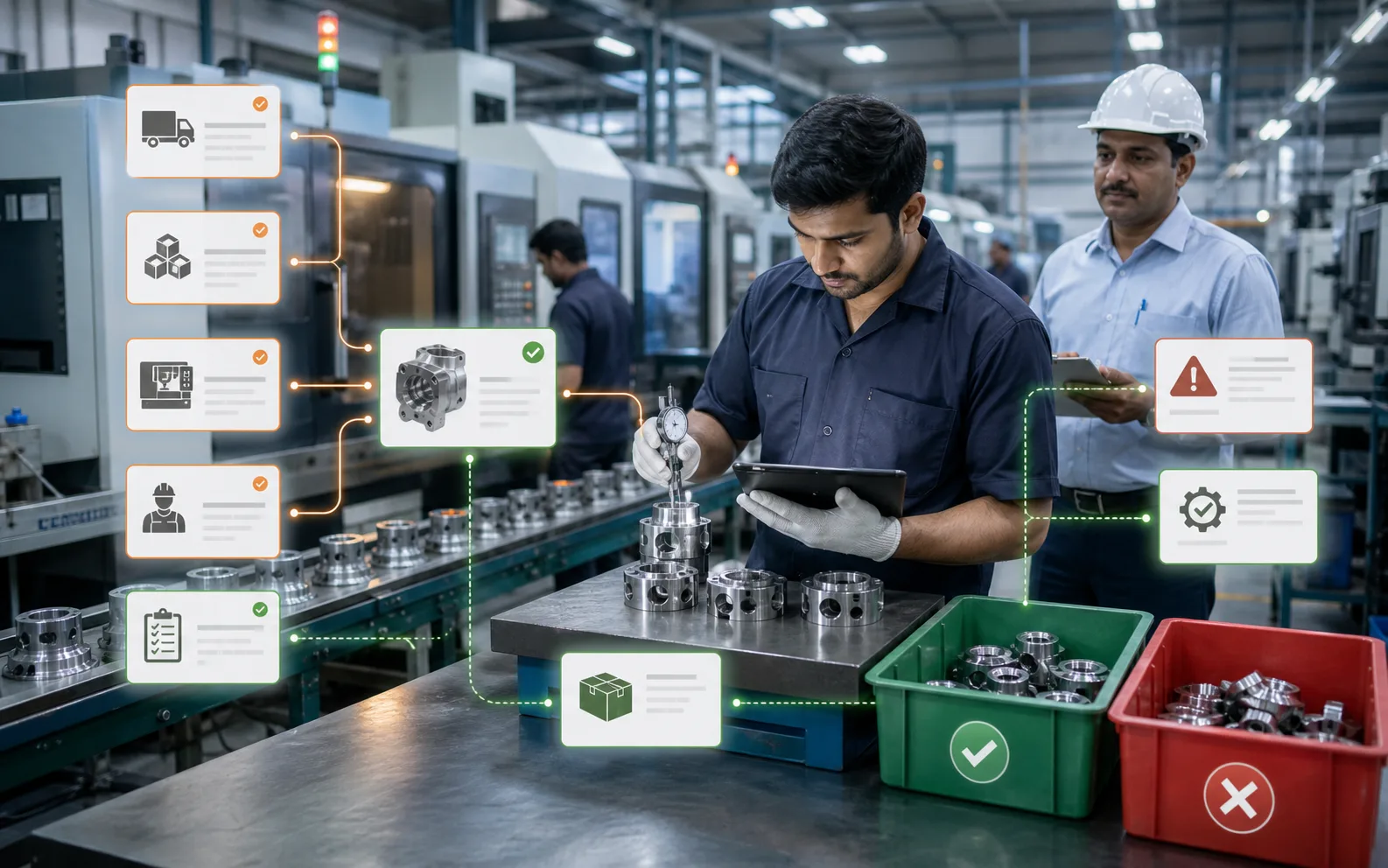

10 Reasons To Consider Cloud Based Inventory Management | Optiwise
Learn why manufacturers should consider cloud-based inventory management for real-time visibility, multi-warehouse control, accuracy, collaboration, and growth.
Loading Optiwise
A structured blog experience powered by the local AICAN CMS, with rich publishing, search visibility, and editorial control without WordPress.

Filter blog posts
1959 posts available, showing 1753-1776

Learn why manufacturers should consider cloud-based inventory management for real-time visibility, multi-warehouse control, accuracy, collaboration, and growth.

Learn what MSMEs should expect from a factory operating system, including ERP, production, inventory, purchase, finance, reporting, automation, and AI readiness.

Learn how injection molding companies manage resin, masterbatch, additives, molds, inserts, packing material, regrind, WIP, finished goods, and batch traceability with ERP.

Before buying factory AI, managers should understand use cases, data readiness, workflow fit, integration, training, ROI, safety, and human oversight.

Learn what a Goods Received Note is, why GRN matters in purchasing and inventory control, what details it should include, and how ERP helps manufacturers avoid stock and billing errors.

Learn how AI predicts equipment failure using downtime history, machine data, vibration, temperature, maintenance logs, alarms, and predictive analytics.

Understand how IoT can track CNC spindle runtime, why it matters for utilization and costing, and how machine data becomes more useful when connected with ERP and production planning.

Learn how factories should handle AI breakdowns in production with fallback processes, human review, data controls, support, and continuity planning.

A practical document checklist for Indian manufacturers from enquiry to quotation, purchase, production, quality, dispatch, billing, and payment, with Optiwise workflow guidance.

Learn how mobile ERP access helps small manufacturers with approvals, inventory, production updates, sales order status, dispatch, reports, and owner visibility.

A practical checklist of documents manufacturers need before installing computer vision systems, including defect definitions, samples, line layout, SOPs, integration details, and acceptance criteria.

Discover the hidden costs of ERP implementation for small manufacturers, including data cleanup, customization, training, downtime, integrations, support, and process change.

Learn what GSTR-2B is, how it supports ITC review, how it differs from GSTR-2A, and how ERP helps businesses reconcile purchase records.

Procurement AI tools have a manageable learning curve when training is role-based, workflows are simple, data is clean, and adoption begins with practical tasks.

Learn how AI helps schedule factory shifts and staffing by linking production demand, capacity, skills, overtime, workload, and delivery commitments.

Learn how to monitor operator productivity fairly using job context, machine availability, planned time, actual output, quality, downtime reasons, training needs, and ERP dashboards.

A practical cost-benefit analysis framework for AI adoption in manufacturing, including costs, savings, ROI areas, risks, and measurement.

Learn five common mistakes material handling equipment manufacturers make in BOM, planning, inventory, subcontracting, and quality control, and how ERP improves control.

AI agents may automate repetitive tasks, but employees remain essential for judgment, relationships, creativity, leadership, escalation, and accountability.

Learn how injection molding factories can track mold performance using shot count, cavity output, cycle time, rejection, maintenance history, downtime, quality issues, and ERP dashboards.

Learn what GST invoice software should do, why invoice accuracy matters, how ERP improves invoicing, and what manufacturers should check before choosing a GST billing system.

See the real manufacturing problems AI can solve, from inventory risk and production delays to quality defects, forecasting, maintenance, and management visibility.

Learn how ERP supports multi-location manufacturing across plants, warehouses, production units, inventory transfers, purchase, quality, dispatch, reporting, and centralized control.

Learn how to read AI production planning case studies with useful metrics such as stockouts, schedule adherence, planning time, downtime, inventory, and delivery performance.