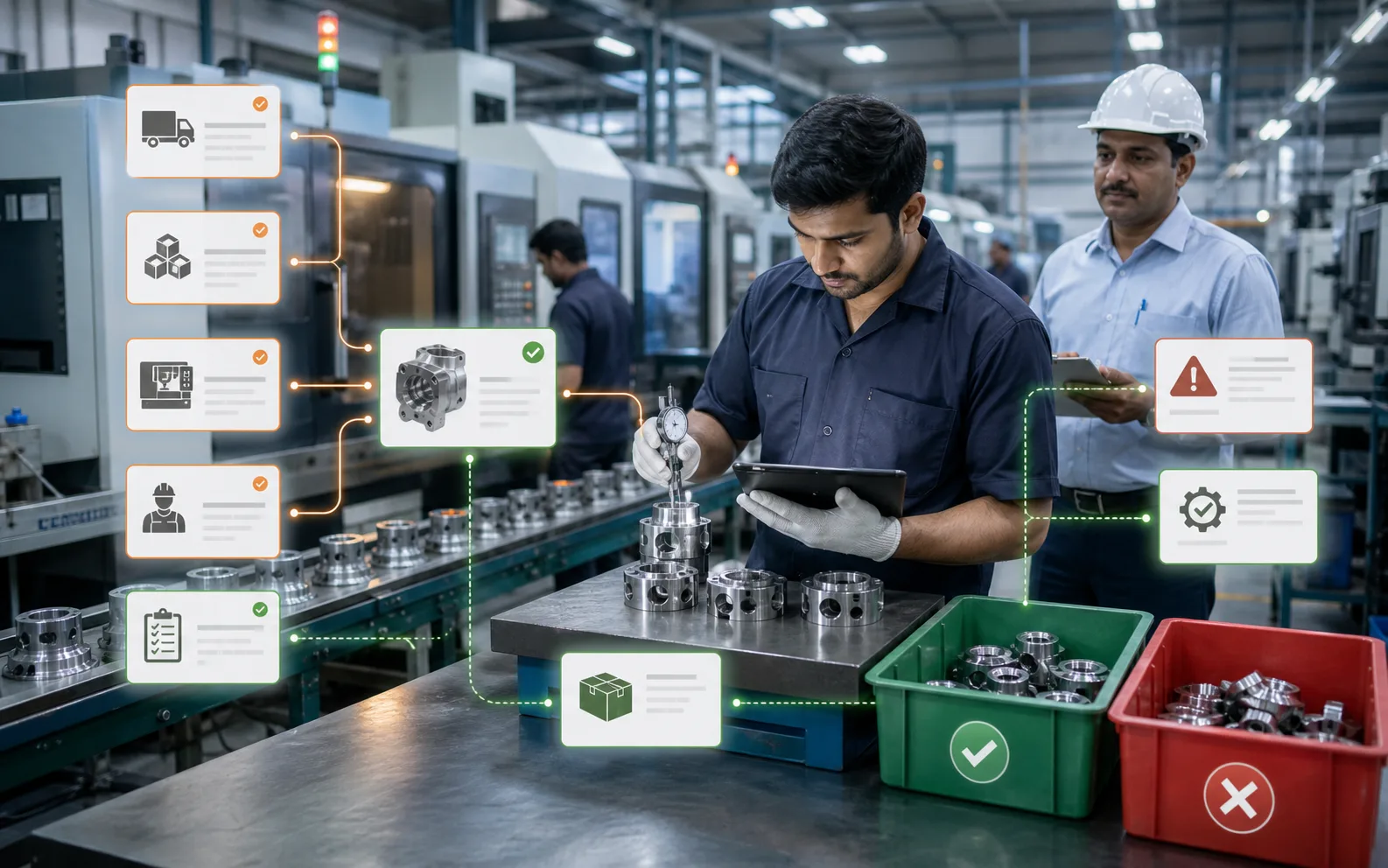

What's the First Step to Adding AI to My Factory?
Learn the first step to adding AI to a factory: choosing one practical use case, checking data readiness, running a low-risk pilot, and measuring ROI.
Loading Optiwise
A structured blog experience powered by the local AICAN CMS, with rich publishing, search visibility, and editorial control without WordPress.

Filter blog posts
1959 posts available, showing 577-600

Learn the first step to adding AI to a factory: choosing one practical use case, checking data readiness, running a low-risk pilot, and measuring ROI.

Understand the difference between ERP and MRP, when manufacturers need each system, and how AICAN Optiwise connects production, inventory, purchase, sales, and finance.

Learn when small businesses need ERP implementation help from vendors or consultants, based on process complexity, data quality, customization, integrations, and internal capacity.

Learn how safe AI is in manufacturing environments, what risks to manage, and how factories can use AI responsibly with human review and controls.

A detailed guide to inventory management for manufacturers: meaning, process, methods, benefits, mistakes, KPIs, and how Optiwise helps MSMEs control stock and production.

AI agents can reduce overtime by automating follow-ups, reports, scheduling, reminders, data checks, and routine coordination when workflows are clear.

Learn how to use AI to write clearer manufacturing work instructions, SOPs, checklists, safety steps, and role-based shopfloor guidance.

Learn how electronics manufacturers can monitor SMT machines using machine status, production orders, component readiness, downtime reasons, output, defects, maintenance, and ERP reporting.

Discover practical quick wins with IoT for manufacturers, including downtime visibility, machine status, energy monitoring, production reporting, shift handover, quality alerts, and remote dashboards.

Learn how subcontracting workflows help manufacturers track material sent to vendors, outside processing, returns, costing, QC, and production status.

An honest assessment of AI job risk, how to evaluate your role, which tasks are exposed, and what practical steps you can take now.

Learn how ERP tracks material costs by job using item masters, BOMs, stock issues, purchase prices, GRNs, WIP, scrap, rework, and actual consumption.

Learn how small manufacturers can afford IoT technology through phased implementation, critical-machine monitoring, practical dashboards, ERP integration, and clear ROI planning.

Learn how to pay GST online through the official GST portal, create challan, understand CPIN and CIN, avoid payment errors, and keep records clean.

Learn how to automate dispatch planning with order readiness, inventory, production status, packing, documentation, transport planning, approvals, and ERP workflows.

Learn what finished goods inventory means, how it is calculated, why it matters, and how manufacturers can manage it with better ERP visibility.

Learn how to calculate OEE for your factory using availability, performance, and quality, with practical examples, data requirements, mistakes to avoid, and ERP visibility.

Learn what makes industrial sensors easier to upgrade or replace, including standardization, wiring, mounting, protocols, spares, documentation, and dashboard mapping.

Learn how inventory software supports supply decisions without removing human control, and how manufacturers should balance automation with judgement.

Learn how manufacturing IoT systems handle poor internet, network drops, offline machines, edge gateways, buffering, redundancy, alerts, and reliable factory data flow.

Understand what implementation support manufacturers should expect for AI systems, including workflow mapping, data readiness, training, rollout, and post-go-live help.

A practical guide for SME manufacturers on how to evaluate startup recognition, software credibility, product fit, support, and ERP implementation before choosing a business system.

Learn how AI helps manufacturers schedule employee shifts better by balancing skills, attendance, workload, overtime, production plans, and compliance.

Learn how QR code systems help manufacturers improve inventory tracking, stock accuracy, receiving, issue, WIP movement, and warehouse visibility.