
AI for Cross-Department Manufacturing Coordination: Use a Shared Exception Record
AI for Cross-Department Manufacturing Coordination. Use a worked manufacturing test, exception checks and direct Optiwise workflow evidence before rollout.
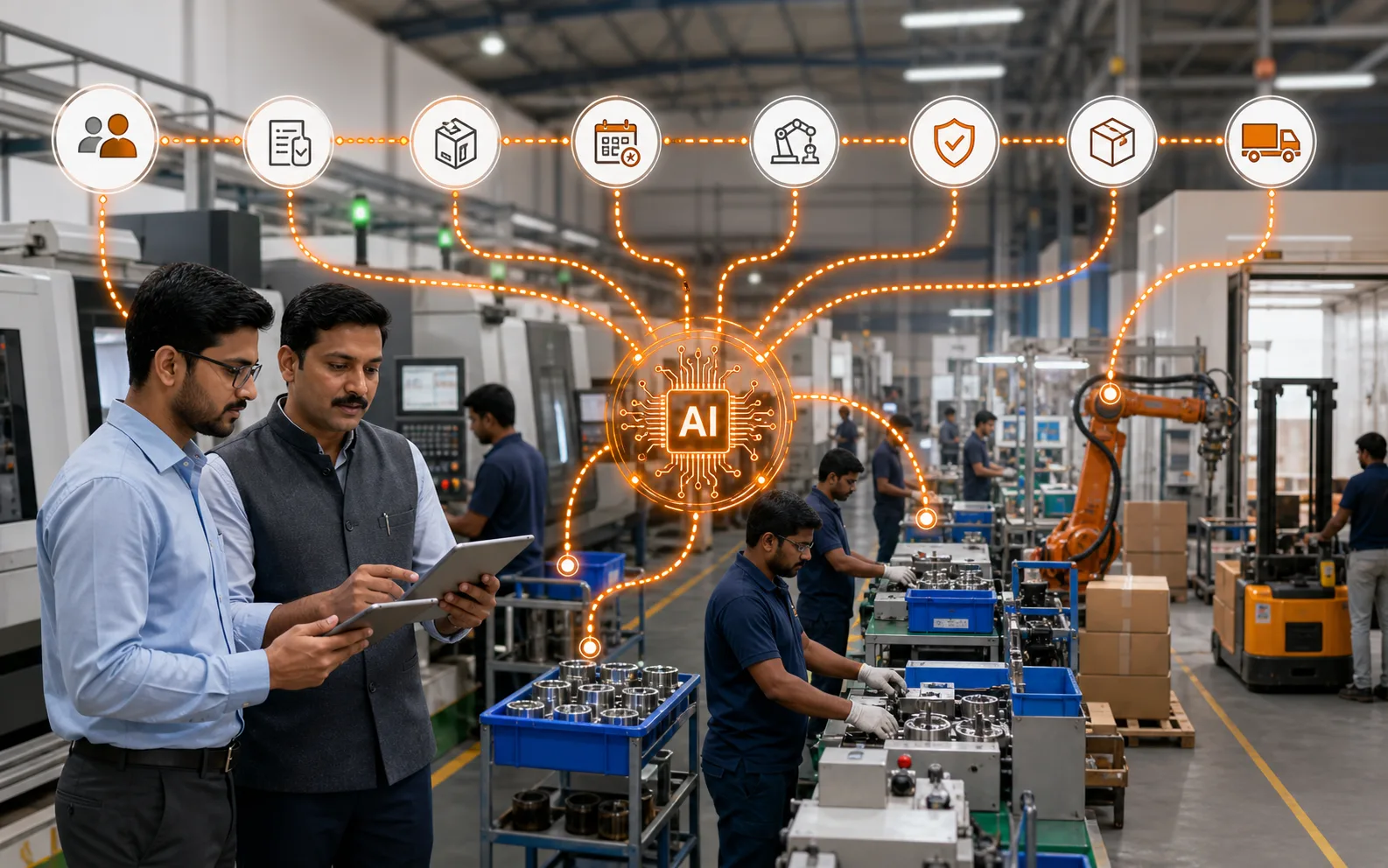
AI for Cross-Department Manufacturing Coordination: Use a Shared Exception Record helps you reduce follow-up gaps between sales, planning, stores, purchasing and quality. Start with one order, one item and one exception. A screen tour cannot prove that records stay connected when the work changes.
Sales sees an urgent date, planning sees a shortage, purchasing sees a late PO and quality sees a held receipt. AI should summarize the same linked records for each role, not create four conflicting status messages.
Start with the decision the system must support
Give every exception one source record, owner, due time and permitted next action.
Optiwise AI queries and actions work across connected sales, production, purchasing, inventory and task records while role permissions control what each user can see and do.
Use NIST AI Risk Management Framework as an external reference for the relevant data or process model. It does not prove an Optiwise feature or a business result; the product statements above come from our current feature record.
| # | Input to prepare | Evidence to retain |
|---|---|---|
| 1 | Order and exception ID | Owner and last update |
| 2 | Source records and timestamps | Definition and source |
| 3 | Current owner and SLA | Acceptance rule |
| 4 | Role-specific allowed actions | Exception owner |
Run one controlled workflow before expanding scope
- 1. Order and exception ID. Confirm who maintains it and which record is authoritative.
- 2. Source records and timestamps. Use the current value in the chosen test order.
- 3. Current owner and SLA. Record the pass condition before the demo begins.
- 4. Role-specific allowed actions. Assign the person who resolves a mismatch.
Keep the first test small enough to reconcile by hand. When the system result differs from the source documents, stop and identify whether the problem is master data, timing, transaction ownership or configuration.
Test exceptions alongside the normal flow
- Two departments claim ownership
- Message is newer than the source record
- AI proposes an unauthorized commitment
For each exception, record the expected status, permitted action, approver and audit trail. A useful manufacturing system should make the exception visible without allowing an unapproved shortcut to rewrite history.
Verify the connected Optiwise workflow
Review workflow details, product capability, supporting guide, implementation context, connected process, book a demo. In the demo, ask us to execute the scenario with your roles and sample records. Confirm the source transaction, resulting status, notification or action, correction method and report before accepting the workflow.
Questions to ask before rollout
What should we test first?
Choose one current order with a known complication. Prepare the four inputs above, run the transaction sequence and reconcile the result with the source documents.
What result should we accept?
Accept the workflow only when the normal path and named exceptions leave a complete, role-appropriate record. Keep feature validation separate from a promised business outcome.
AI improves communication between departments by giving everyone a shared view of production reality. In many factories, sales, purchase, stores, production, quality, dispatch, and management work from different files, messages, and assumptions. This creates delays, blame, and repeated follow-ups.
AI for production planning helps when it connects order demand, material readiness, production progress, quality status, and dispatch commitments in one system. Communication becomes more factual because teams discuss the same information.
The goal is not more meetings. It is fewer unclear conversations.
Sales and Production Alignment
Sales teams need realistic delivery commitments. Production teams need clear order priorities. AI can help show whether an order is feasible based on material, capacity, and current workload.
This reduces overpromising and late surprises.
Purchase and Planning Alignment
Purchase teams need to know which materials are truly urgent. AI can connect shortage risk to production orders and customer due dates, helping purchase prioritize better.
Urgency becomes based on impact, not noise.
Stores and Production Alignment
Stores updates affect planning directly. AI-supported workflows can show whether materials are received, issued, reserved, or short.
This reduces repeated stock-check calls.
Quality and Dispatch Alignment
Quality holds can delay delivery. When quality status is visible in planning, dispatch and sales teams can respond earlier.
Connected communication protects customer trust.
Management Visibility
Managers can review exceptions without asking every department for manual updates. This makes review meetings shorter and more action-focused.
Where AICAN Optiwise Fits
AICAN Optiwise connects production planning with inventory, purchase, sales, finance, reporting, IoT readiness, and AI workflows. This shared operating view helps departments communicate from the same truth.
Learn more at AICAN Optiwise and About AICAN.
Founder’s Note
AICAN’s founder-led belief is that many planning problems are communication problems in disguise. When departments see the same operating picture, coordination becomes calmer and faster.
AI should reduce noise, not add another channel.
FAQ
How does AI reduce follow-ups?
It shows shared status for orders, stock, purchase, production, quality, and dispatch so teams do not need to repeatedly ask for updates.
Can AI improve sales commitments?
Yes. Sales can make better commitments when production feasibility is visible.
Does AI replace department meetings?
No, but it can make meetings shorter and more fact-based.
What data must be shared?
Orders, material readiness, purchase status, production progress, quality holds, and dispatch status are important.
Final Thought
AI improves department communication by replacing scattered assumptions with shared visibility. Better planning begins when everyone sees the same reality.
Next step: Visit AICAN Optiwise to connect planning communication across your factory.

Related Posts

Is AI Worth the Investment for My Factory?
Learn how to decide if AI is worth the investment for your factory by evaluating use cases, data readiness, costs, risks, ROI, and operational impact.
13 Jun 2026Read more →Manufacturing AI Mistakes to Avoid Before You Start
List manufacturing AI mistakes and controls for unclear use case, messy data, unsafe automation, no owner, weak security and unreviewed recommendations.
13 Jun 2026Read more →What's the Difference Between AI and Regular Automation?
Understand the difference between AI and regular automation in manufacturing, with practical examples for workflows, decisions, alerts, and predictive operations.
13 Jun 2026Read more →What Are the Risks of Using AI in Manufacturing?
Understand the risks of AI in manufacturing, including bad data, wrong recommendations, safety issues, security, job fear, over-automation, and implementation failure.
13 Jun 2026Read more →