

Inventory & Supply Chain
Inventory Cost | Optiwise
Understand inventory cost in manufacturing, including purchase cost, carrying cost, shortage cost, ordering cost, obsolete stock, and working capital impact.
16 Mar 20263 min read
Loading Optiwise
A structured blog experience powered by the local AICAN CMS, with rich publishing, search visibility, and editorial control without WordPress.

Filter blog posts
2013 posts available, showing 409-432
Understand inventory cost in manufacturing, including purchase cost, carrying cost, shortage cost, ordering cost, obsolete stock, and working capital impact.

Remote Production Data Access. Use a worked manufacturing test, exception checks and direct Optiwise workflow evidence before rollout.
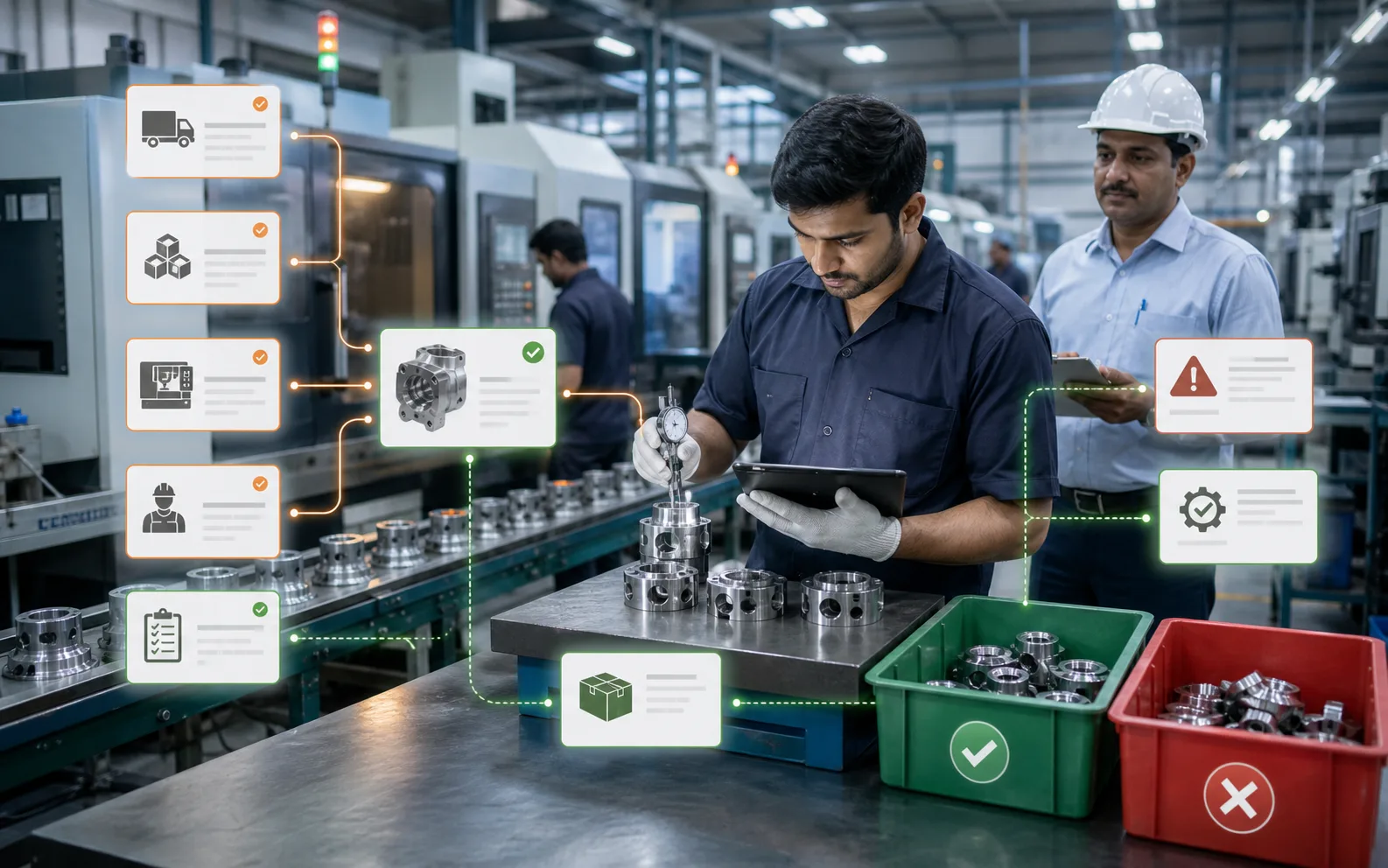
Compare the cost and operating impact of computer vision systems versus hiring more manual inspectors, including accuracy, fatigue, rework, scalability, data, and long-term quality control.
Learn how Indian MSMEs can choose the best ERP for affordability, production control, inventory, purchase, sales, finance, reporting, scalability, and AI readiness.
Compare standard, blanket, planned, subcontract and emergency purchase orders for manufacturers with clear commitment and release examples.
See stock by store, quality status and movement in Optiwise. Work through a warehouse transfer without double-counting stock or issuing held material.
Compare purchasing in Optiwise and Odoo. Use material demand, vendor history, RFQs, AI recommendations and quality-linked receipts in Optiwise.
Review old stock using receipt dates, movement history, quality status and future use. See why a warehouse transfer should not make an old lot look new.
Manage manufacturing in Optiwise: sales orders, BOMs, planning, inventory, purchase, subcontracting, quality, AI agents and no-code workflows.
Discover simple, practical ways to use AI in a factory without heavy technical setup, including reports, SOPs, quality notes, schedules, and data summaries.
Avoid common factory monitoring mistakes such as tracking too many metrics, ignoring shop-floor adoption, missing downtime reasons, and using disconnected dashboards.
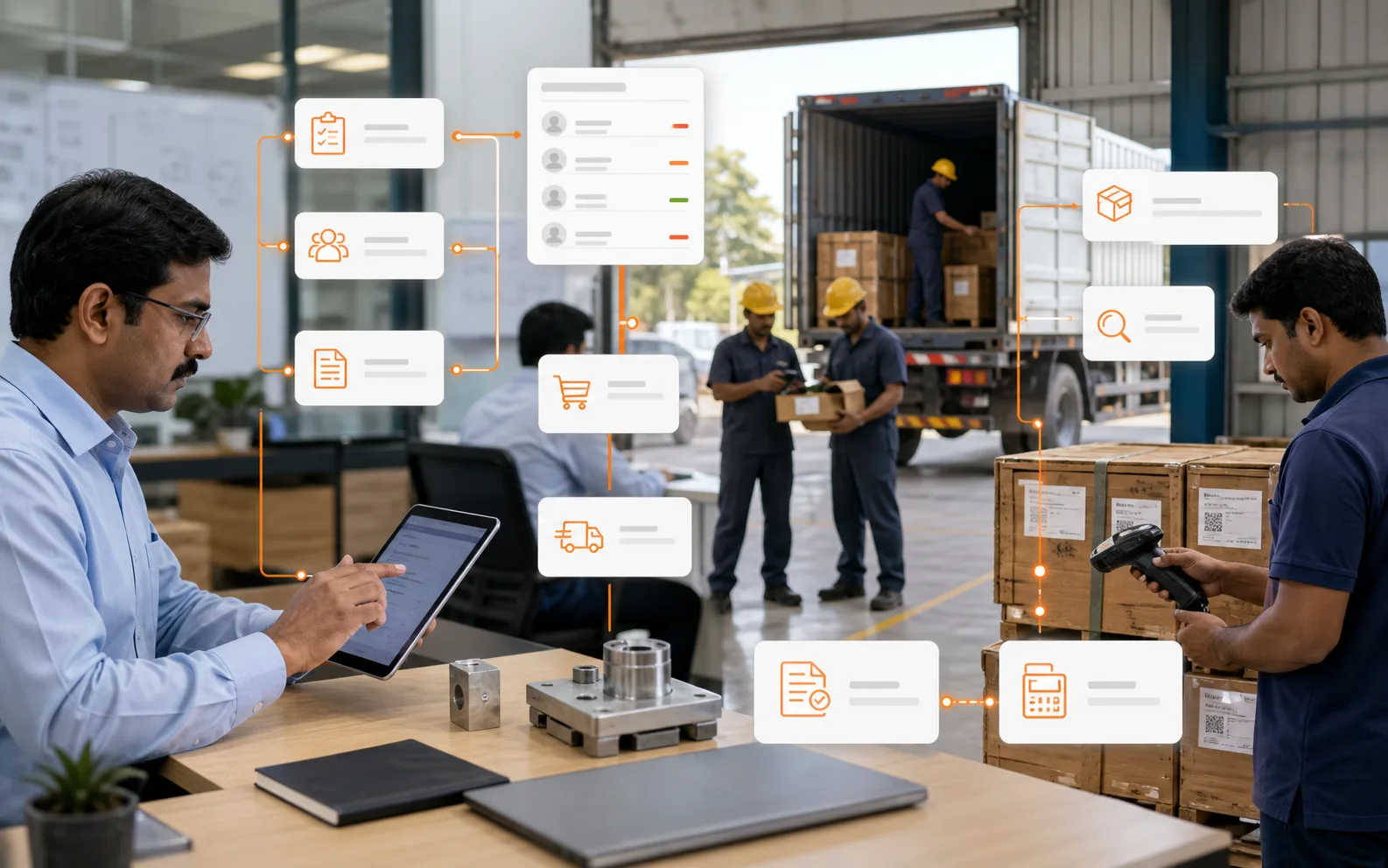
A practical ERP vendor evaluation guide for MSME manufacturers covering demos, process fit, support, cost, implementation plan, scalability, references, and red flags.

Learn what ERP implementation means, how the process works, common risks, and how businesses can go live with stronger adoption and cleaner data.
Learn what employers really want in the AI era: AI tool fluency, domain expertise, communication, judgment, adaptability, data literacy, and ownership.
Understand the difference between value chain and supply chain, how both affect manufacturing growth, cost control, delivery, quality, and customer value.

ERP hidden costs are not only software fees. Learn the real costs manufacturers miss: data cleanup, training, customization, reports, integrations, adoption, support, and process change.
Understand IGST under GST, when it generally applies, why place of supply matters, and how manufacturers should keep invoice and tax records clean.

Manage work orders from demand to closure with BOM, routing, material issue, job cards, quality decisions and finished-goods receipt.
Learn how small manufacturers should migrate data to a new ERP system, including item masters, BOMs, customers, suppliers, opening stock, pending orders, testing, and go-live validation.
Learn how Optiwise helps manufacturers manage GST invoicing, sales orders, dispatch, tax details, credit and debit notes, receivables, and finance visibility.
Sales Management Software for Manufacturing SMEs: Quote What Production Can Deliver. Use a worked factory scenario, explicit inputs and exception checks before rollout.
Understand manufacturing data safety with AI systems, including access control, privacy, vendor checks, sensitive data, audit trails, and responsible usage.
Improve OEE. Use a worked manufacturing test, explicit inputs and exception checks before rollout.
Understand Industry 4.0 in manufacturing, what it means beyond buzzwords, and how data, connected systems, sensors, ERP, and automation change factory operations.