
AI Shift Scheduling for Manufacturing: Skills, Machines and Demand
Plan manufacturing shifts with skill, machine, leave, overtime risk, planned load and approval boundaries instead of treating AI scheduling as magic.
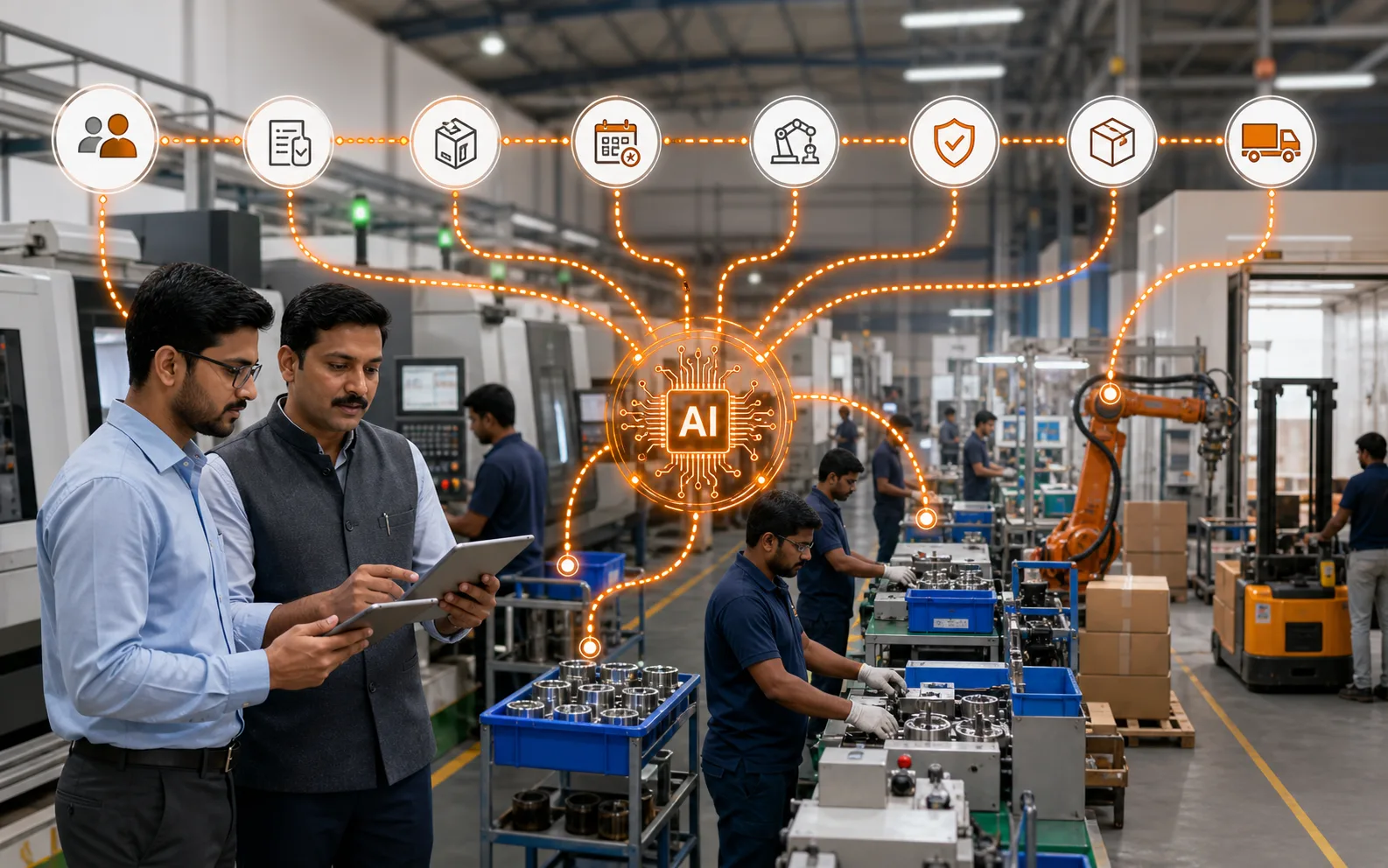
Shift scheduling in manufacturing is not the same as filling a calendar. A good schedule needs machine availability, worker skill, job priority, leave, overtime rules and planned load.
Optiwise supports calendars, shifts, worker skills, machine allocation and bottleneck views. AI can help review options, but supervisors still approve the plan.
Direct answer
AI shift scheduling works only when skills, machines, planned load, leave, availability and approval rules are visible.
Factory example
A plant has a rush order for a product that only two operators can run. One operator is on leave and the bottleneck machine has planned maintenance. A useful AI scheduling review shows the conflict before the supervisor releases the order.
Worksheet for the decision
| Area | What to check | Why it matters |
|---|---|---|
| Scheduling input | What to record | Decision impact |
| Skill matrix | Who can run which operation | Avoids assigning untrained workers |
| Machine calendar | Working hours and planned stoppage | Prevents impossible plans |
| Job load | Setup and run time by product | Shows overload |
| Leave and absence | Unavailable workers | Avoids last-minute gaps |
| Overtime rule | Allowed hours and approval | Controls cost and fatigue |
| Approval owner | Supervisor or planner | Keeps human responsibility |
How Optiwise supports this workflow
- Use machine calendars, shifts and worker availability in production planning.
- Review bottlenecks before releasing work.
- Use production dashboards to compare planned allocation with actual output.
Use the related Optiwise workflows for AI agents, production, inventory, purchasing, quality and industrial IoT.
Implementation notes
Do not let scheduling AI hide constraints. The schedule should show why a job moved: missing skill, bottleneck machine, planned maintenance, material shortage or priority change. The supervisor should be able to override the recommendation with a reason. Those reasons become useful training data for future planning and help management see whether the constraint is people, machine time or material.
Source and control checks
For AI risk and governance language, compare your project controls with the NIST AI Risk Management Framework. For connected device access and security planning, also review CISA cybersecurity performance goals where applicable.
Before using the recommendation, confirm the record owner, source timestamp, approval rule and missing-data handling. Keep customer results, savings numbers, safety certification and regulatory claims out of the page unless there is separate evidence for that exact claim.
Buyer review before rollout
Before rollout, review one finished transaction from start to end. Check the source record, the recommended action, the approval step, the person who accepted or rejected it and the operational result. This review catches weak data, vague ownership and unsafe automation before the workflow reaches more users. Keep the pilot narrow until the team can explain the recommendation in plain factory language.
FAQs
Can AI create the final shift schedule?
AI can recommend or highlight conflicts, but the final schedule should remain with the configured supervisor or planner.
What data improves shift scheduling first?
Skill matrix, machine calendar, job load and leave records improve the plan before any complex model is needed.

Related Posts

Is AI Worth the Investment for My Factory?
Learn how to decide if AI is worth the investment for your factory by evaluating use cases, data readiness, costs, risks, ROI, and operational impact.
13 Jun 2026Read more →Manufacturing AI Mistakes to Avoid Before You Start
List manufacturing AI mistakes and controls for unclear use case, messy data, unsafe automation, no owner, weak security and unreviewed recommendations.
13 Jun 2026Read more →What's the Difference Between AI and Regular Automation?
Understand the difference between AI and regular automation in manufacturing, with practical examples for workflows, decisions, alerts, and predictive operations.
13 Jun 2026Read more →What Are the Risks of Using AI in Manufacturing?
Understand the risks of AI in manufacturing, including bad data, wrong recommendations, safety issues, security, job fear, over-automation, and implementation failure.
13 Jun 2026Read more →