
Manufacturing AI Myths: What to Believe Before You Buy
Replace common manufacturing AI myths with buying checks around data, workflow scope, user approval, small-factory readiness and measurable pilot value.
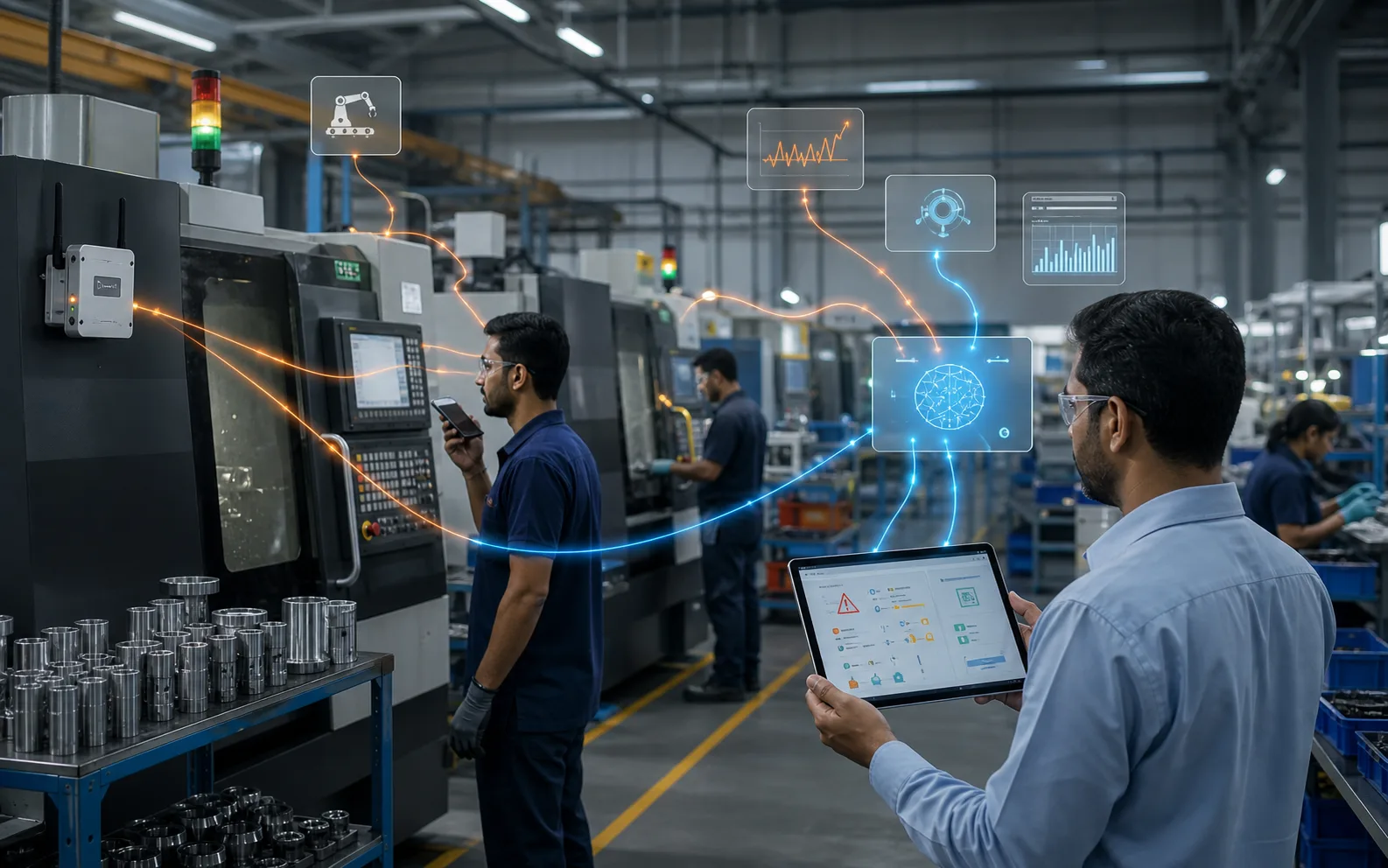
AI myths waste money because they turn a factory project into theatre. The buyer sees a polished demo and assumes the same output will appear in a messy plant with partial records.
A better approach is to test one workflow, one owner and one dataset before expanding. Optiwise is built around connected operational records, which makes that test practical.
Direct answer
Most manufacturing AI mistakes start with myths: perfect data, instant ROI, full automation and one tool replacing factory discipline.
Factory example
A factory expects AI to fix planning in one week. The real blocker is missing BOM revisions, unclosed work orders and manual stock adjustments. AI can help after the records are controlled; it cannot create planning discipline by itself.
Worksheet for the decision
| Area | What to check | Why it matters |
|---|---|---|
| Myth | Better buying check | Why it matters |
| AI needs perfect data | Data must be good enough for the chosen decision | Avoids endless cleanup |
| AI replaces workers | AI supports owners with faster review | Keeps accountability |
| ROI is instant | Pilot value needs a baseline and review period | Prevents fake success |
| Robots are required | Many use cases start with ERP records | Keeps scope affordable |
| Free tools are enough | Factory actions need permissions and audit trail | Protects business control |
| One AI fits every plant | Use cases differ by process and data | Improves fit |
How Optiwise supports this workflow
- Tie AI to production, purchase, inventory, sales and quality workflows.
- Use role permissions for actions and approvals.
- Start with one workflow where records already exist or can be cleaned quickly.
Use the related Optiwise workflows for AI agents, production, inventory, purchasing, quality and industrial IoT.
Implementation notes
A practical myth test is simple. Ask what record the answer depends on, who owns that record, what action can follow and what happens when the answer is wrong. If the team cannot answer those four questions, the AI idea is not ready for rollout. Fix the workflow and records first, then test again with a smaller scope.
Source and control checks
For AI risk and governance language, compare your project controls with the NIST AI Risk Management Framework. For connected device access and security planning, also review CISA cybersecurity performance goals where applicable.
Before using the recommendation, confirm the record owner, source timestamp, approval rule and missing-data handling. Keep customer results, savings numbers, safety certification and regulatory claims out of the page unless there is separate evidence for that exact claim.
Buyer review before rollout
Before rollout, review one finished transaction from start to end. Check the source record, the recommended action, the approval step, the person who accepted or rejected it and the operational result. This review catches weak data, vague ownership and unsafe automation before the workflow reaches more users. Keep the pilot narrow until the team can explain the recommendation in plain factory language.
FAQs
What is the biggest AI myth in manufacturing?
That AI fixes poor process records by itself. It can help only after the decision, data source and owner are clear.
Can a small factory use AI before buying robots?
Yes. Many useful AI workflows start with orders, stock, purchasing, inspection and production records.

Related Posts
Is AI Worth the Investment for My Factory?
Learn how to decide if AI is worth the investment for your factory by evaluating use cases, data readiness, costs, risks, ROI, and operational impact.
13 Jun 2026Read more →Manufacturing AI Mistakes to Avoid Before You Start
List manufacturing AI mistakes and controls for unclear use case, messy data, unsafe automation, no owner, weak security and unreviewed recommendations.
13 Jun 2026Read more →What's the Difference Between AI and Regular Automation?
Understand the difference between AI and regular automation in manufacturing, with practical examples for workflows, decisions, alerts, and predictive operations.
13 Jun 2026Read more →What Are the Risks of Using AI in Manufacturing?
Understand the risks of AI in manufacturing, including bad data, wrong recommendations, safety issues, security, job fear, over-automation, and implementation failure.
13 Jun 2026Read more →