
Fastener Returns: Check Grade, Coating and Lot Before Restocking
Handle mixed fastener returns without overstating usable stock. Follow the item, grade, coating, lot and quality decision through a worked Optiwise example.


Keep returned fasteners out of the usable bin until their full specification, source identity and condition are resolved. In Optiwise, we connect the item, lot, job return and quality decision so stores can release the right quantity.
A handful of M8 bolts comes back from assembly. The nearby bin also says M8, so putting them there looks reasonable. But thread size alone leaves questions unanswered: length, pitch, strength grade, coating, drawing requirement and source lot may differ. A barcode on the destination bin cannot prove what is in your hand.

Give stores a complete return identity
Use an item code or variant that distinguishes the fasteners your engineering specification treats differently. Keep the required thread, pitch, length, grade, finish and drawing revision with that item. The receipt or lot record carries its supplier and source evidence. Keep the job issue reference with a return so the storekeeper can follow where the material came from.
Read head markings against the applicable specification and manufacturer evidence. Surface colour alone does not establish coating, grade or lot. The US Department of Energy fastener handbook, section 5, gives examples of missing markings, packaging information and unsuitable finishes that need further evaluation. Its US programme requirements are not a substitute for your customer’s specification or your quality team’s acceptance decision.
Separate the count from the release decision
Consider an illustrative return of 100 pieces. There are 240 released pieces already in the required stock bin. Quality checks the returned material against the job issue, specification, lot evidence and condition. The result is:
| Returned quantity | Evidence and next action |
|---|---|
| 80 pieces | Required item and lot established; accepted for return to usable stock |
| 12 pieces | Different grade identified; keep separate while its source and correct destination are resolved |
| 8 pieces | Identity unresolved; retain the exception for quality follow-up |
Only the accepted 80 increase that bin’s usable balance: 240 + 80 = 320 pieces. Counting all 100 would show 340 and overstate usable stock by 20. All 100 are physically present, but the other 20 still need a recorded decision. The 12 known to have a different grade must not be relabelled as the required item. Identifying their grade also does not recover a missing source lot.
Record the physical return and the unresolved quantities in the agreed returns workflow. If the mixed tray cannot be traced reliably to the original job issue, keep that gap visible. Do not choose the expected lot merely to make the job balance. A later quality decision can explain a release, rejection or other authorised destination without rewriting what arrived.
Run the return through Optiwise
Our inventory workflow supports item variants, batch and lot identifiers, barcodes, store locations and movement history. Production records retain material issues, extra issues and unused returns against the job. Stores can follow the original issue and record the identified return rather than making an unexplained stock adjustment.
We configure the return form, required specification and evidence fields, hold location, responsible role and release step for your factory. Use our inspection forms and quality queue to retain the result and disposition with the relevant work. The physical segregation and checks still have to happen; a scan does not recognise a bolt’s material properties.
When the tray has already been tipped into stock
Record the affected bin, likely quantity, last reliable identification and jobs issued from it since the mix. Keep uncertain stock separate from released material while quality defines the investigation. Do not estimate which bolts are correct by the proportions on the original purchase order. If production has already used them, follow the affected job and assembly records and assign the next quality action.
A supplier shortage is a separate buying decision. Replacing an unavailable grade or finish needs the authorised technical decision and the changed item requirement; a purchasing deadline does not make two similar fasteners interchangeable. Our outside-plating return example explains the related case where a processor returns mixed source lots.
Can every M8 bolt use the same item code?
Use separate identities where the approved specification requires a distinction. Thread size alone does not capture pitch, length, grade, coating or customer requirements. Keep the item rule consistent across buying, stores and the bill of materials.
Does a readable grade mark establish the original lot?
No. A grade mark and a source lot answer different questions. Retain the receipt, packaging or other approved evidence needed to link the physical material to its source.
Bring one mixed fastener return and its job issue to a factory walkthrough. We will follow the identified quantity, the unresolved material and the next quality decision in Optiwise. Implementation costs ₹0; subscription, optional add-ons and IoT hardware are separate.
Related Posts
Solder Paste Tracking: Keep Each Jar’s Storage and Opening History
Track solder-paste jars beyond the expiry date. Keep storage removal, opening, job issue and returned paste linked, with a worked timing example in Optiwise.
3 Nov 2026Read more →Chemical Batching: Verify the Ingredient Before Charging
A correct weight can hide the wrong ingredient. Follow approved material, actual lots, weighing evidence and exceptions in an Optiwise batch workflow.
3 Nov 2026Read more →
Optiwise Optimize Savings: What Shop-Floor Follow-Ups Are Worth
Test whether less shop-floor chasing can cover Optimize: a floor-only example, 13.3-minute break-even, job records, costs and editable calculator inputs.
2 Nov 2026Read more →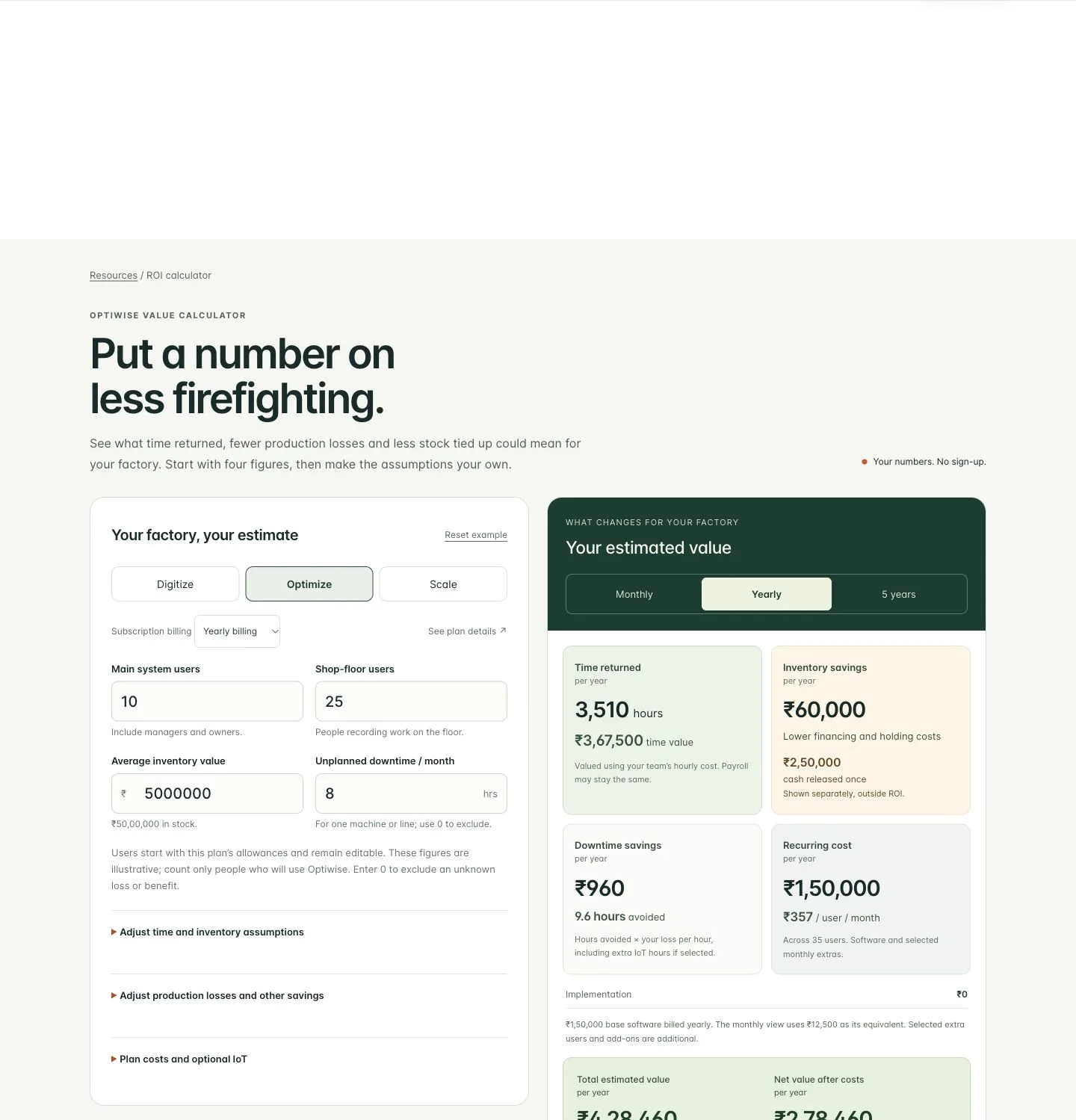
How Much Can Optiwise Save Your Factory?
See a worked Optiwise savings example with time returned, stock carrying costs, software and optional IoT. Use our free calculator for your own factory ROI.
2 Nov 2026Read more →