Manufacturing Automation System | Optiwise
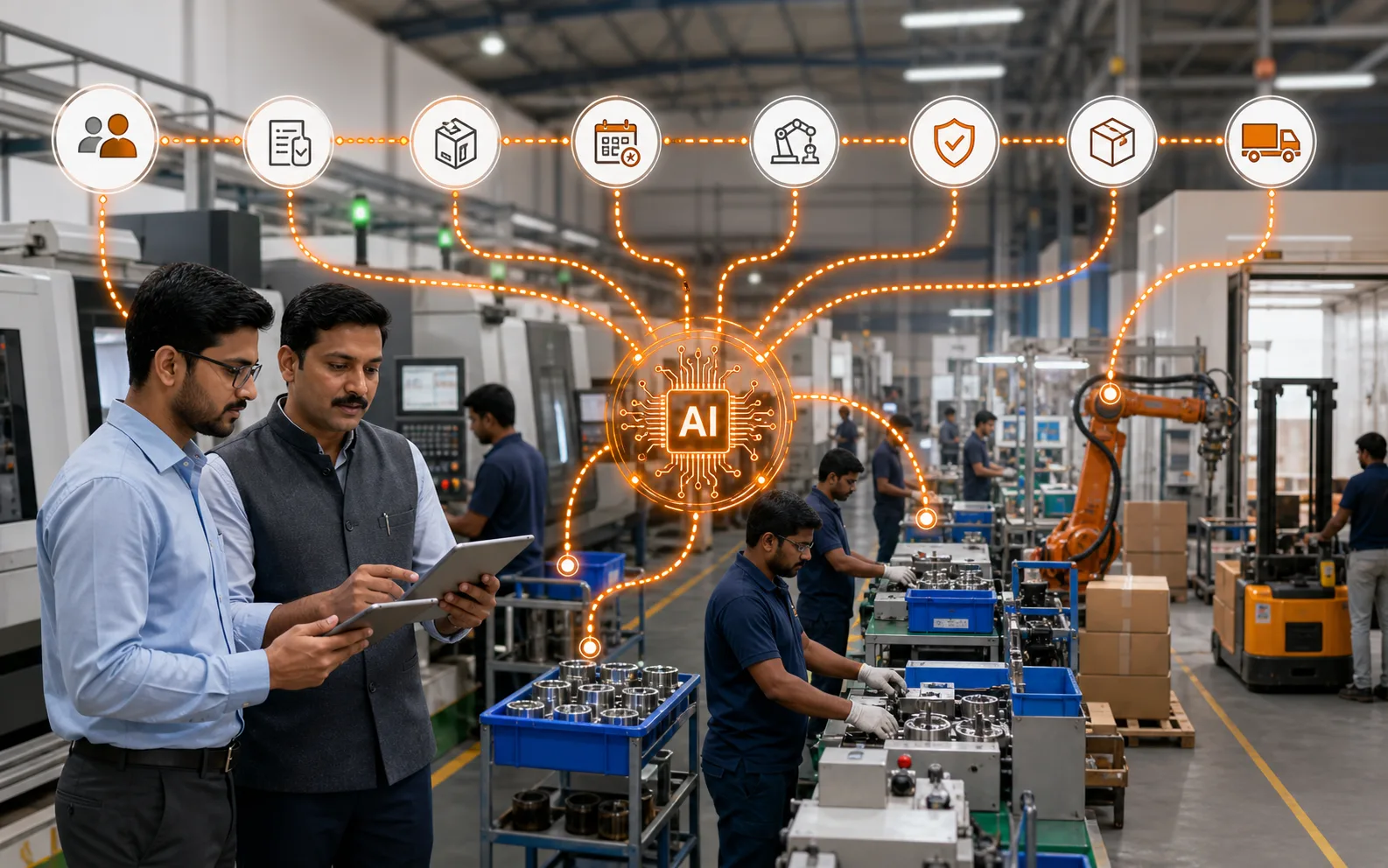
Learn what a manufacturing automation system is, where automation helps, common mistakes, ROI considerations, and how Optiwise connects automation with ERP, IoT, and AI workflows.
Loading Optiwise
A structured blog experience powered by the local AICAN CMS, with rich publishing, search visibility, and editorial control without WordPress.

Filter blog posts
1959 posts available, showing 145-168

Learn what a manufacturing automation system is, where automation helps, common mistakes, ROI considerations, and how Optiwise connects automation with ERP, IoT, and AI workflows.

Learn why Indian manufacturing SMEs should go digital, how Digital India has changed business expectations, and how AICAN Optiwise supports factory digitisation.

Learn what ROI manufacturers can expect from AI through time savings, lower downtime, fewer defects, better inventory, faster planning, and improved visibility.

Explore realistic examples of how manufacturers use AI for production planning across material readiness, scheduling, forecasting, capacity, and dispatch risk.

Learn what manufacturers should look for in AI software, including ERP integration, data security, usability, workflow fit, explainability, ROI, and implementation support.

Compare IoT and traditional industrial monitoring for manufacturing, including data access, connectivity, dashboards, analytics, ERP integration, alerts, and scalability.

Learn what ERP should include for polymer manufacturing companies, including formulation, batch tracking, raw material lots, quality control, production planning, inventory, and costing.

AI can support procurement, but strategic work like supplier relationships, ethical judgment, complex negotiation, and business trade-offs still needs humans.

AI can speed up supplier evaluation by comparing price, lead time, quality history, delivery reliability, risk, and past performance for manufacturers.

Learn how plastic factories track batch production with resin lot traceability, machine and mold data, production records, rejection, quality checks, dispatch lots, and ERP workflows.

Learn how small businesses should choose billing software, including GST-ready invoices, inventory linkage, sales orders, dispatch, payments, reports, and growth readiness.

Learn how manufacturers can compare shift performance fairly using production output, downtime, quality, manpower, WIP, planned vs actual targets, and connected factory dashboards.

Learn how textile and garment manufacturers can reduce production delays with ERP planning, material readiness, WIP tracking, job work control, quality visibility, and dashboards.

Learn what production planning means, key steps, common challenges, and how manufacturers can improve material readiness and delivery reliability.

Learn how manufacturers should choose warehouse management software for receiving, putaway, bin control, picking, packing, barcode, dispatch, and ERP integration.

Learn the difference between production planning and production control, how they work together, and how Optiwise helps manufacturers improve factory execution.

Learn how steel manufacturers manage inventory by grade, size, weight, heat number, location, offcut, scrap, reservation, and production demand using ERP.

Learn what Surat manufacturers should expect from ERP, including production, inventory, purchase, dispatch, finance, reporting, textile workflows, and AI readiness.

Learn what a smart factory is, how ERP, IoT, automation, real-time monitoring, quality tracking, maintenance, inventory, and dashboards work together.

Learn how manufacturers can track production in real time using production orders, material readiness, stage-wise WIP, machine status, quality, rework, dispatch, and dashboards.

Learn how plastic manufacturers can reduce downtime by tracking machine stoppages, mold issues, setup delays, material readiness, maintenance, cycle time, and ERP-connected alerts.

Measure AI efficiency with time saved, faster response, fewer errors, task completion, overtime reduction, customer satisfaction, and workflow adoption.

Learn why predictive maintenance software is creating manufacturing tech careers in IoT, analytics, AI, machine data, and ERP-connected operations.

Understand HML analysis in inventory management, how it classifies stock by unit price, how it differs from ABC analysis, and how manufacturers can use it for purchasing control.