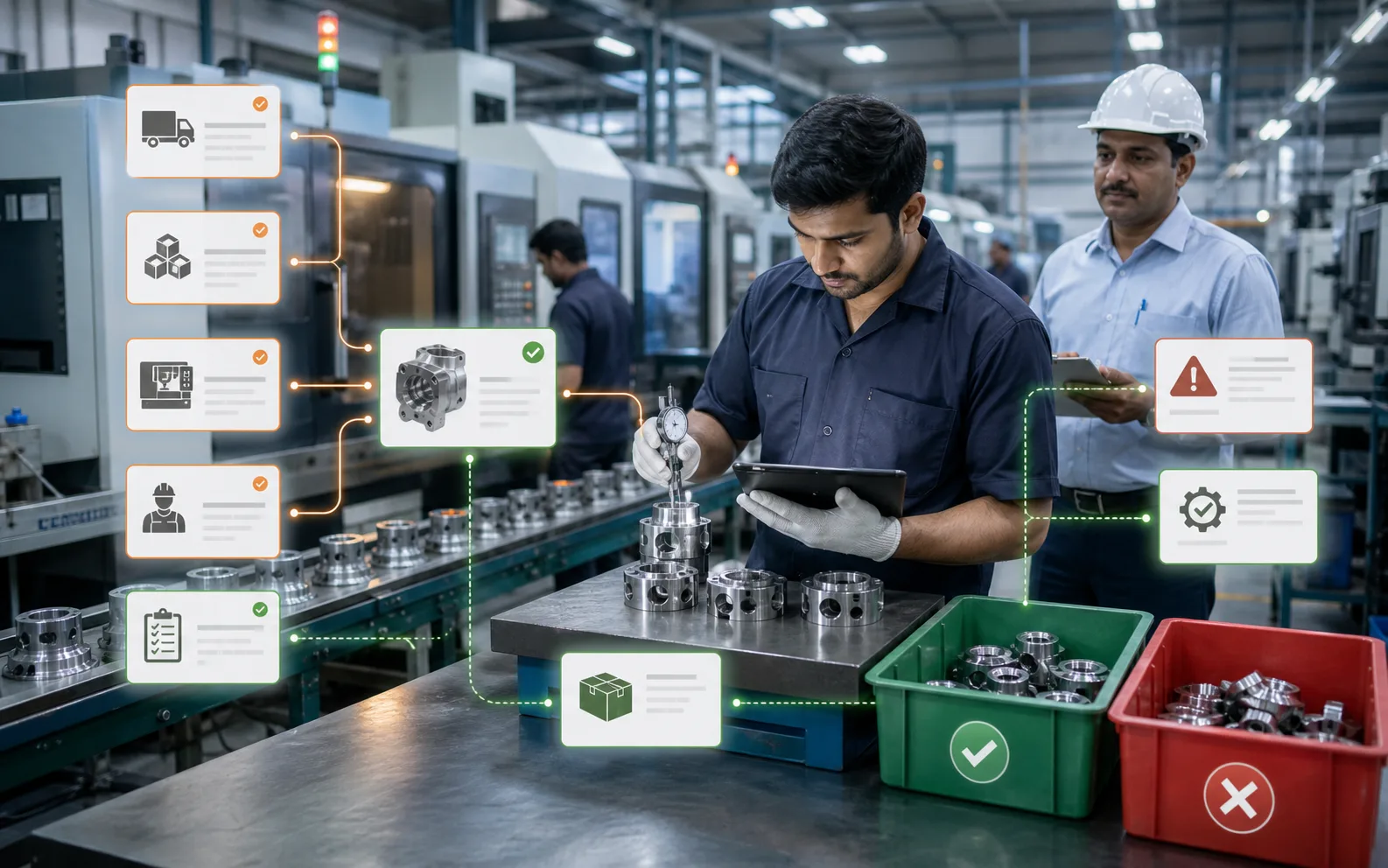

Can IoT Monitor CNC Machines in Auto Plants?
Learn how IoT can monitor CNC machines in auto plants, what data can be captured, how to handle older machines, and how ERP integration improves production visibility.
Loading Optiwise
A structured blog experience powered by the local AICAN CMS, with rich publishing, search visibility, and editorial control without WordPress.

Filter blog posts
1959 posts available, showing 1777-1800

Learn how IoT can monitor CNC machines in auto plants, what data can be captured, how to handle older machines, and how ERP integration improves production visibility.

Learn material handling in manufacturing, types, process steps, common problems, safety and inventory impact, and how Optiwise improves material movement visibility.

Learn how to manage plant maintenance with preventive schedules, breakdown tracking, spare planning, work orders, asset history, downtime analysis, and ERP visibility.

Learn when sensor redundancy is needed, how backup systems protect production, and how manufacturers should plan failover, spares, alerts, and manual fallback.

Factories should automate first where work is repetitive, measurable, high-impact, low-risk, and connected to production, quality, downtime, or material visibility.

Compare AI and traditional production planning methods, including spreadsheets, ERP planning, human judgement, AI forecasting, and hybrid planning models.

Understand what a debit note is, when it is used under GST, how manufacturers should manage debit notes, and how Optiwise helps keep records clean.

Understand period costs, how they differ from product costs, and why manufacturers need clear cost classification for better profitability decisions.

Learn how manufacturing software increases productivity through better planning, inventory accuracy, shopfloor visibility, quality control, and faster decisions.

Learn how packaging manufacturers can monitor line efficiency using planned output, actual output, downtime, changeovers, wastage, defects, machine utilization, quality, and ERP dashboards.

Learn how to monitor welding operations with job cards, welder assignment, fit-up readiness, stage progress, inspection holds, rework reasons, consumables, and ERP dashboards.

Learn how to build a practical business case for manufacturing IoT using downtime, reporting delays, energy waste, quality losses, ROI, pilot scope, and AICAN Optiwise workflows.

Learn what ERP software actually does for inventory management: stock tracking, movements, reorder alerts, purchase planning, production consumption, WIP, and reporting.

Learn how to choose manufacturing inventory software for raw material, WIP, finished goods, BOM, production, QC, batch tracking, reorder planning, and dispatch.

Understand the difference between IoT and Industry 4.0 in manufacturing, how they overlap, and how factories can use both concepts practically without getting lost in terminology.

Compare computer vision and human inspection for manufacturing defects, including consistency, speed, judgement, false rejects, training, and ROI.

Learn what Chennai manufacturers should expect from factory ERP, including production, inventory, purchase, quality, dispatch, finance, reporting, and AI-ready operations.

Learn how manufacturers should choose an IoT platform based on factory use cases, machine connectivity, dashboards, alerts, integrations, security, support, and ROI.

Learn practical lessons from real manufacturing ERP stories, including visibility, BOM accuracy, scalability, shop-floor control, and why ERP success depends on process fit.

Learn what GSTR-9C is, who may need to file it, what reconciliation it involves, common issues, and how ERP helps maintain cleaner annual GST records.

Understand what production tracking software does, why manufacturers need it, and how it helps improve visibility, output control, WIP tracking, and delivery reliability.

Compare manufacturing AI solutions across ERP-based systems, point tools, machine vision, predictive maintenance, analytics platforms, and full operating systems.

Learn how manufacturing SMEs can manage scrap inventory, reduce losses, track scrap generation, improve costing, and build better inventory controls.

A practical guide to evaluating computer vision providers for manufacturing, including quality, cybersecurity, safety, industrial standards, documentation, support, and proof of implementation capability.